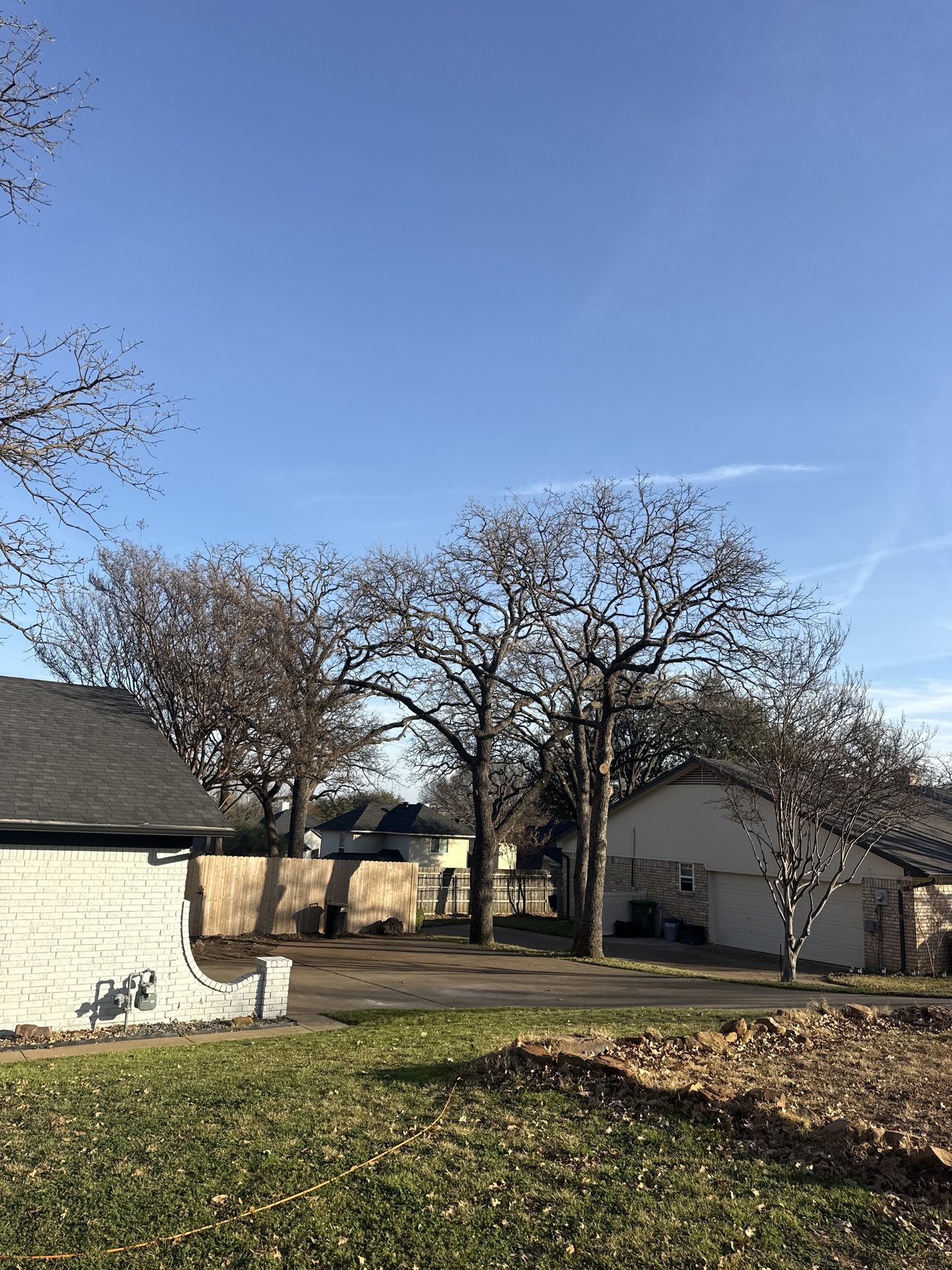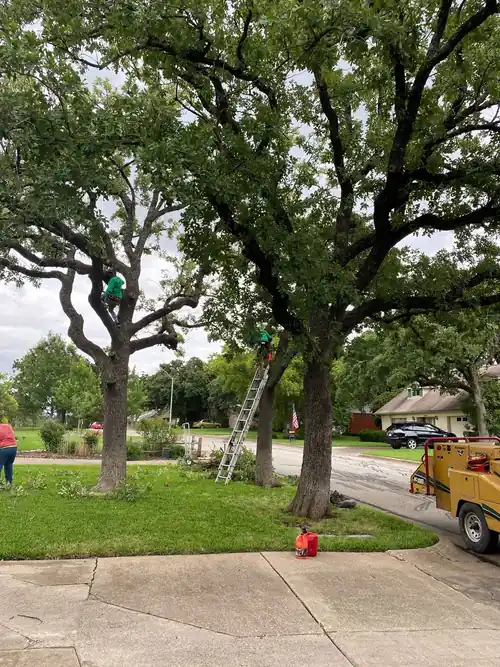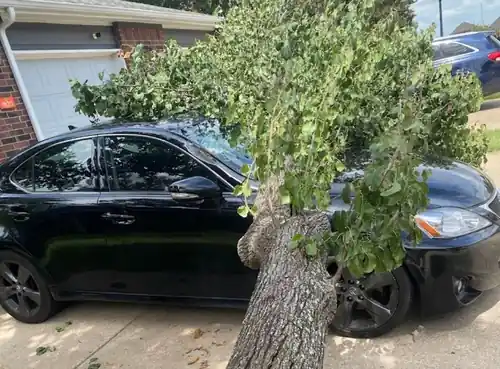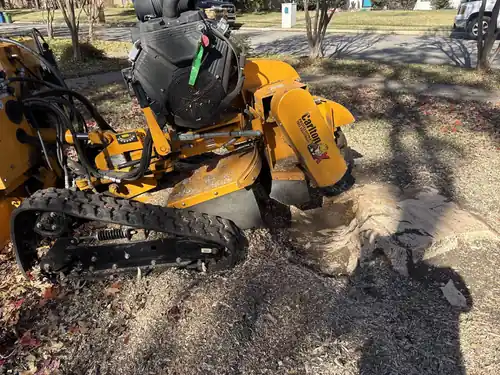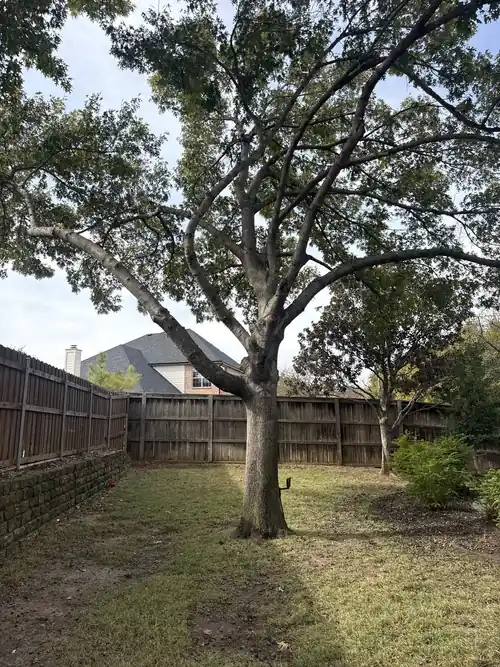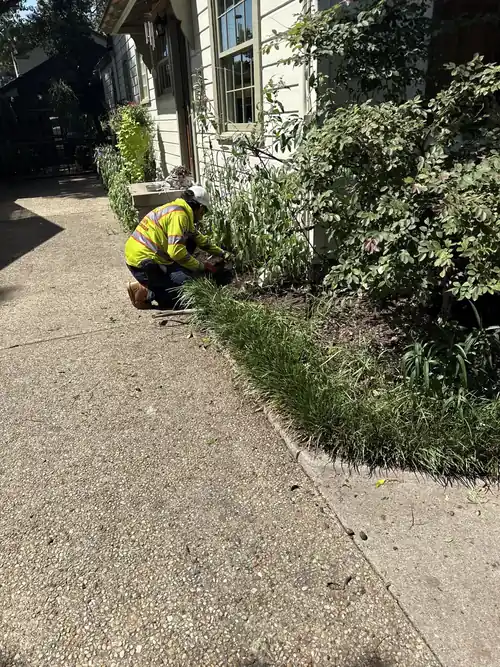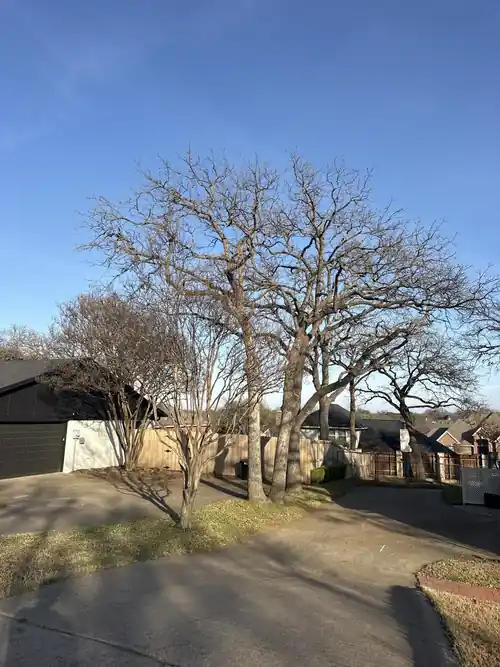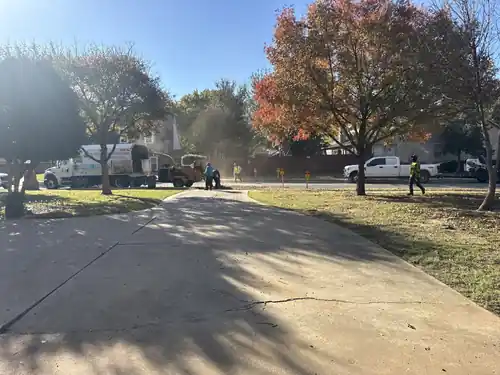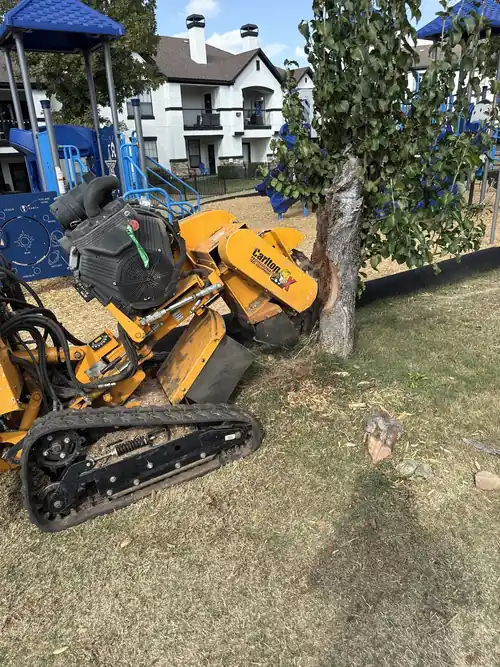
Colleyville’s canopy runs older than most of the metroplex’s. The Eastern Cross Timbers crosses the city, its sandy loam grows shallow-rooted post oaks and blackjack oaks that predate the estates around them, and the city protects them with its own Urban Forestry code and heritage list. The practical consequence for a homeowner: a removal starts with a permit question, not a chainsaw, and we answer it as part of the estimate. Stump removal is the other Colleyville staple, old removals cut flush years ago and lawns that want their level ground back, and the grinder handles those without ceremony. Storm damage, clearance trimming, and the slow post-oak declines that follow remodels round out the list.
The service area covers the city end to end: Montclair Parc and Whittier Heights, the creek lots along Caldwell’s Creek, Ross Downs and the horse properties, and the Timarron neighborhoods Colleyville shares with Southlake, from Glade Road to Hall-Johnson and the 26 corridor between.
Colleyville has regulated tree removal since 1993. Trees 6 inches DBH and larger are protected; on homestead property, state law allows removal of trees under 10 inches DBH, but larger trees — and anything inside a tree preservation easement — go through the city’s online tree removal permit first.
Official source: Colleyville Land Development Code — Urban Forestry
Ordinance details change; confirm current requirements with Colleyville before scheduling a removal.
The Timarron master-planned community extends into Colleyville — two of its seventeen neighborhoods sit here — and its Owners Association requires Design Review approval for exterior modifications, with neighborhood-specific landscape guidelines. The binding tree rules still come from the city’s Urban Forestry code.
The city itself notes Colleyville lies in the Eastern Cross Timbers, a forest dominated by post oak and blackjack oak on coarse sandy soils over sandstone — sandy loam over clay hardpan that produces shallow, disturbance-intolerant root systems. Its heritage tree list centers on Cross Timbers natives — post oak, blackjack oak, cottonwood, water oak, and ash — some 200 to 400+ years old. Post oaks grow too slowly to heal torn roots before decay sets in, which is why Colleyville maintains its own city Forestry Management Plan.
Tarrant County is among the 76 Texas counties with confirmed oak wilt — the fungus spreads via sap-feeding beetles to fresh wounds and about 75 feet per year through connected live oak roots. Do not prune oaks February 1 through June 30, and paint every wound immediately.
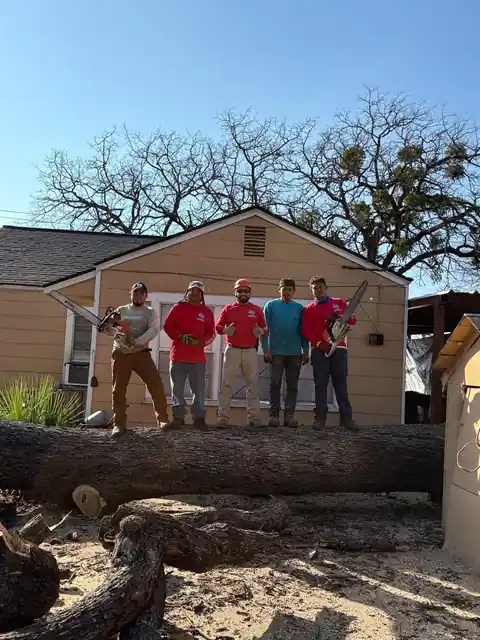
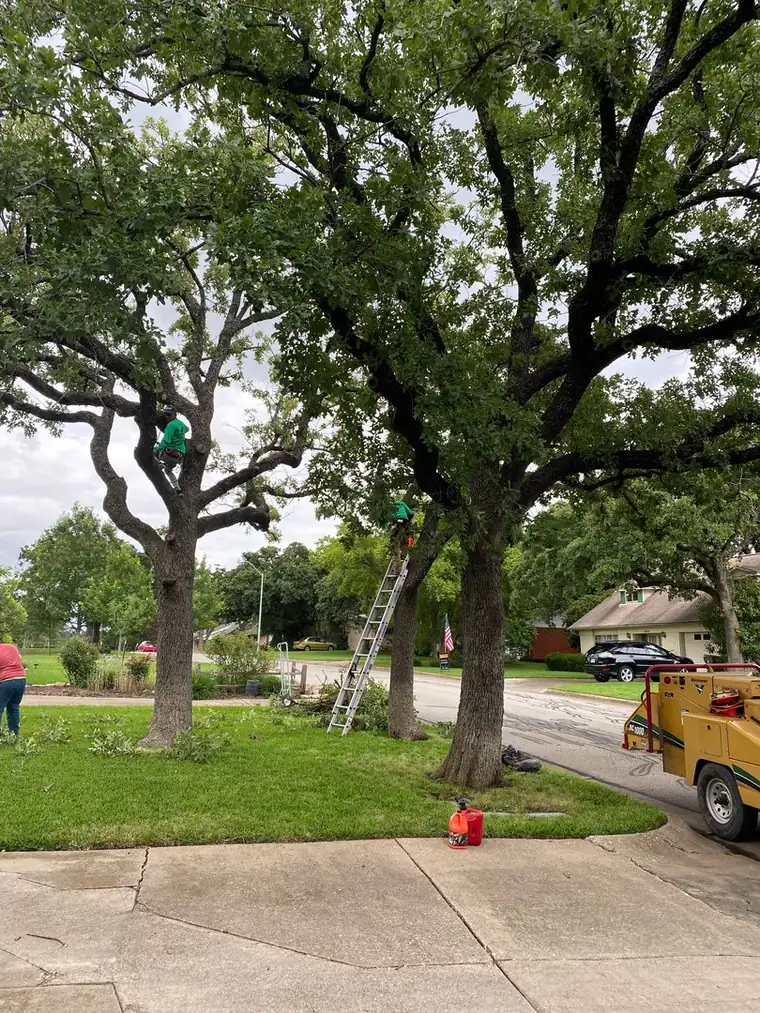
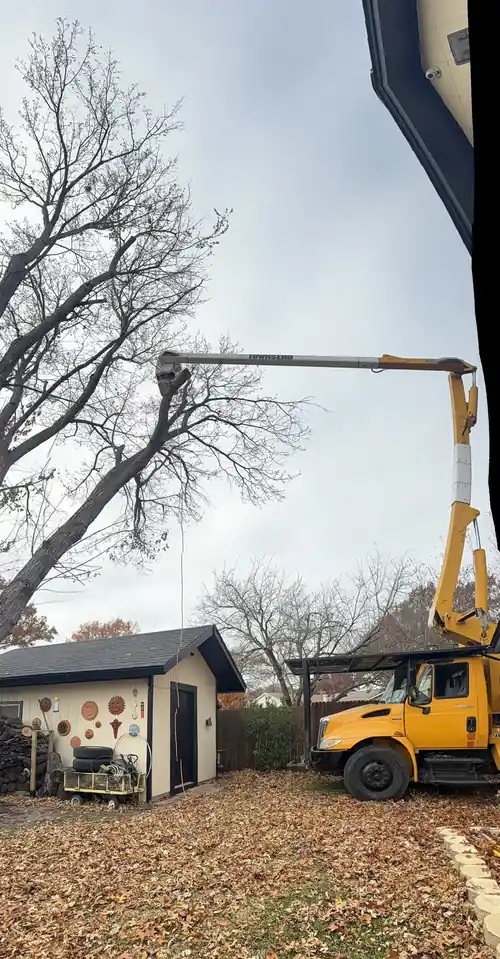
Texas Tree Tops provides tree removal, trimming, emergency tree service, stump grinding, pruning, vegetation maintenance, lot and brush clearing, and commercial tree service in Colleyville.
A Colleyville tree service request includes the service needed, property location, access concerns, urgency, and cleanup expectations. When local rules apply, the documented municipal source is included in removal planning.
The Colleyville site review accounts for structures, fences, driveways, pools, utilities, parking, and the path used to move debris.
The Colleyville estimate connects tree condition, service type, timing, equipment access, and final property needs with Colleyville Land Development Code — Urban Forestry.
Tree condition, property access, cleanup needs, and the approved estimate determine the final service scope in Colleyville. Call +1 682-708-4984.
Texas Tree Tops provides tree service for neighborhoods, HOAs, commercial corridors, managed properties, and nearby communities around Colleyville, including properties close to city boundaries. Coverage includes neighborhoods and areas like Montclair Parc, Whittier Heights, Caldwell's Creek, Remington Park, Ross Downs, and Timarron Cascades.
Texas Tree Tops serves Colleyville from its Fort Worth business address. Tree service is planned around the property location, access, timing, and requested work.
Send the service type, property location, timing, access notes, and cleanup expectations.
Request A Scope Review