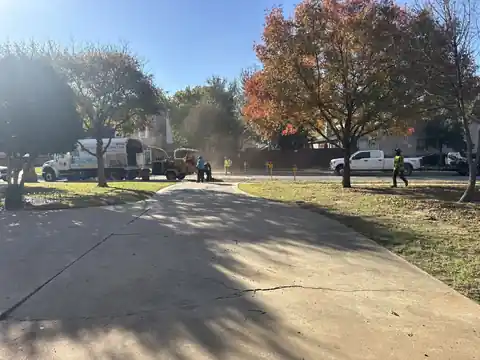
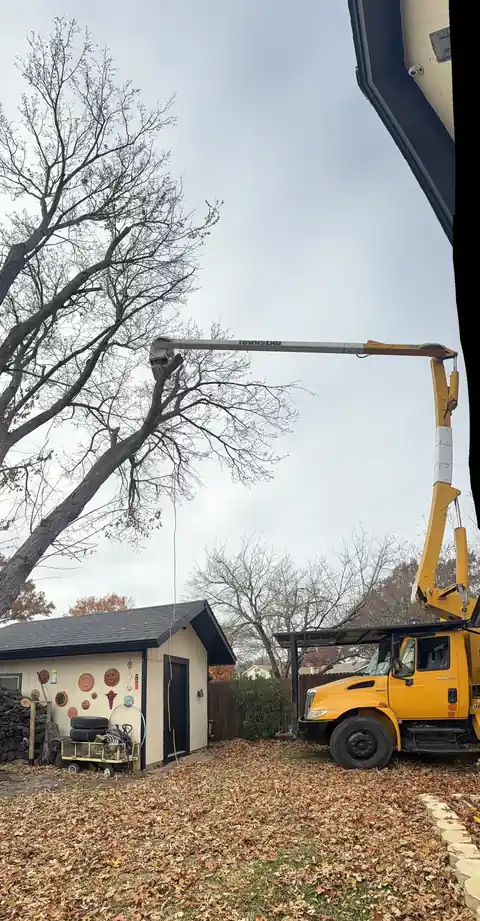
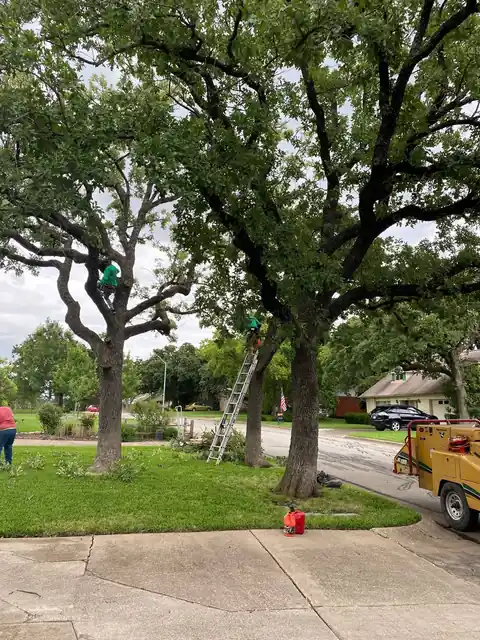
Land and lot clearing in Fort Worth and across DFW
An overgrown lot in North Texas is never just tall grass. It is mesquite and hackberry saplings turning into trees, greenbrier and mustang grape tying the understory together, and a season or two of dumped limbs hiding in the middle. Clearing takes it back to ground you can walk, mow, build on, or sell.
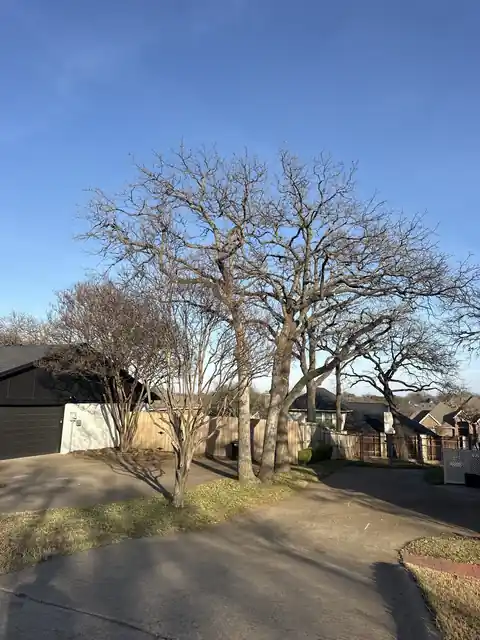
This is one-time work with a defined end state. Texas Tree Tops walks the area first and settles the line every clearing job lives or dies on: what goes, what stays, and where the debris ends up. Mature oaks and pecans worth keeping get worked around, not flattened with the brush.
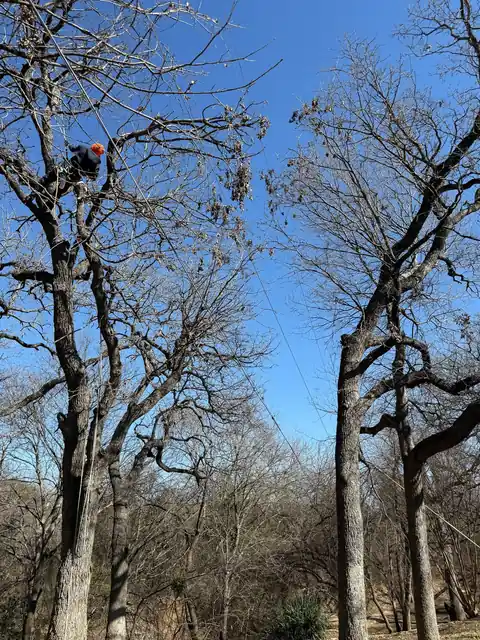
The crew that clears the lot is a tree crew, which matters the moment the overgrowth includes actual trees. Volunteer trunks come down and get hauled with the brush, and a stump grinder finishes the spots that need to be sod or pad instead of stubble.
What a clearing job covers
Brush and undergrowth clearing
Fence line and access clearing
Stump grinding on cleared ground
What you get back
- Overgrown ground back to usable: mowable, buildable, or sellable.
- Keeper trees protected while the brush around them comes out.
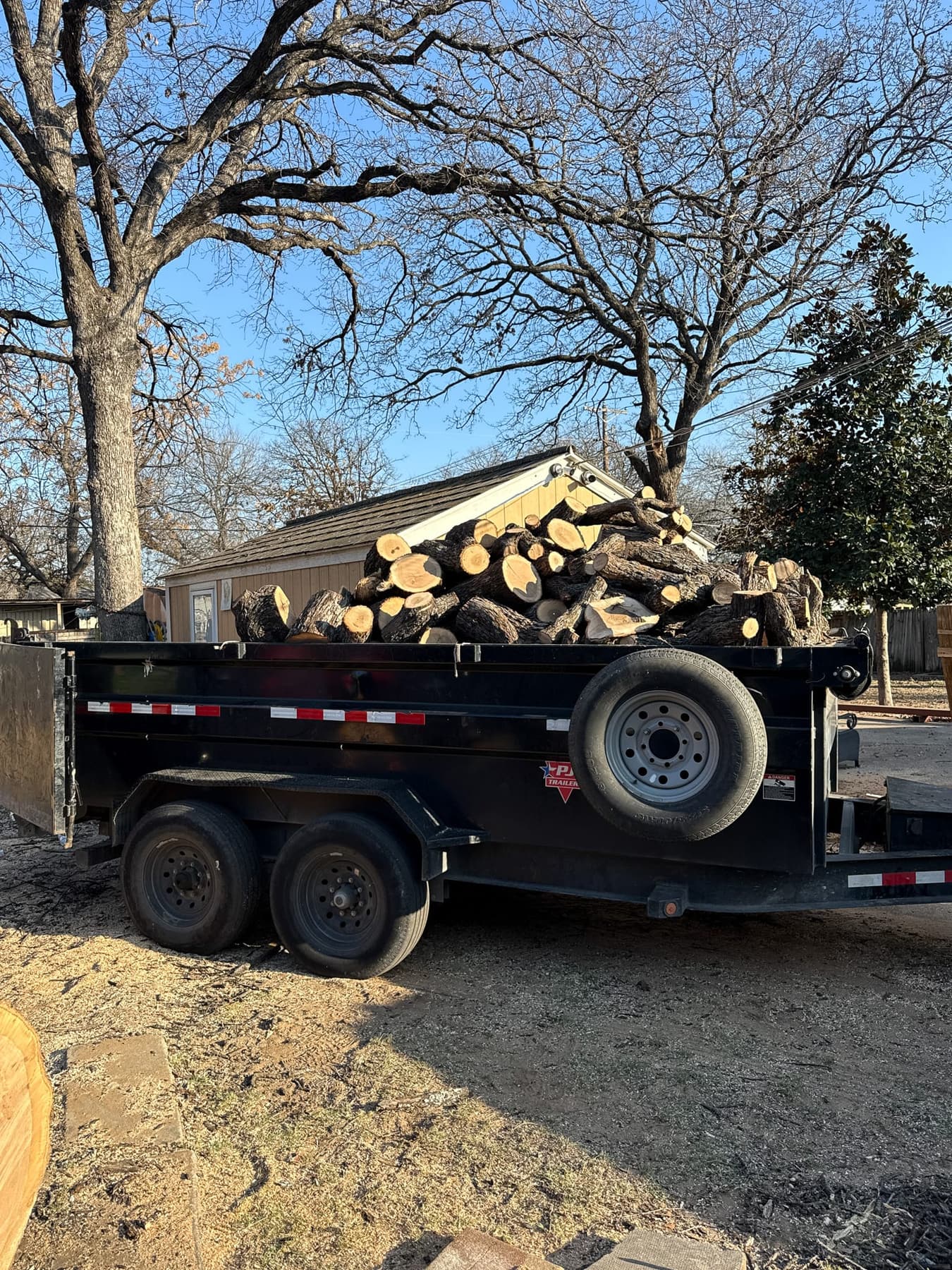
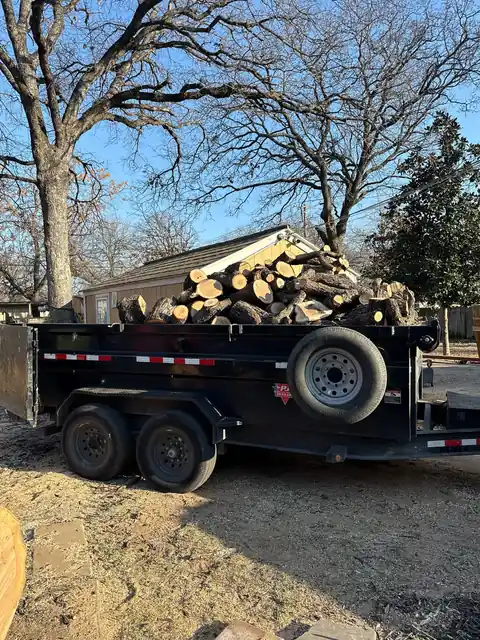
- Debris hauled off, leaving clear ground instead of a mulch mat.
- One mobilization covering brush, trees, stumps, and cleanup.
Brush removal: hauled off or mulched in place
Every clearing quote in DFW splits on one question: where does the brush go? Forestry mulching grinds it where it stands, which is fast and cheap on acreage and leaves a carpet of chipped wood that takes seasons to break down. Haul-off loads it out, which costs the loading time and leaves bare workable ground the same day.
We clear with haul-off because of what our customers do with the lot next: sod, fence, foundation, or a for-sale sign. A mulch mat under any of those is a problem you pay to fix later. On jobs where mulch-down genuinely fits, like a back-acre cedar stand nobody will mow, we say so at the walk-through.
Brush that grew through fences gets cut out from the wire rather than yanked, dumped piles hiding in the growth get loaded with the rest, and vines get pulled from the keeper trees they were climbing.
What decides the cost of clearing a lot
Per-acre averages are near useless here, because two lots of identical size can be a morning apart in work. The bid comes from what is actually standing on the ground and what has to happen to it.
The walk-through prices these in one pass, and the estimate states what leaves, what stays, and what the ground looks like when the trailer gate closes.
- Density and size of what is growing. Waist-high brush is machine work; a lot with thirty volunteer trees is a tree job wearing a clearing job’s name.
- Keeper trees. Protecting an oak’s root zone slows the machines around it. Flattening everything is faster, which is exactly why the walk-through marks the trees first.
- Debris destination. Mulched in place, hauled to the landfill, or bucked into firewood lengths and stacked: each moves the number differently.
- Access. A machine that drives onto the lot is one price. Ground that everything must be walked off through a gate is another.
- Stumps. Ground below grade for lawn or pad, or left to rot in a back corner nobody mows.
Do you need a permit to clear land in Fort Worth?
Brush, undergrowth, and saplings are yours to clear. Trees are where Fort Worth gets a say: the city’s urban forestry rules (city code § 6.302, updated in 2025) put tree removal under a permit, with an exemption covering most single-family homes on a one- or two-family lot of an acre or less. A lot-clearing job that takes out multiple trees, or sits on commercial or undeveloped land, is squarely the case the permit rules were written for.
The trap on clearing jobs specifically: the permit math cares about trunk size, and penalties for clearing first and asking later scale with it. A seller tidying a lot before listing, or an owner prepping ground ahead of a build, can turn a cleanup into a code case by flattening the wrong six trees in an afternoon.
We flag it at the walk-through. If the trees on the lot put the job inside the permit rules, you will know before a machine touches the ground, and the brush work that needs no permit is scoped so it does not have to wait on the paperwork that does.
Tree service, mulching crew, or excavator: who fits the job
Land clearing companies in DFW come in three shapes, and matching the shape to the lot is most of the decision. A forestry mulching outfit clears acreage fast and leaves chips. An excavation contractor clears, grades, and leaves dirt ready for a pad. A tree service clears lots where trees are the point: some coming down, some staying, all of it hauled.
The jobs that land with us look like this: a half-acre backyard that disappeared over five years, an inherited lot going on the market, a fence line swallowed on both sides, a commercial pad with volunteer trees coming up through the gravel. Work where the difference between a tree worth keeping and a weed with a trunk decides what the finished lot is worth.
If your job is forty acres of cedar or a site that needs dirt work, we will tell you at the first call and you will not pay a tree crew to do a bulldozer’s job.