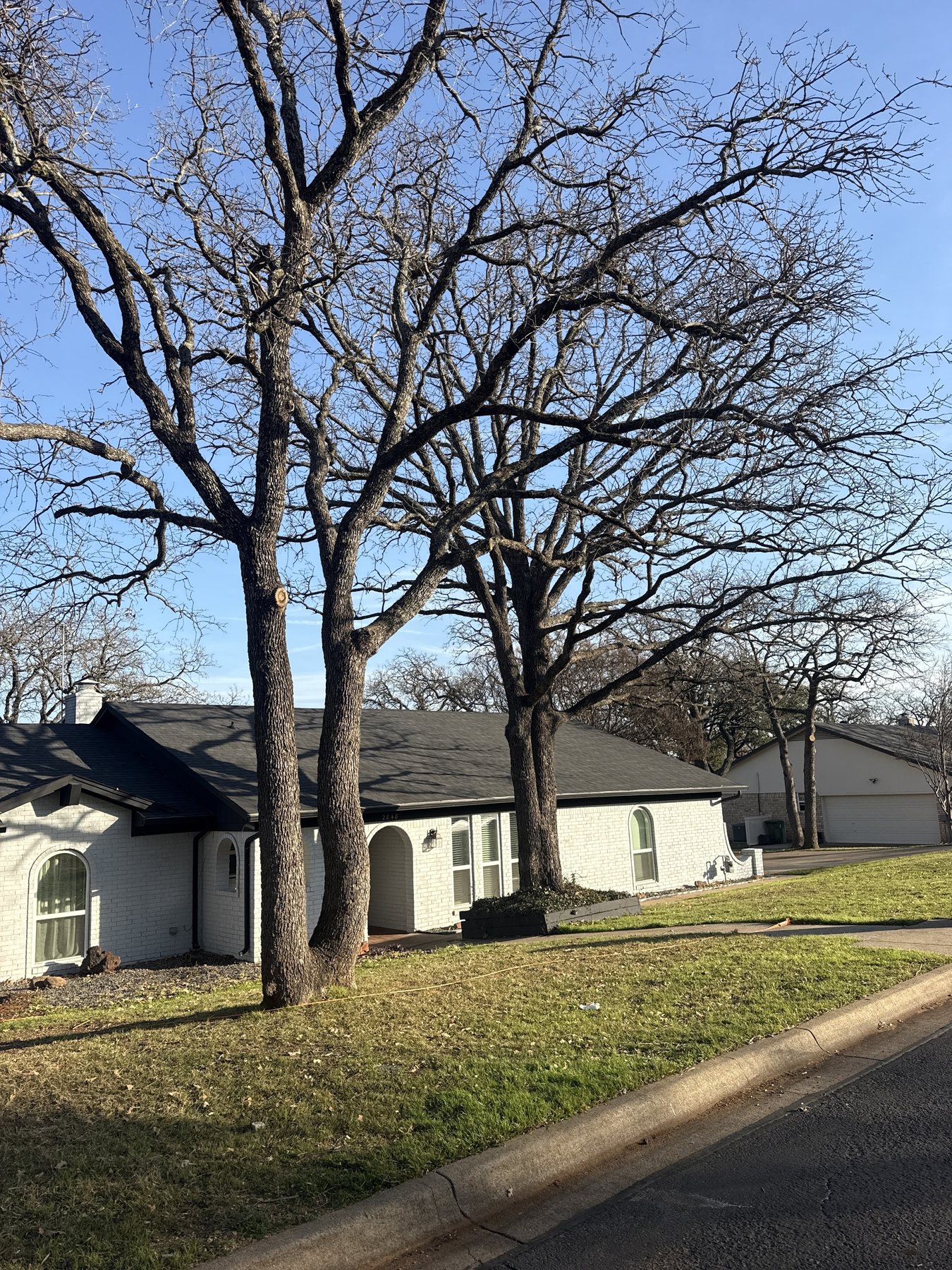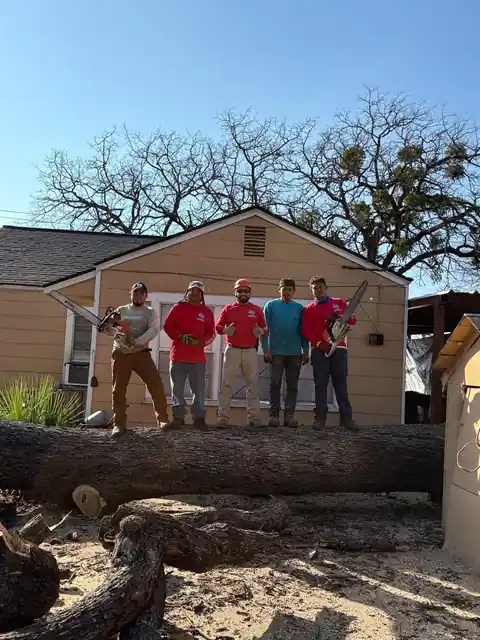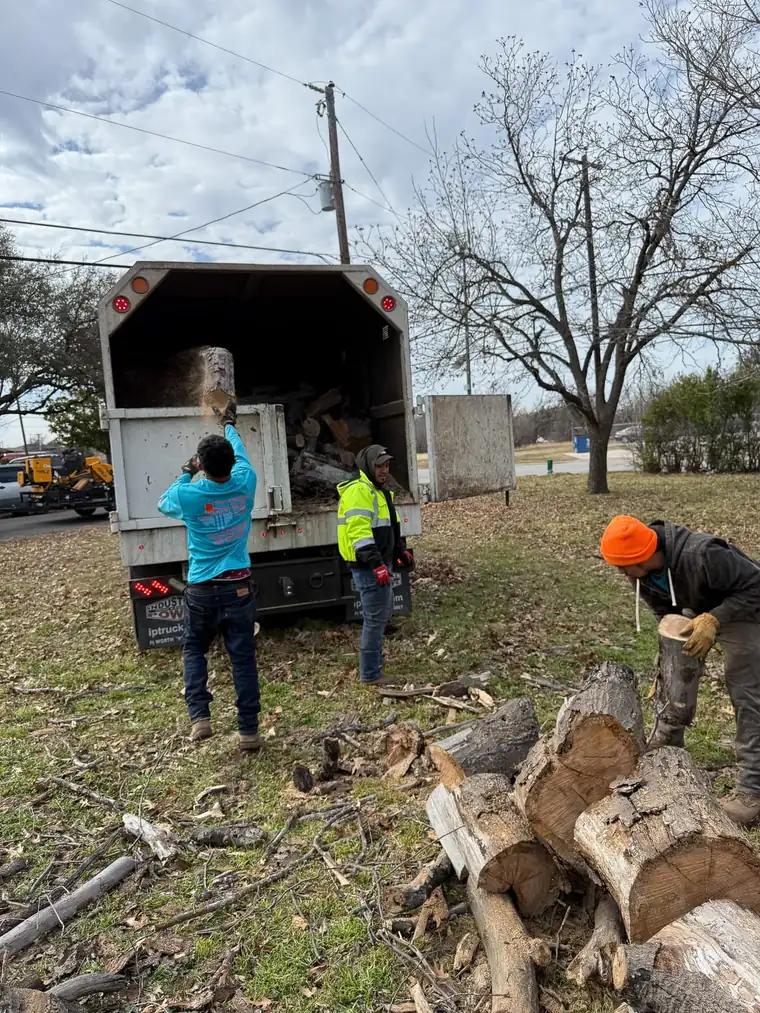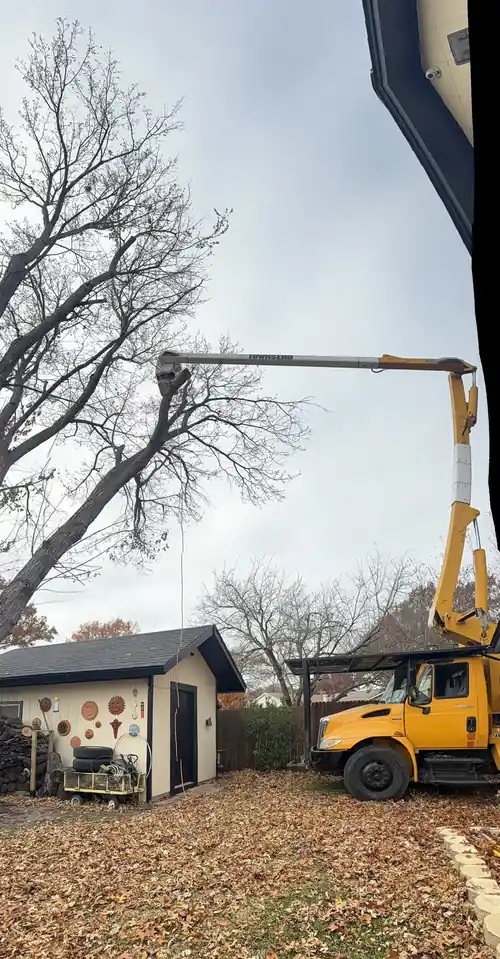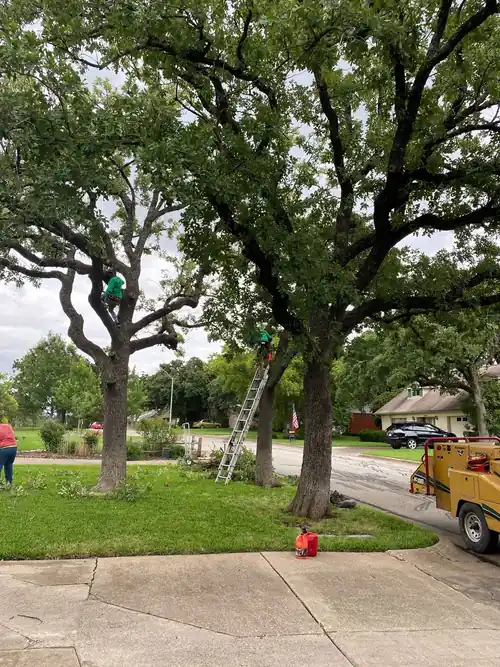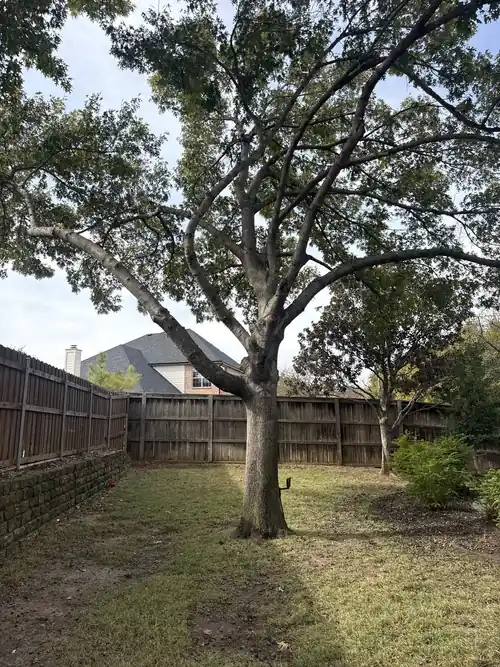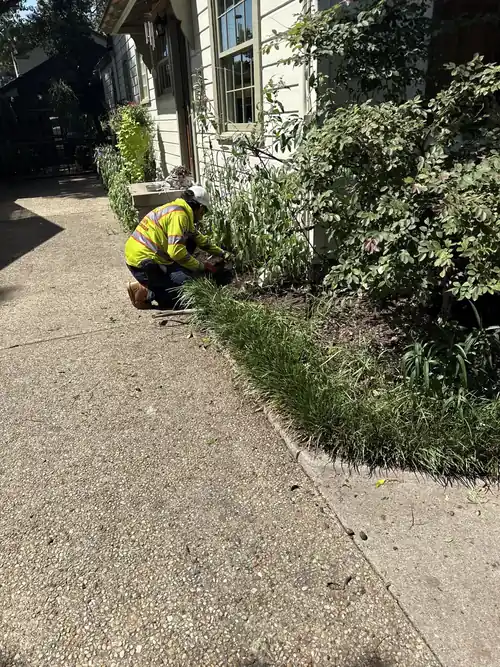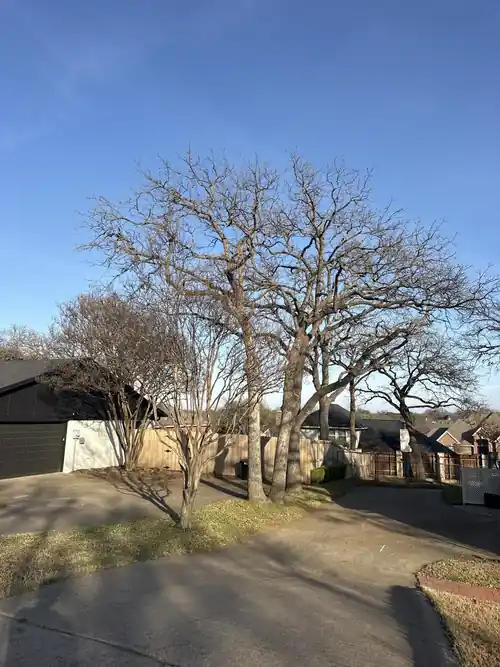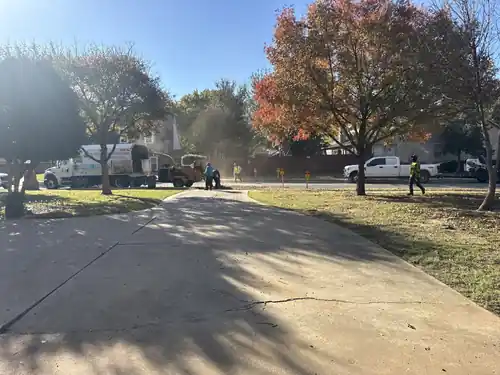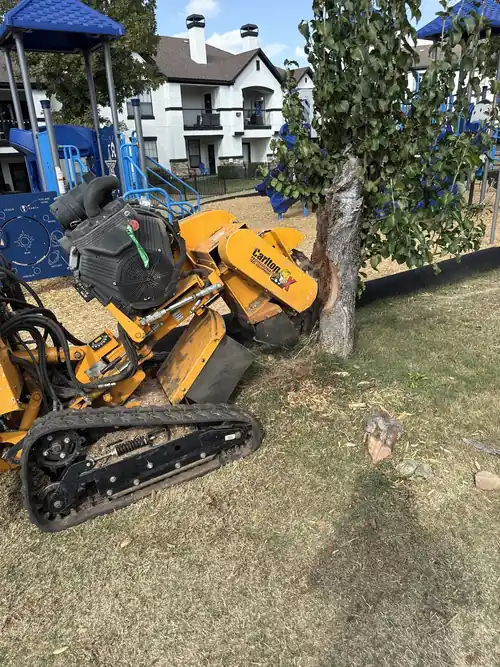
The Dallas calls we get most are removals: a dead red oak over a Lakewood pool, a storm-split cedar elm in a Lake Highlands alley easement, a hackberry heaving a Kessler Park retaining wall. What makes them Dallas jobs is the ground and the map. Blackland clay swells and shrinks hard enough to stress roots and slabs alike, the parkway strip belongs to the city and needs the City Arborist’s sign-off, and conservation districts and Neighborhood Forest Overlays add their own review in the neighborhoods most worth protecting. We price the tree and the logistics together: where the truck stages, which side the limbs come down on, and whose approval has to exist before the first cut.
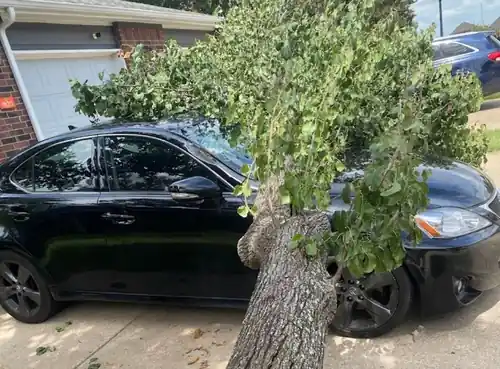
From East Dallas and the M Streets to Oak Cliff’s escarpment lots, North Dallas, and the lakeside streets around White Rock, the crew stages by alley where alleys exist and by street where they do not. Commercial properties along the Stemmons and LBJ corridors get itemized, board-ready scopes. Storm weeks are alley weeks here: the limb that blocks one Dallas garage blocks the whole block’s access, so cleared alleys get first priority the morning after.
Single-family and duplex properties under 2 acres do not need a city permit to remove trees, per Dallas City Arborist guidance. Parkway trees between the sidewalk and street are city property and need City Arborist approval, and commercial or development sites need a Tree Removal Application under Article X.
Official source: Dallas Development Code Article X — Landscape and Urban Forest Conservation Regulations
Ordinance details change; confirm current requirements with Dallas before scheduling a removal.
Tree and landscape review powers in Dallas rest with city overlay districts — conservation districts like Kings Highway and Greenway Parks, and Neighborhood Forest Overlays such as the one Forest Hills has organized around — rather than with most voluntary neighborhood associations.
Dallas’s urban forest counts roughly 14.7 million trees at about 29% average canopy, with live oak, cedar elm, and Shumard red oak among the leading species. Most of the city sits on Blackland Prairie expansive clay that swells wet and shrinks dry — stressing roots and foundations alike.
The City of Dallas runs an oak wilt program with a dedicated municipal forester. Do not prune oaks February 1 through June 30, and paint every oak wound immediately — red oaks can die within weeks of infection.
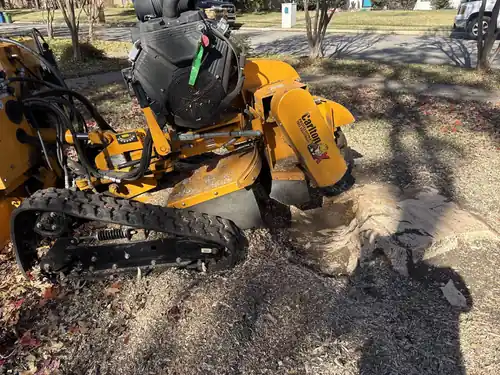
Texas Tree Tops provides tree removal, trimming, emergency tree service, stump grinding, pruning, vegetation maintenance, lot and brush clearing, and commercial tree service in Dallas.
A Dallas tree service request includes the service needed, property location, access concerns, urgency, and cleanup expectations. When local rules apply, the documented municipal source is included in removal planning.
The Dallas site review accounts for structures, fences, driveways, pools, utilities, parking, and the path used to move debris.
The Dallas estimate connects tree condition, service type, timing, equipment access, and final property needs with Dallas Development Code Article X — Landscape and Urban Forest Conservation Regulations.
Tree condition, property access, cleanup needs, and the approved estimate determine the final service scope in Dallas. Call +1 682-708-4984.
Dallas tree service coverage includes local neighborhoods and districts throughout the city. Tree removal, trimming, emergency tree service, stump grinding, pruning, and property cleanup are available across these communities. Coverage includes neighborhoods and areas like Lakewood, Lake Highlands, Kessler Park, Bluffview, Casa Linda, and Forest Hills.
Texas Tree Tops serves Dallas from its Fort Worth business address. Tree service is planned around the property location, access, timing, and requested work.
Send the service type, property location, timing, access notes, and cleanup expectations.
Request An Estimate