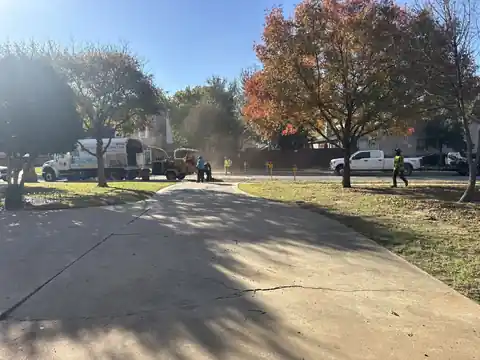
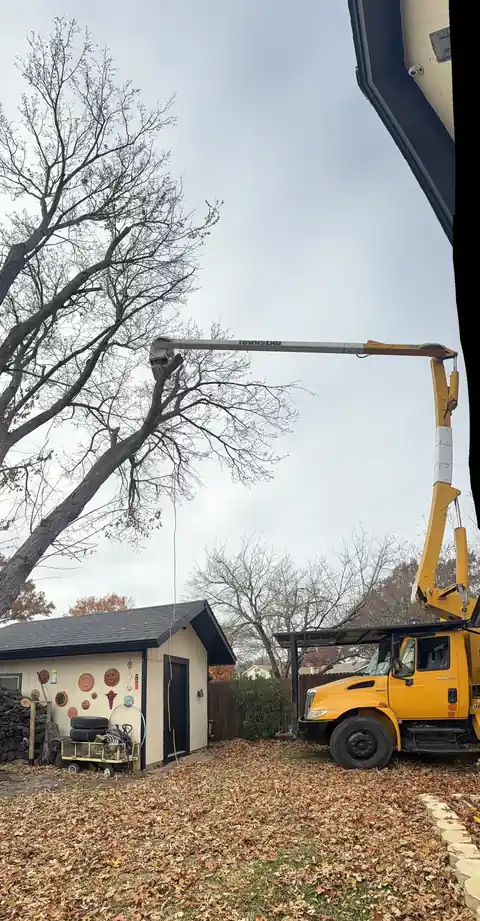
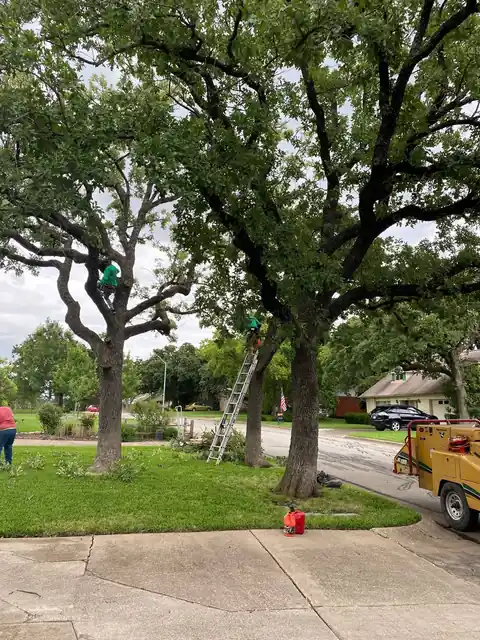
Emergency tree service in Fort Worth and across DFW
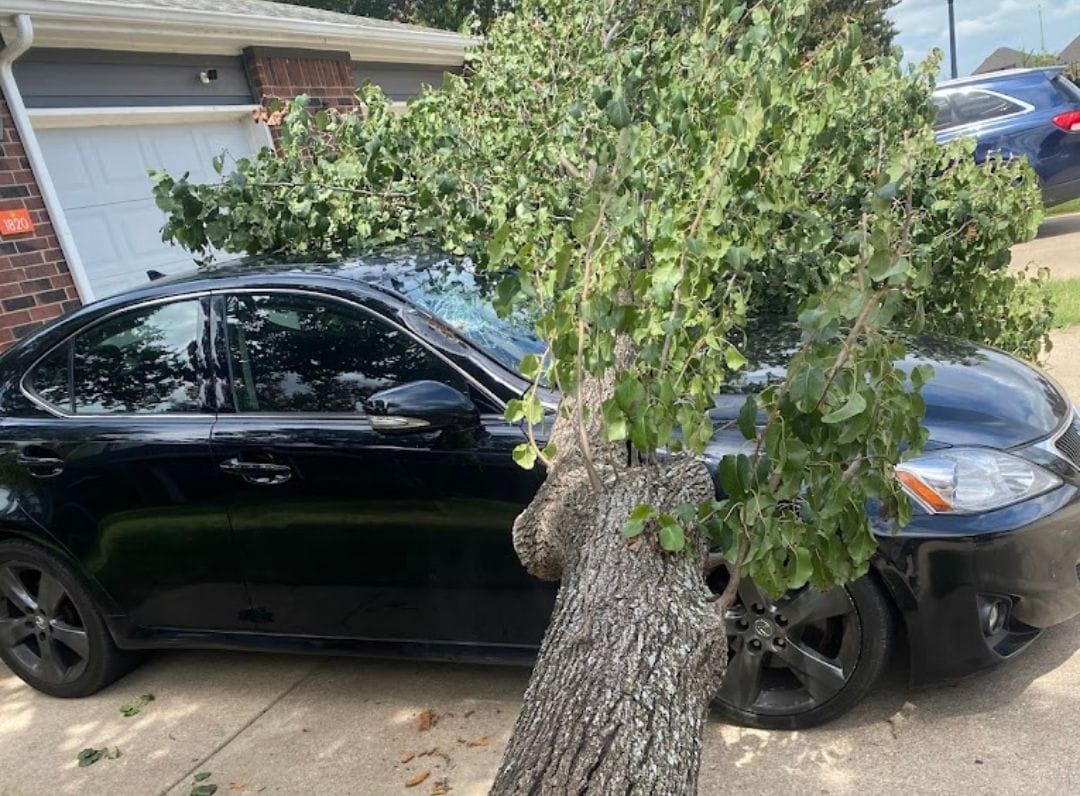
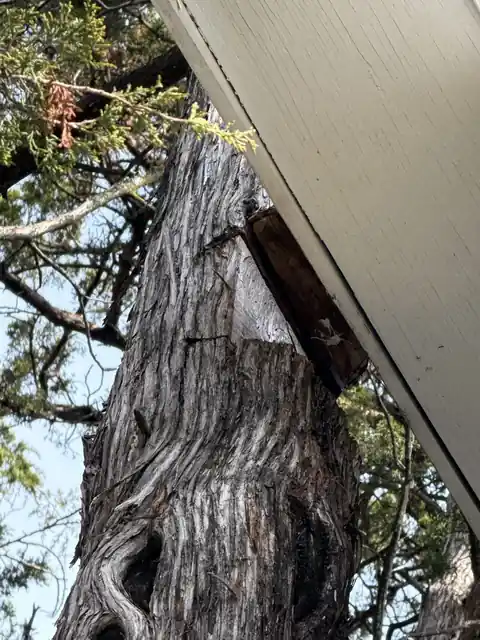
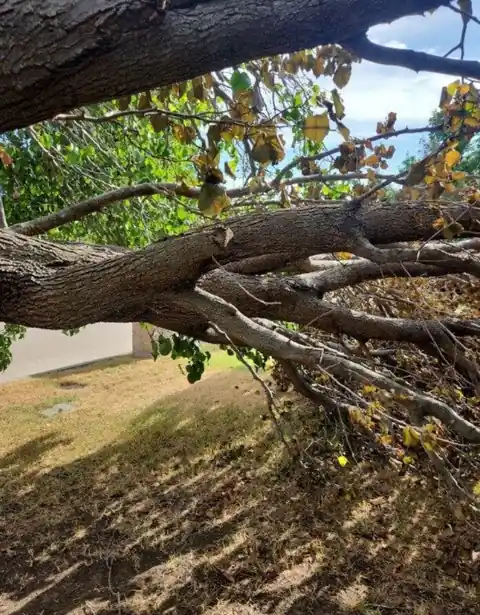
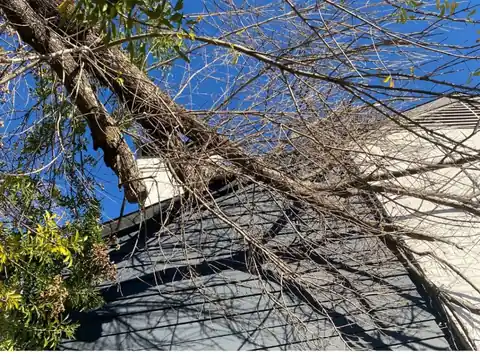
North Texas storms do their tree work all at once. A supercell rolls through, and by morning there is a trunk across the driveway, a limb through the fence, or half an oak resting on the roof decking. Emergency calls go to the front of the schedule, ahead of every routine job on the books.
The first pass makes the property safe and reachable: the load comes off the structure, the driveway opens, and anything hanging over people or parking is cut down before it chooses its own moment. Full removal, stump work, and the rest of the cleanup follow once the hazard is gone.
Storm work rewards patience in exactly one place: the camera. If a tree is on the house or the car, photograph everything before any wood moves. The insurance claim is built on what the scene looked like, and a cleaned-up yard proves nothing.
What emergency work covers
Blocked driveways and access
Follow-up removal and stumps
What you get
- Storm calls jump the queue ahead of scheduled work.
- The load lifted off the roof, fence, or car without dragging new damage behind it.
- A blocked driveway opened the same visit.
- Photos-first guidance so the cleanup never undercuts the claim.
Tree on the house, the car, or the line: the first hour
The order of operations matters more than speed. People clear of the damaged area first. Then photos of everything, from every angle, before a single cut: the tree where it lies, the crushed section of roof or hood, the room below if water is coming in. Those photos are the insurance claim.
Wires change everything. If the tree brought down a line, or is resting on the service drop to the house, nobody touches it, including us, until the utility makes it dead. In most of DFW that call is Oncor at 888-313-4747; a line actively arcing or burning is a 911 call.
Then tarp what the sky can reach, and get the load off. A trunk resting on rafters keeps working on them with every gust, so once the scene is documented and the power is safe, the right move is lifting the weight off in sections the same day.
Why storm work is priced differently
Emergency removal costs more than the same tree on a calm Tuesday, and it is worth knowing why rather than just resenting it.
A storm-thrown tree is a loaded spring. Wood under tension cuts differently than wood at rest, and a trunk on a roof has to be lifted off in pieces rather than dropped, which means rigging, more cuts, and slower work. Add that after a big front every crew in the county is booked at once, and urgent work bids like urgent work.
The honest math for a homeowner: the hazard removal that cannot wait is one job, and everything that can wait, the rest of the trunk, the stump, the debris pile, is another. Splitting them keeps the emergency bill down and puts the remainder on regular scheduling.
Storm season in North Texas
DFW gets two rounds a year: spring supercells from March through June that throw hail and straight-line wind, and the fall fronts of September and October. Search the phrase "downed tree removal" in Texas and the volume triples in September. The trees know the calendar.
Most of what storms break was breakable in advance. Deadwood, overextended limbs over the roof, and canopies that have not been thinned in years are what ends up on houses. The cheapest emergency call is the trimming appointment that happens in February instead.
After a storm, be picky about who knocks. Crews that follow storms door-to-door want cash, work fast, and are gone before the tarp leaks. Anyone cutting on your property should be able to show insurance paperwork with their company name on it.