Tree removal in Fort Worth and across DFW
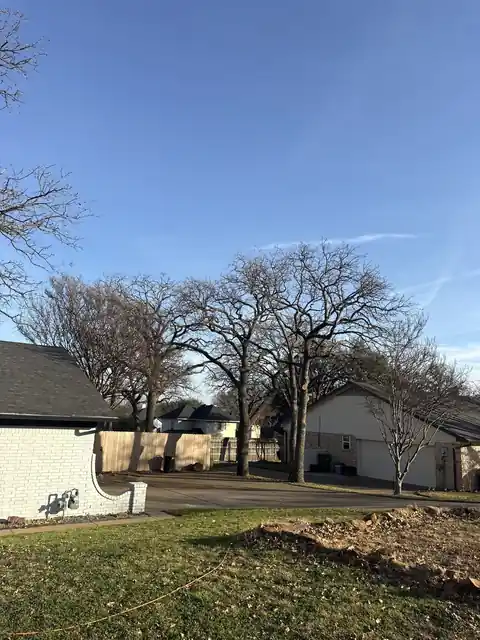
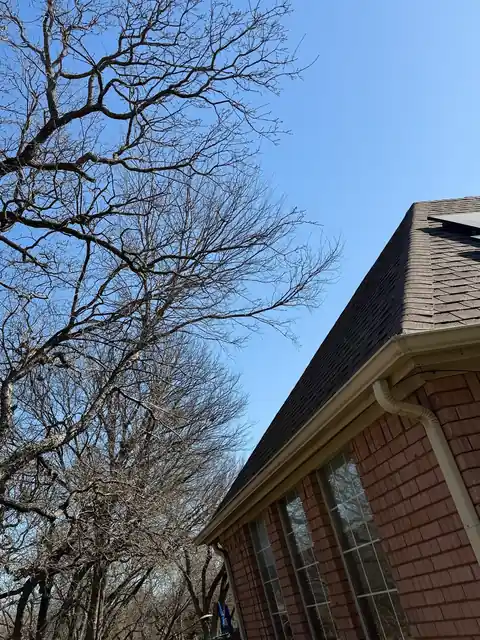
A removal call usually starts with a tree that has already made the decision. It died over the summer, it cracked in a storm, it leans a little further every wet spring, or it stands close enough to the house that every windy night costs sleep. Removal takes the problem out at the trunk instead of managing it limb by limb.
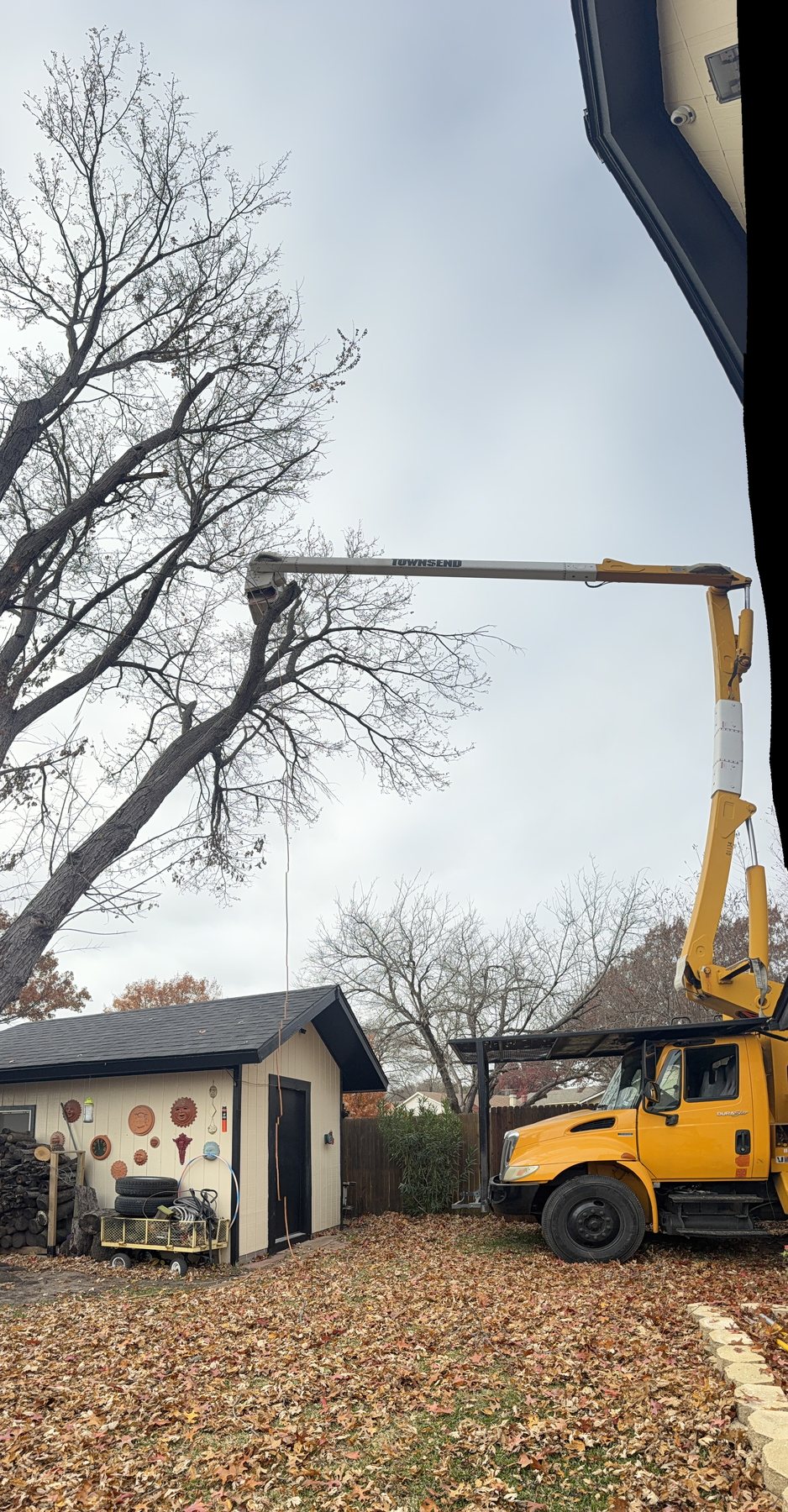
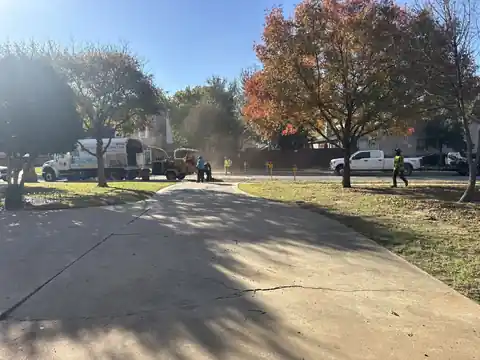
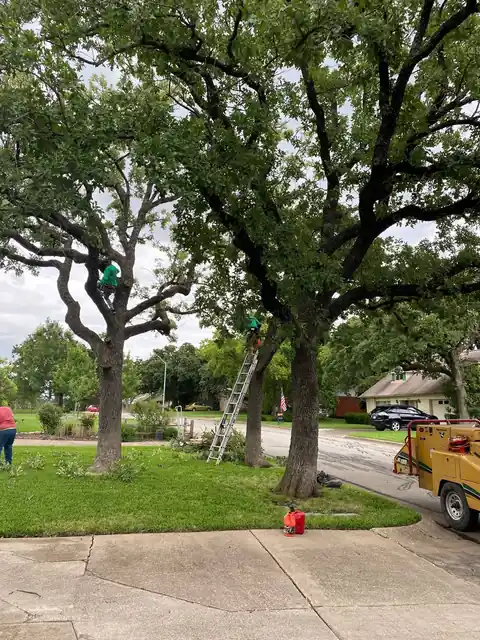
The work is a controlled take-down, not a felling. In a Fort Worth yard there is almost never room to drop a tree whole, so it comes down in sections. Limbs are roped and lowered past whatever sits beneath them, the trunk is cut down in pieces, and the wood is staged where the truck and chipper can reach it.
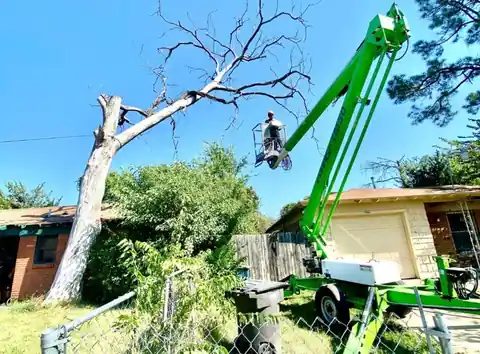
Dead trees change the plan. Brittle wood does not hold a climber or a rope the way live wood does, so a tree that has stood dead for a year needs more rigging and more caution than the same tree taken down the season it died. It is the one job that gets more expensive the longer it waits.
What a removal covers
Roped and rigged lowering
Stump grinding, same visit
Why homeowners call
- The dead tree gone before a storm drops it on the fence.
- Limbs lowered on rope past the roof, the pool, and the power drop.
- The stump ground out on the same job instead of left for later.
- A yard that is usable again, not a hazard you route around.
Tree and stump removal in one visit
Half of DFW’s removal quotes stop at the trunk and leave the stump standing in the middle of the lawn. Then the stump gets its own quote, its own crew visit, and its own hole in the schedule.
We grind the stump on the same job when it’s on the estimate. The grinder takes the stump below grade along with the surface roots that anchor it, the chips backfill the hole, and the spot is ready for sod or a new planting instead of a monument to the old tree.
If you want the stump left, say so. Some stay as seating or firewood staging on rural lots. But decide it at estimate time, because mobilizing a grinder later costs more than rolling it onto the original job.
What decides the cost of removing a tree
Our house minimum is $500, and most removals land above it. That number is the floor for putting a crew, a truck, and insurance on your street. It is not an estimate for your tree.
Cost calculators and national averages miss the things that actually move a removal bid, because the tree is only half the job. The other half is what surrounds it.
A dead tree also quietly raises its own price the longer it stands. Once the wood is too brittle to climb, everything comes down on rigging or equipment, and the job grows. Storm season works the same way in reverse: after a big blow, every crew in Tarrant County is booked and urgent work bids accordingly. The slow months, December through February, are the cheapest time of year to take down a tree that can wait.
- Size and height. A 60-foot pecan is a different job than a 25-foot hackberry, on different equipment.
- What’s in the fall zone. Open yard means limbs drop free. A roof, pool, or service line underneath means every limb rides a rope.
- Condition. Live wood holds a climber; brittle dead wood means rigging from outside the tree.
- Access. If the chipper backs up to the trunk, it’s a short day. If every log leaves through a 36-inch gate, it isn’t.
- The stump and the wood. Grinding, hauling, or leaving each changes the number.
Dead, dying, and dangerous trees
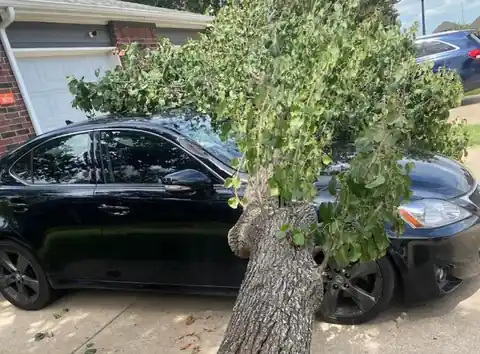
A dead tree in North Texas rarely falls all at once. It sheds: bark first, then the small limbs, then the big structural wood, usually onto whatever the wind points it at. By the time fungus shows at the base or woodpeckers work the trunk, the wood inside has already changed.
The signs that move a tree from watch-it to remove-it: no leaf-out on half the canopy or more, bark sloughing off in sheets, mushrooms or conks at the root flare, a fresh lean or lifted soil on one side after rain, and limbs the size of your leg dropping without weather.
Large removals near structures are where the crew earns the bid. The cut order, the rigging points, and where each section lands are planned before the saw starts, and the biggest trunks come down in pieces small enough that nothing lands harder than the ground can take.
Do you need a permit to remove a tree in Fort Worth?
Sometimes, yes, even on your own lot. Fort Worth’s urban forestry rules (city code § 6.302, updated in 2025) route tree removal through a permit, with an exemption that covers most single-family homes: a one- or two-family lot of an acre or less. Dead, dying, and hazardous trees have their own removal process, and the city asks for photos documenting the condition.
Two cases catch homeowners out. A tree in the parkway strip between sidewalk and street is in the city right-of-way and belongs to the City Forester, not to you, no matter who waters it. And clearing multiple trees, or working on a larger or commercial property, puts the job squarely under the permit requirement, with penalties that scale with trunk size for cutting first and asking later.
We flag permit questions during the estimate. If the tree needs city paperwork before it can come down, you’ll know before anyone is holding a saw.