Tree trimming in Fort Worth and across DFW
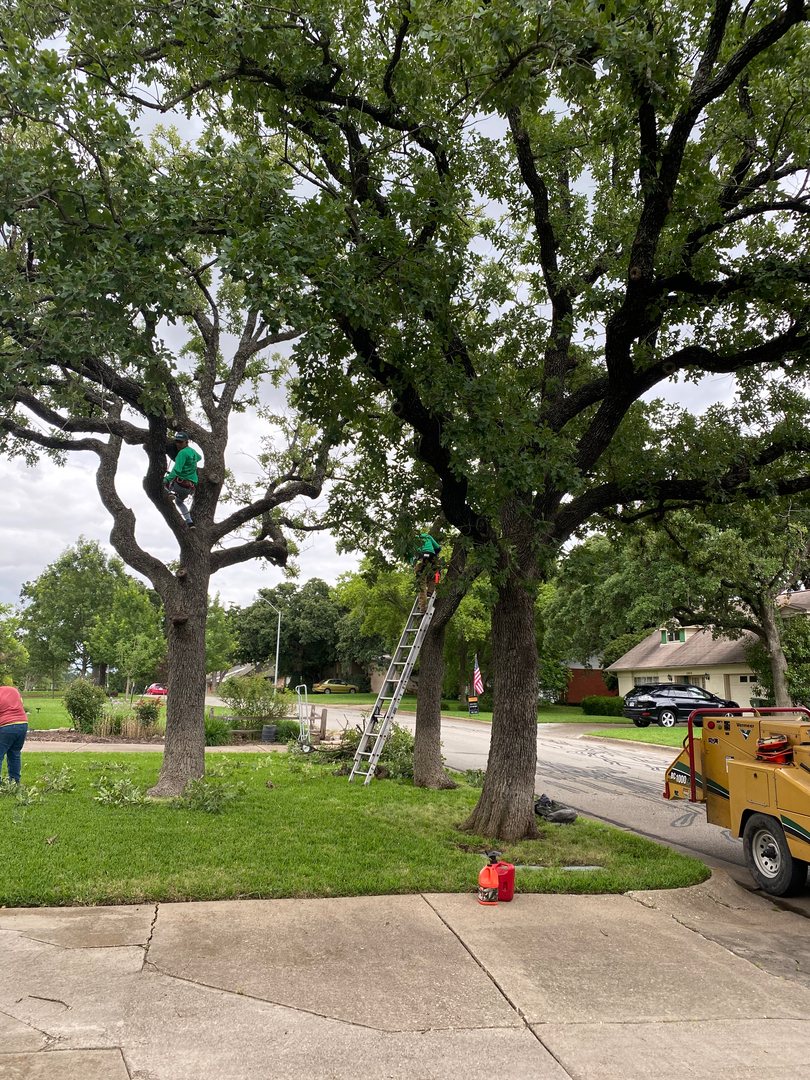
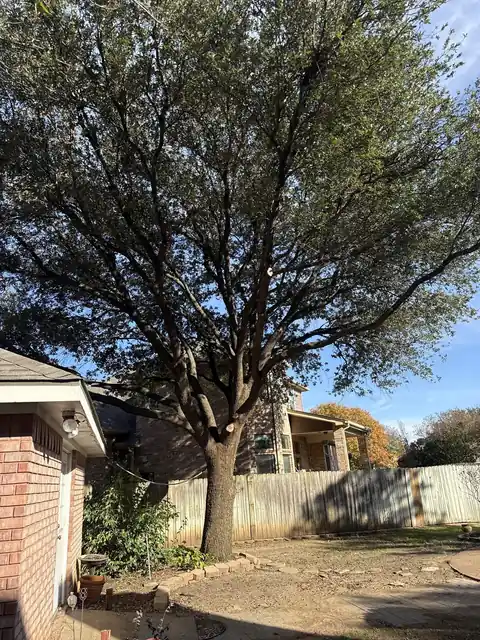
Most trimming calls start the same way. A limb is resting on the roof, a branch blocks the driveway, or the canopy has closed in until nothing under it grows anymore. Trimming solves clearance and shape problems without taking the tree.
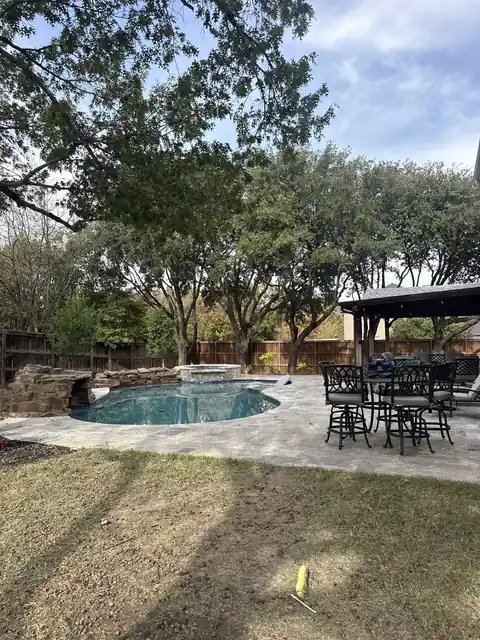
We cut with the rest of the property in view. Rooflines, gutters, walkways, driveways, fence lines, pool decks, and whatever is planted underneath all change where a limb can come down. Oak and crepe myrtle each want a different approach, and so does everything else that grows in a North Texas yard.
Timing matters more than most people expect. Cuts on oaks between February and June open the tree to oak wilt, so oak work belongs in dormancy whenever the schedule allows. Storm damage and clear hazards are the exception. Those get handled when they happen.
What trimming usually covers
Canopy thinning and reduction
Roof and structure clearance
Oak trimming, dormant season
Why homeowners call
- Limbs off the roof, out of the gutters, and clear of the fence line.
- Deadwood on the ground before the next storm puts it there.
- Oak cuts timed to dormancy so the work does not invite oak wilt.
- Light back into a yard the canopy had closed over.
When to trim oak trees in North Texas
Oak wilt is the reason oak trimming runs on a calendar. The fungus travels on beetles that are drawn to fresh wounds, and those beetles are at their busiest from February through June. A cut opened in that window is an invitation.
So oaks get trimmed in the cold months where the schedule allows. November through January is the safest window in North Texas. July through October works as a fallback, once beetle activity has dropped off. Live oaks and red oaks are the most vulnerable. Post oaks hold up better but follow the same rule.
Storm damage does not wait for a calendar. A cracked or hanging limb gets cut when it happens, and the wound should be painted immediately. Oak wounds during beetle season are the one case where wound sealer genuinely earns its place.
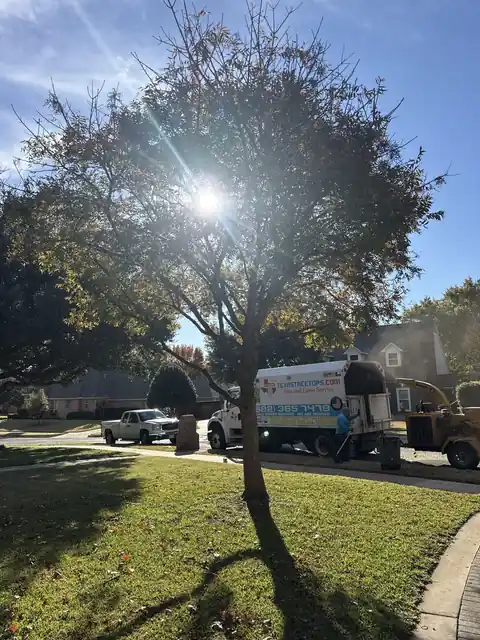
Crepe myrtle trimming without the crepe murder
Crepe myrtles get topped all over North Texas every winter, cut back to knuckled stubs because that is how it was done last year. The tree survives it. It just spends the spring pushing thin whippy shoots out of the wound instead of building the frame it already had.
Real crepe myrtle pruning takes out crossing branches, the suckers at the base, and last season’s seed heads, then opens the middle so light and air move through. The trunk shape stays. Late winter, before bud break, is the window.
What changes the price of a trimming job
Trimming is priced off the work the tree actually needs, not a flat rate per tree. A handful of things move the number more than anything else.
- Size and height. A 20-foot ornamental and a 60-foot live oak are different jobs on different equipment.
- Access. If a truck and chipper can back up to the tree, it is a short day. If every limb comes out through a side gate by hand, it is not.
- What sits underneath. Roofs, fences, pools, and power lines mean limbs get lowered on rope instead of dropped.
- How much comes off. A clearance cut over a driveway is not the same job as reducing a whole canopy.
- Debris. Hauling everything away costs more than cutting the wood down and stacking it on site.