Tree health help in Fort Worth and across DFW
The call usually starts the same way: something about the tree looks wrong. Half a canopy that never leafed out. Leaves browning in June. Mushrooms at the base, bark going loose, a limb down without wind. The question behind all of it is whether the tree is sick, stressed, or already gone, because those are three different bills.
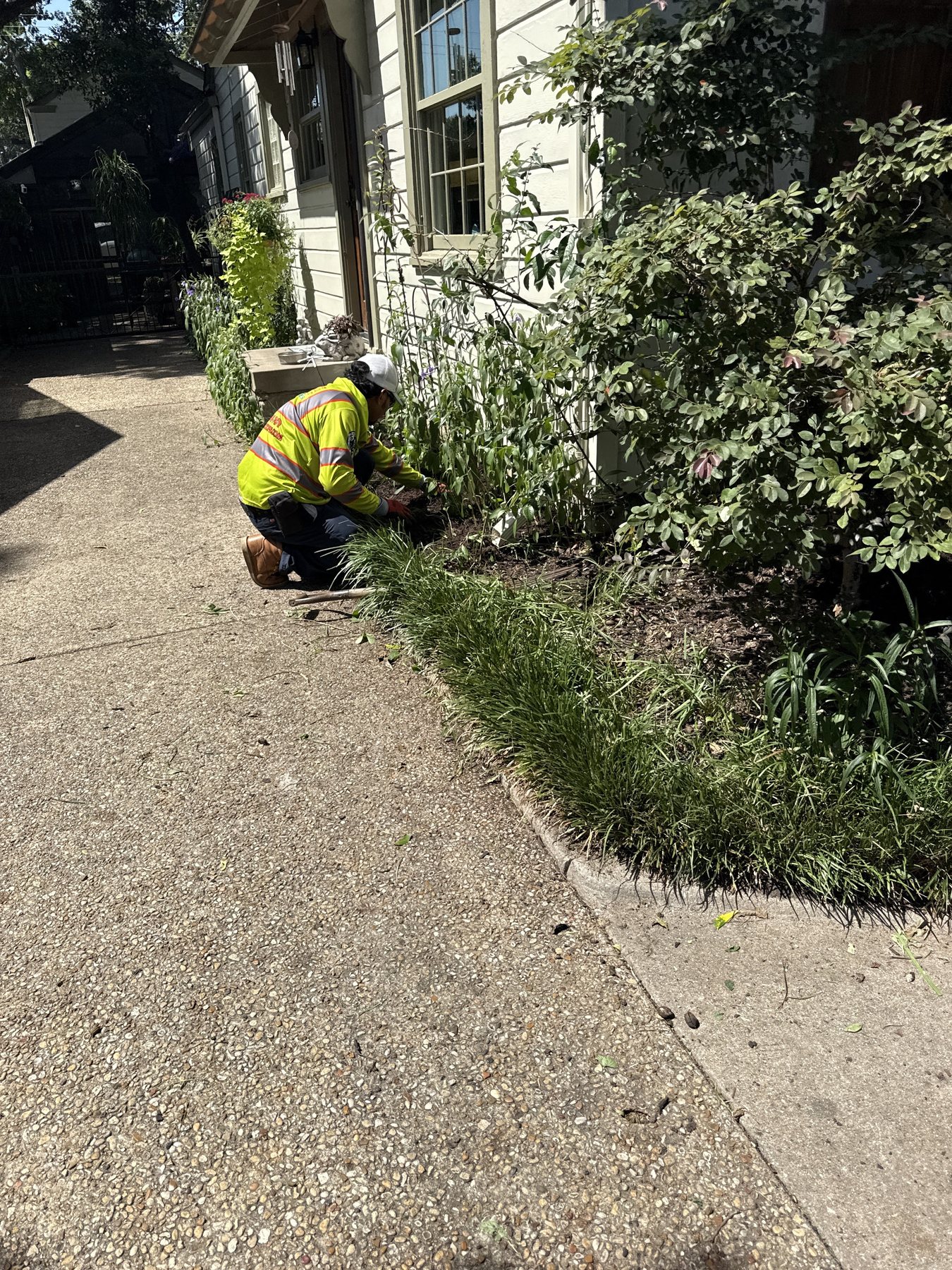
What we bring is field judgment: crews that work DFW trees all year and know what post oak decline, drought scorch, and oak wilt each look like on the species in these neighborhoods. We walk the tree, tell you what we see, and say which next step the evidence supports: prune it, treat the site, take it down, or leave it alone and look again in a season.
What we do not sell is a credential. When an HOA, an insurance claim, or a city permit requires a formal written report from a credentialed arborist, that is its own scope from a specialist, and we will say so instead of dressing an estimate up as one.
What a health visit covers
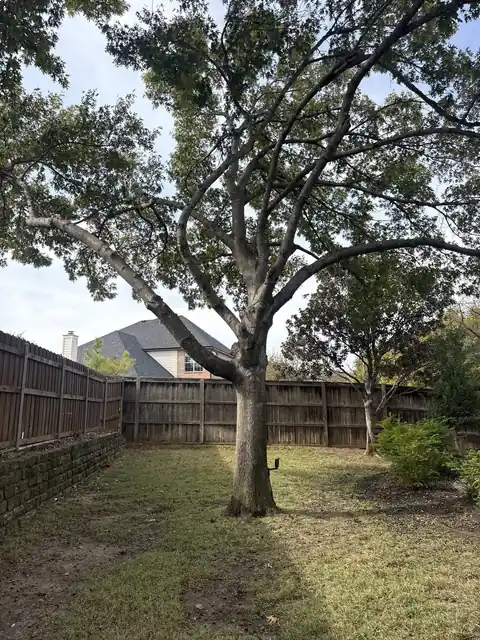
On-site tree condition review
Species and symptom identification
Prune, treat, remove, or wait: a call
Site and root zone review
What the visit settles
- A straight answer on sick, stressed, or dead, before money gets spent.
- North Texas pattern recognition: oak wilt, post oak decline, drought scorch.
- The next step and the crew in one call when the tree needs work.
- Told honestly when a formal report or a specialist is the right move.
Is the tree dying, or just having a Texas summer?
August in DFW makes healthy trees look sick. Leaf scorch, browned edges on a canopy that is otherwise full, is a water story, not a death sentence, and it shows up on ornamentals and red oaks every dry year. The tree that drops some interior leaves in a drought is triaging itself, which is normal.
The signs that earn a closer look are different: one whole section of canopy bare while the rest leafed out, bark cracking or sloughing in sheets, mushrooms or conks at the root flare, sawdust trails or exit holes in the trunk, and limbs dropping green in still air. Those are structural and biological problems, and they do not fix themselves.
The DFW-specific pattern worth knowing is post oak decline. Post oaks tolerate almost anything except change: a new driveway, a trenched utility line, fill soil over the roots, or a sprinkler system where there was none can start a decline that takes three to five years to finish. By the time a post oak looks bad, the cause is usually years behind it, which is why the walk-around covers the yard’s history, not just the tree.
Oak wilt: spotting it, and what treatment actually involves
Oak wilt is the disease DFW oak owners are right to fear. On live oaks the tell is veinal necrosis: leaves whose veins turn yellow then brown while the rest of the blade stays green, dropping while half-alive. Red oaks skip the warning and simply die, crown down, in a matter of weeks, usually in late spring or summer. Live oaks spread it to each other underground through grafted roots, which is how one infection walks down a street of them.
Real treatment is narrower than the internet suggests. Trenching between infected and healthy live oaks severs the root grafts the fungus travels through. Fungicide injection with propiconazole, done by specialists, can protect high-value trees near an infection center; it is prevention and suppression, not a cure for a tree already browning. And infected red oaks come down before the fungal mats that feed the beetles can form, with the wood chipped, burned, or buried, never stacked as firewood by the fence.
Where we fit: knowing what oak wilt looks like on a Fort Worth street, telling you whether your tree’s pattern matches it, handling the removals and the oak-safe pruning calendar, and pointing you to injection specialists when a tree is worth that fight. What no one should sell you is a trim for a disease problem.
When you need an arborist, a report, or a crew
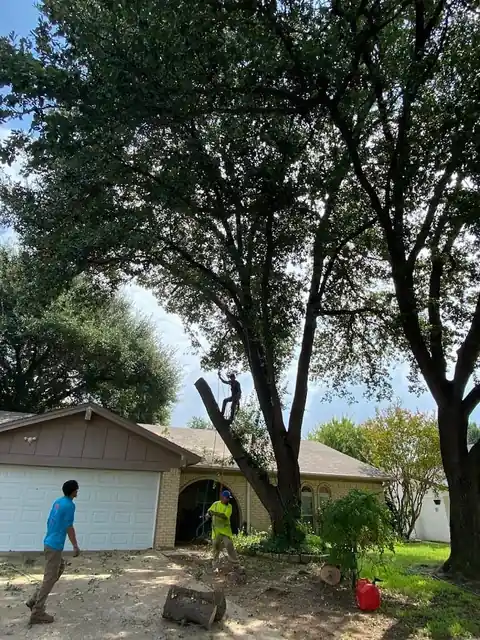
Most tree problems need one of three things, and they cost very different amounts. A crew handles the visible work: deadwood out, storm damage cleared, a failing tree down before it chooses its own schedule. Field-level health guidance, the kind this page describes, rides along free with that work and answers the is-it-worth-saving question honestly.
A formal written assessment from a credentialed arborist is the third thing, and it exists for paperwork with stakes: an HOA demanding proof before a removal, an insurance claim that needs cause documented, a Fort Worth permit case, a dispute with a neighbor or builder. That document has to come from a specialist whose signature carries weight, and it is worth its fee exactly when someone official will read it.
The trap is paying report prices for crew questions, or trusting crew answers where a report was required. Say what the answer is for, an HOA letter or your own peace of mind, and you will get pointed at the right one of the three.
The North Texas problem list
Most of what goes wrong with DFW trees is a short, local list. Drought stress and its opposite, over-watered clay. Iron chlorosis on pin oaks planted into alkaline soil they were never suited for, leaves gone yellow-green with dark veins. Webworms tenting the pecans by August, ugly but survivable; bagworms stripping cedars and cypress, less so if ignored. Storm wounds that seal or rot depending on how they were cut. Construction damage cashing out years late.
The reason a local read matters is that the same symptom points different directions on different species. Thin canopy on a hackberry is a Tuesday; thin canopy on a live oak in an oak wilt county is a phone call. Yellow leaves on a pin oak are soil chemistry; yellow leaves dropping off a live oak vein-first in June are not. Species plus symptom plus street is the diagnosis, and that third input is the one a search result cannot give you.