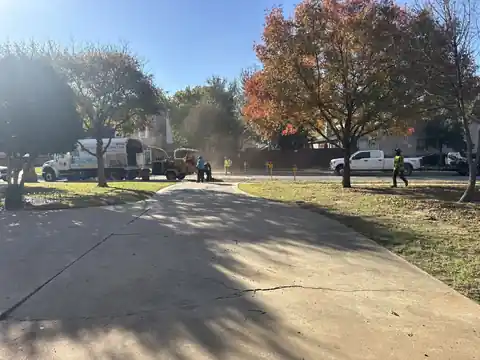
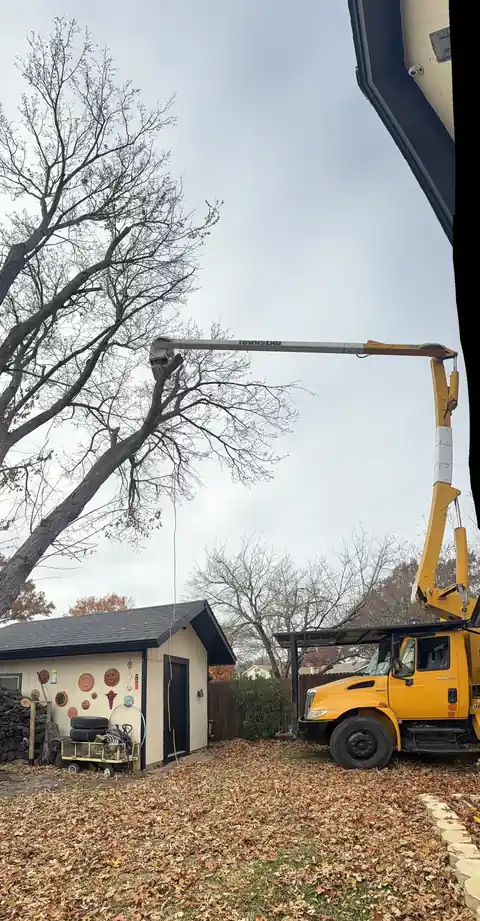
Tree pruning in Fort Worth and across DFW
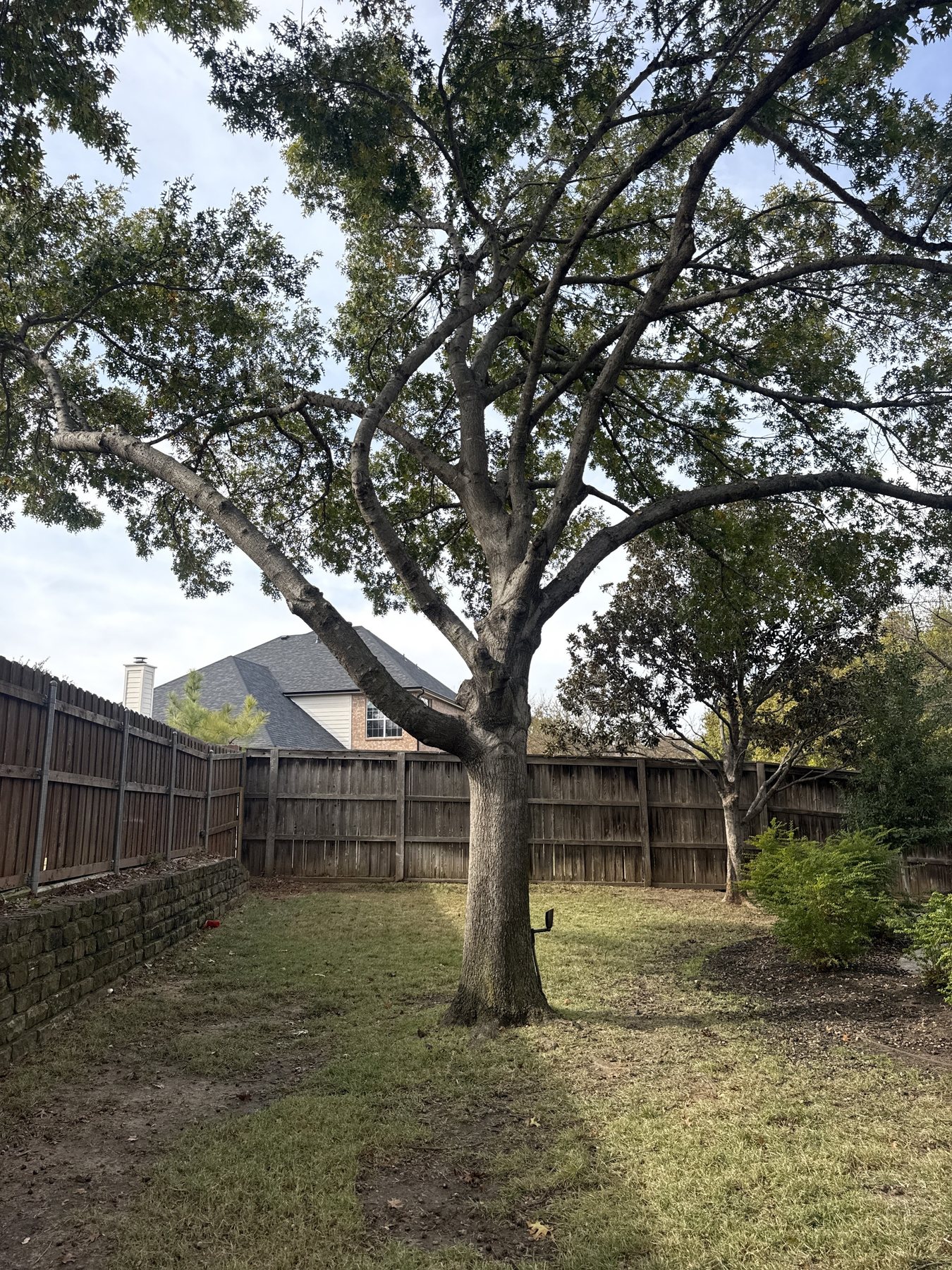
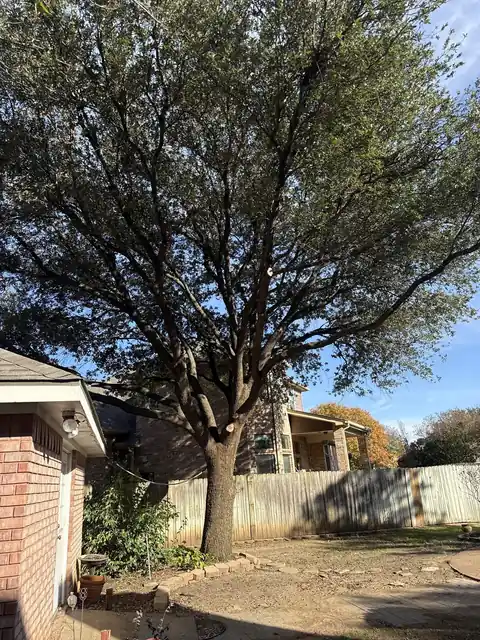
Pruning is the version of tree work where every cut has a reason. Deadwood that will drop on its own schedule, a double leader that will split in a storm ten years from now, limbs rubbing bark off each other, growth headed into the roof line. The saw follows the tree’s structure, not a hedge-trimmer silhouette.
Every cut lands just outside the branch collar, the swollen ring where limb meets trunk, because that is the only place a tree can seal a wound. Heavy limbs come off in three cuts so the falling weight cannot strip bark down the trunk. And nothing gets topped: cutting a canopy back to stubs is how you turn one strong limb into five weak ones.
In North Texas, the calendar is part of the craft. Most structural pruning belongs in the dormant window, roughly January and February, and oaks carry their own hard rule from oak wilt season. When you ask for pruning, the first answer you get is often a date, not a price.
What a pruning visit covers
Structural and formative pruning
Weight reduction on long limbs
Crossing and rubbing limb cuts
Oak-safe seasonal scheduling
Wound paint on every oak cut
What good cuts buy the tree
- Deadwood down on your schedule instead of the wind’s.
- Structural cuts young trees bank for decades: one leader, sound spacing.
- Weight off over-extended limbs before a storm tests them.
- Cuts at the collar that seal, not stubs and tears that rot.
Oak tree pruning and the oak wilt window
Oak wilt is the reason oak pruning in Texas has a calendar. The fungus that causes it kills live oaks and red oaks by the neighborhood, and it spreads in spring: sap-feeding beetles carry spores from infected wood to fresh cuts, and a pruning wound in the wrong month is an open door. Red oaks die within weeks of infection; live oaks pass it root to root down a whole street.
So the rule we work by, the same one the Texas A&M Forest Service teaches: no oak pruning from February through June, and every oak cut painted the same hour it is made, in any month. Wound paint matters only on oaks, and on oaks it is not optional.
The safe windows are July through January. Storm breaks are the exception: a snapped oak limb cannot wait five months, so the break gets a clean cut and immediate paint whatever the date. If a crew offers to prune your live oak in April and never mentions any of this, that is the estimate to decline.
When to prune what in North Texas
The dormant season, roughly January and February, is the workhorse window: shade trees take structural pruning best when the sap is down and the branch map is visible without leaves. Summer takes the light work. Anything dead, broken, or in the way can go year round.
A word on crape myrtles, because February in DFW is chainsaw season for them: cutting every stem back to knuckle-height stubs is topping, and it trades the tree’s natural form for a fist of weak whips that flop when they bloom. A crape myrtle needs suckers cleared, crossing stems out, and seed heads off. If someone offers to “cut it way back”, they are describing the wrong service.
- Shade trees (oak rules aside): January-February for structure, deadwood any time.
- Oaks: July through January only. Every cut painted.
- Crape myrtles: late winter, thinning cuts, never topped.
- Spring bloomers like redbuds and ornamental pears: right after they finish blooming.
- Fruit trees: late winter before bud break, opening the center for light.
- Storm damage: immediately, whatever the month.
Pruning or trimming: which one are you asking for?
Same saws, different job. Trimming serves the property: clearance off the roof, the driveway opened up, the silhouette cleaned for the street. Pruning serves the tree: deadwood out, structure corrected, weight reduced, damage cut back to sound wood. On a young tree, pruning is an investment; two visits in its first decade decide the branch structure the tree keeps for fifty years.
The distinction matters because the failure modes differ. A bad trim looks bad for a season and grows out. Bad pruning, topped leaders and flush cuts into the trunk, writes rot into the tree permanently. It is also why we quote them differently: a trim is scoped by what is in the way, a pruning by what the tree needs.
If what you want is the view back and limbs off the gutters, that is our tree trimming service. If the tree is dropping branches, growing double leaders, or recovering from a storm, you are on the right page.
What decides tree pruning cost
Pruning is priced by what the work actually takes, and four things move the number more than anything else.
The cheap version of this service exists, and it is expensive. A topping crew is fast because they cut everything at whatever height the saw reaches: no collar cuts, no species calendar, no judgment. The regrowth is weak, the wounds do not seal, and the correction work costs more than doing it right the first time would have.
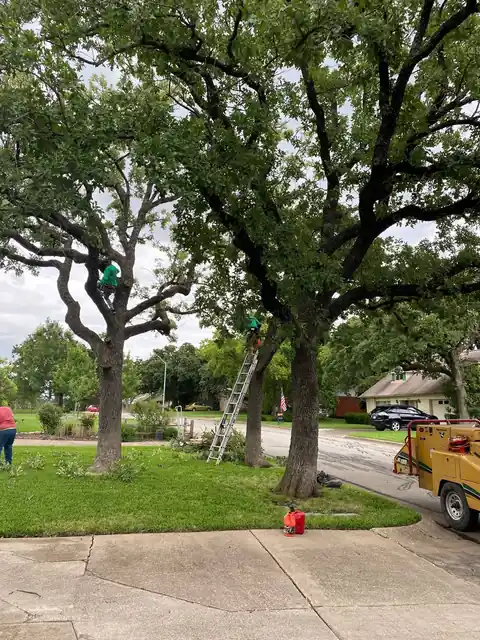
- Size and reach. A 60-foot pecan worked limb by limb from ropes is a different day than an ornamental worked from the ground.
- How much comes out. Deadwooding a healthy canopy is lighter work than correcting years of neglect or storm damage.
- What is under the tree. Cuts over a roof, pool, or fence get roped down instead of dropped.
- Count and cadence. Several trees on one visit share the setup, and a tree pruned on cycle costs less each visit than one rescued every ten years.