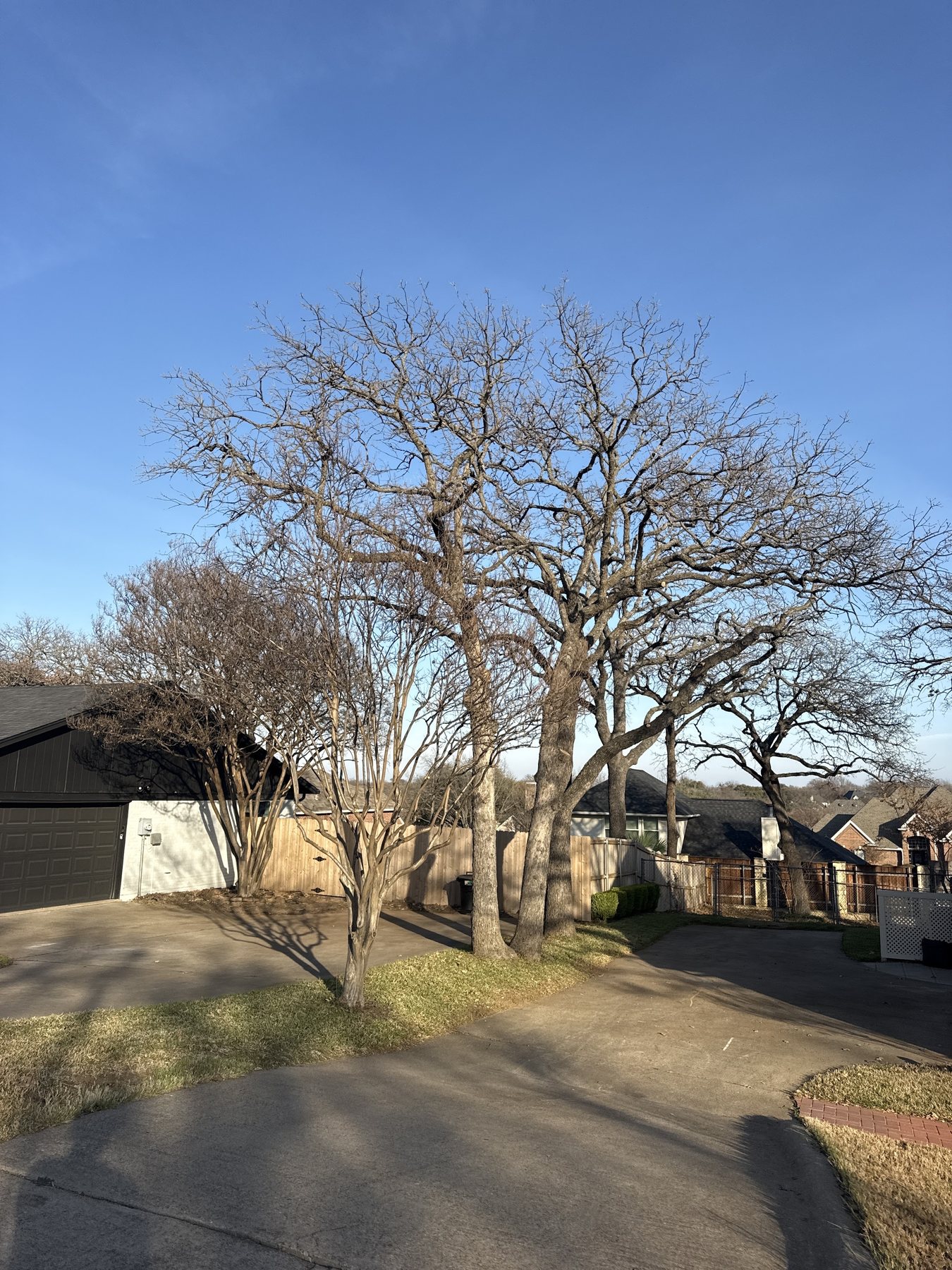
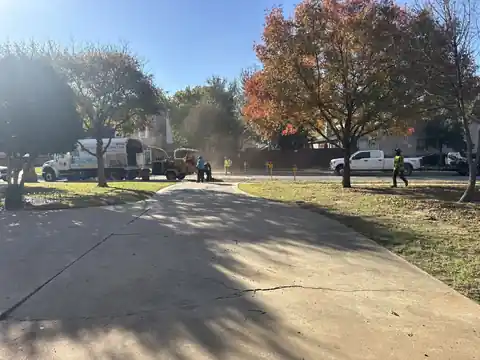
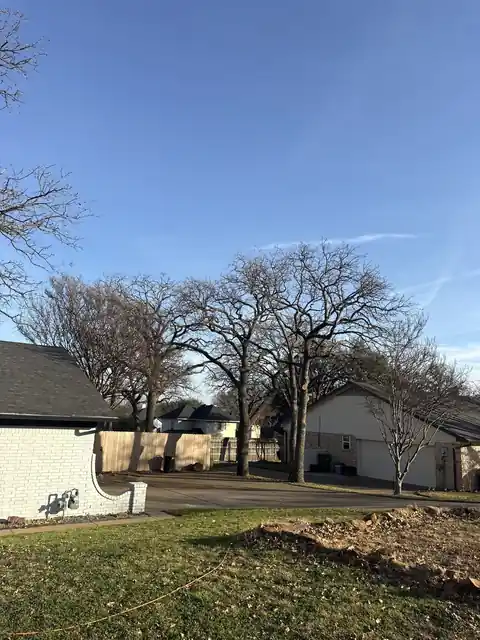
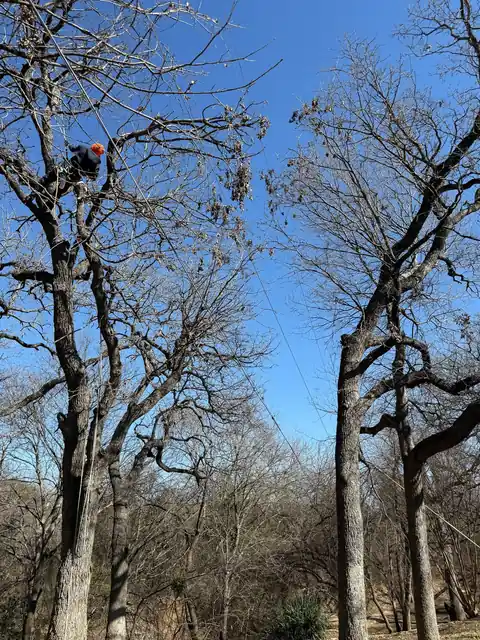
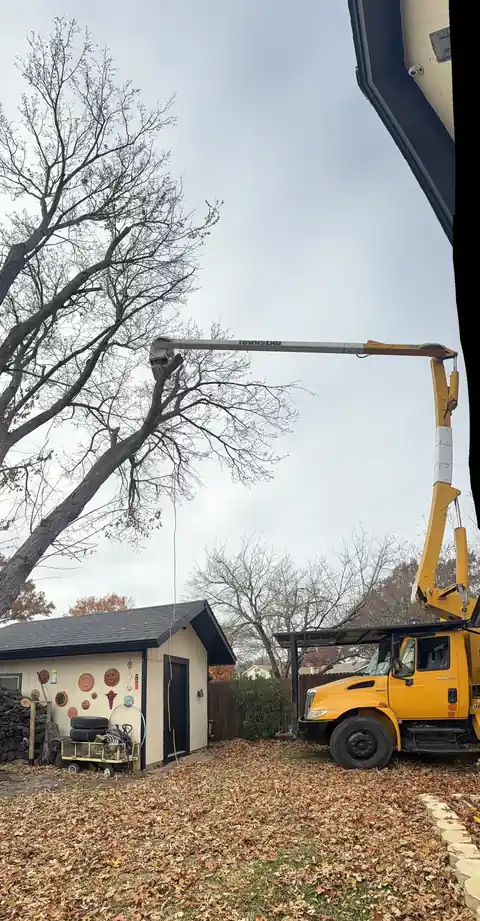
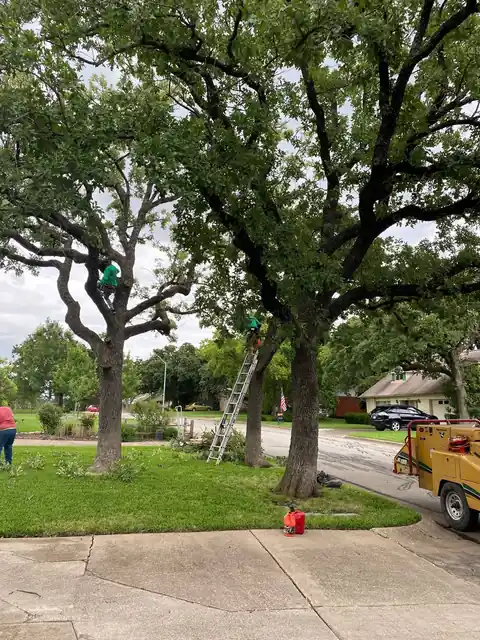
Vegetation management for Fort Worth and DFW properties
Vegetation in North Texas does not stay where you left it. Birds perch on the fence wire and seed hackberry and privet along it, mesquite pushes back from the root after every cut, and one skipped year turns a clean easement into a thicket. Maintenance is the difference between owning that cycle and being owned by it.
This is scheduled work, not a one-time cleanup. Texas Tree Tops walks the property, marks what gets cut, what gets kept, and where the regrowth pressure comes from, then returns on a cadence that keeps fence lines, drives, and shared spaces open instead of letting them close back in.
Taking an overgrown lot back to usable ground is a different job with its own page. This one is for properties that need to stay clear: homes with acreage, HOAs, churches, retail frontage, and managed sites where overgrowth becomes a complaint, a sightline problem, or a code letter.
What a maintenance visit covers
Fence line and easement clearing
Scheduled regrowth cutting
Clearance and low-limb pruning
Frontage and sightline upkeep
Debris haul-off every visit
Why properties stay on a schedule
- Fence lines, easements, and access drives stay open year round.
- Regrowth gets cut while it is still soft, before it hardens into trunk wood.
- Entrances and corners keep their sightlines instead of growing blind spots.
- One crew answers for the whole property instead of a different truck every season.
Fence line and easement clearing
Fence lines are where North Texas properties lose the fight first. Every strand of wire is a perch, every perch plants hackberry, privet, and mustang grape, and within a few seasons the fence is holding up a hedge. The wire rusts under the growth, posts heave, and the line that took a day to clear at year two takes heavy equipment at year six.
We cut fence lines back to the wire: brush out at the ground, volunteer trees removed before their trunks swallow the strand, and vines stripped off the posts. Easements and access drives get the same treatment to their full width, so a gate that has to open, opens, and a utility or drainage easement that has to pass inspection, passes.
Right-of-way clearing on private ranchettes and acreage follows the same logic: the lane a truck needs to reach the back of the property is kept drivable instead of being re-earned with a chainsaw every time it is needed.
Vegetation control that outlasts the season
Cutting brush is easy. Keeping it cut is the actual job. Mesquite and hackberry both regrow from the root, so a mow-down that leaves the root crown intact buys one season, and the second-year regrowth comes back thicker than the first cut.
Control that lasts means cutting low, taking the root ball where a species demands it, and timing the return pass for when regrowth is soft and cheap to remove. That is why this service runs on a schedule: the second visit is smaller than the first, the third is smaller than the second, and the property stops producing surprises.
Scheduled tree maintenance for homes and managed properties
For a homeowner on acreage, maintenance means the property stays the size you bought. For an HOA board, a church, or a property manager, it means the landscape line item stops generating complaints: entrances keep their sightlines, walking paths keep their headroom, and the back fence does not appear in anyone’s photos to the board.
Managed properties get one crew that already knows the site. The scope is written down, the same standard is applied on every visit, and the person who answers the phone is the same one who walked the property. When a storm drops a limb between visits, the call goes to a crew that already knows where the gate code is.
Where utility vegetation management ends and yours begins
Search vegetation management and most of what comes back is utility work: Asplundh, Davey, and the other contractors who clear transmission and distribution corridors for the power companies. That work belongs to the utility. In DFW, Oncor trims around its pole-to-pole lines on its own cycle, and no private crew should touch them.
Everything on your side of that boundary is yours: the trees leaning over the fence, the brush swallowing the easement, the limbs working toward the service drop that feeds your building. That is property-level vegetation management, it is what this service is, and when a job runs close to a live line we coordinate with the utility so the line is dead before anyone cuts near it.