• Licensed & insured
  • 4.9★ Google Rating (316 reviews)
  • Fort Worth–Based, Serving DFW
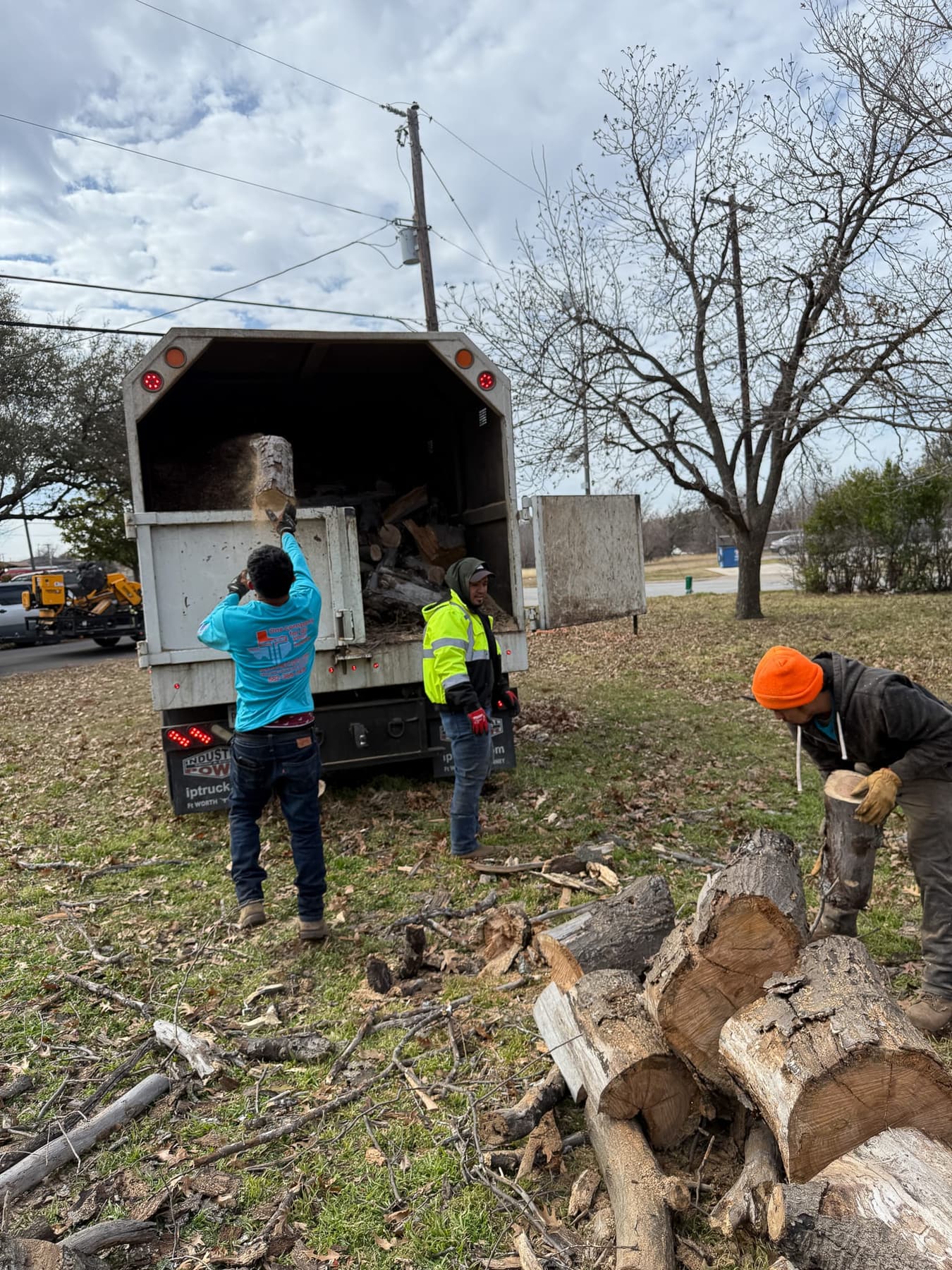
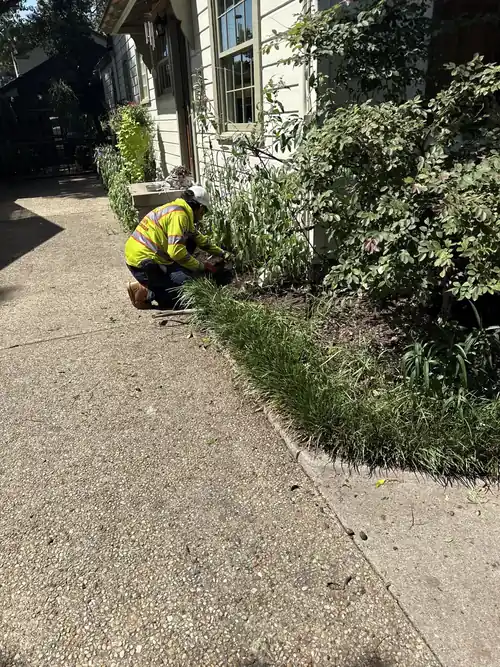
Texas Tree Tops team serving Denton tree service customers
Denton Service Area

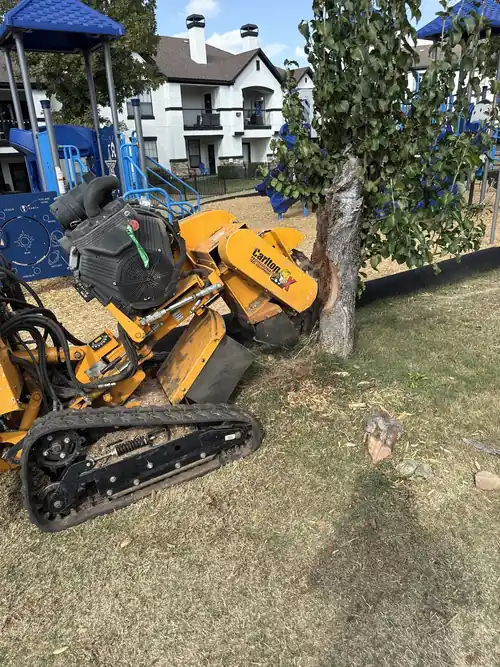
Tree Removal, Trimming, Stump Grinding, And Emergency Tree Service In Denton

Denton properties can range from established neighborhoods to growing commercial and residential areas. Texas Tree Tops helps property owners address overgrown trees, hazardous limbs, storm damage, stumps, and cleanup needs across the area.

Local Rules & Permits

Tree Removal Rules In Denton

Denton runs a full tree code with a permit system: any tree to be removed requires a tree removal permit through Building Safety, at $215 plus mitigation where applicable. Existing single-family and duplex properties are largely exempt — unless a tree is designated for preservation on a plat or tree survey — but teardowns are not: a demolition permit on the main structure brings the code back, with protected trees defined at 10 inches DBH.

  • Tree removal permit: $215 plus mitigation fees if applicable; no fee if an exemption applies
  • Existing single-family and duplex homes are exempt except for trees flagged on an approved tree survey or plat
  • Teardown-rebuilds fall under the code, with protected trees at 10 inches DBH and up
  • Landmark trees (Texas Big Tree Registry or historic designation) must be 100% preserved during development

Official source: Denton Development Code § 7.7.4 — Tree Preservation

Ordinance details change; confirm current requirements with Denton before scheduling a removal.
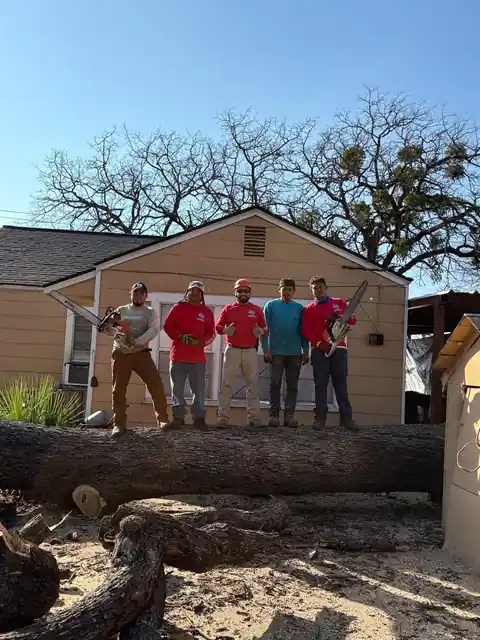
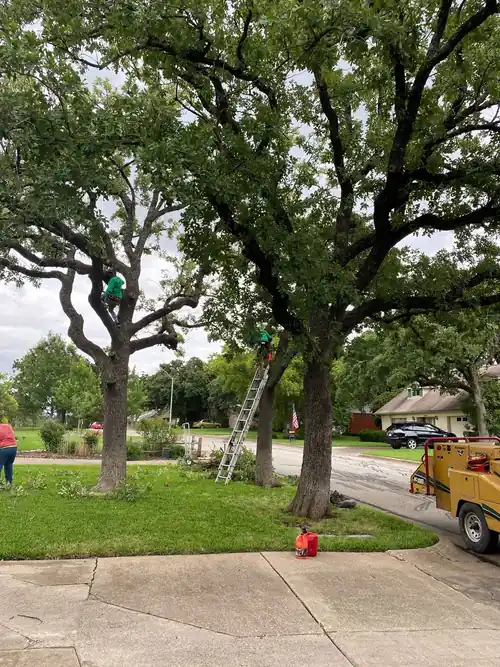
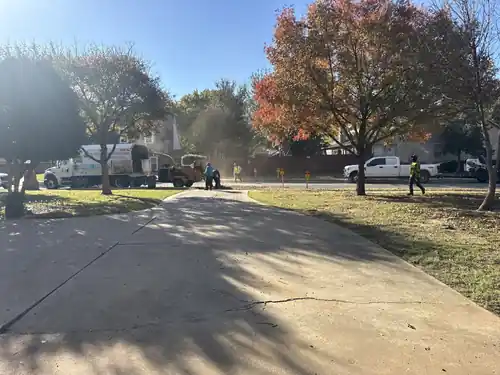
Texas Tree Tops crew working under Denton tree rules

HOA & Review Boards

Denton's binding tree rules come from the city's development code rather than HOAs — no Denton HOA with documented tree-removal rules exists. Robson Ranch, the large active-adult community in southwest Denton, carries a mandatory HOA, and the Oak-Hickory Historic District holds some of the city's oldest and largest homes.

Native Trees & Soil In Denton

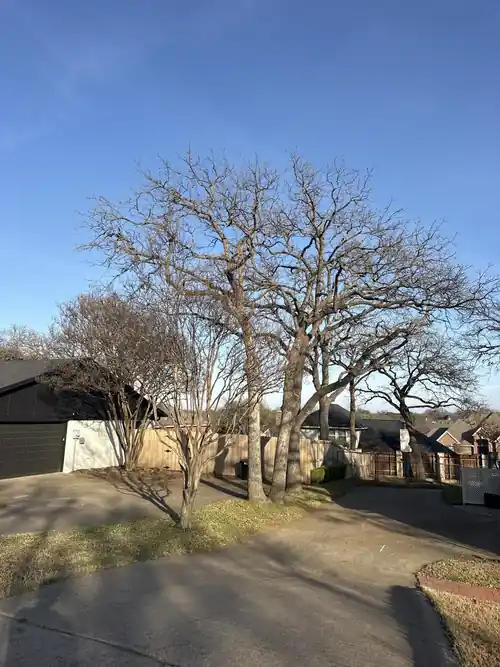
Denton sits where the Eastern Cross Timbers crosses Denton County — the ancient post oak and blackjack oak belt on sandy soils that early travelers used as a landmark. The post oak's intolerance of disturbed ground is written directly into local code: root-zone protection fencing before any permit release, no fill or excavation in driplines without a landscape-architect-designed tree well plan, and stop-work orders for damaged protection fencing.

Denton Oak Pruning Window

Oak wilt is active across North Texas — confirmed in 76 Texas counties, with a 2026 case one county over in Arlington — and moves about 75 feet a year through connected live oak roots. No oak pruning February 1 through June 30, paint every oak wound immediately in any season, and clean tools between trees.

Process

How Is Tree Service Planned In Denton?

01

Denton Service Details

A Denton tree service request includes the service needed, property location, access concerns, urgency, and cleanup expectations. When local rules apply, the documented municipal source is included in removal planning.

02

Denton Site Conditions

The Denton site review accounts for structures, fences, driveways, pools, utilities, parking, and the path used to move debris.

03

Denton Tree Work Plan

The Denton estimate connects tree condition, service type, timing, equipment access, and final property needs with Denton Development Code § 7.7.4 — Tree Preservation.

FAQ

Denton Tree Service Questions

Tree condition, property access, cleanup needs, and the approved estimate determine the final service scope in Denton. Call +1 682-708-4984.

If your home already exists and the tree is not flagged for preservation on a plat or tree survey, you are generally exempt. But new construction, additions that remove trees, and especially teardown-rebuilds trigger Denton's tree removal permit — $215 plus mitigation where it applies. Rules change — confirm current requirements with the city before removal.

Denton classifies trees by size and quality: quality trees run over 6 inches DBH, larger protected-species trees reach heritage status, and landmark trees — Big Tree Registry or historic designation — must be 100% preserved during development. On a demolition-permit lot, protection starts at 10 inches DBH. Dead, dying, hazardous, and invasive-list trees are exempt with documentation. Rules change — confirm current requirements with the city.

Removals during development are replaced by ratio — 2.5 inches planted per heritage inch removed, 2 per quality inch — with an automatic 50% residential credit under state law. You can plant on site, pay into the city Tree Fund, or dedicate a conservation easement. The math changes per lot, so run the numbers with city staff before committing.

Denton is Cross Timbers ground, and the native post oak is the least forgiving tree on it: sever or smother part of its root system and it cannot regrow the loss. Utility trenches, regrading, parked equipment, and daily sprinklers are the classic triggers, with symptoms arriving seasons after the work. The city writes root-zone fencing into its permits for exactly this reason.

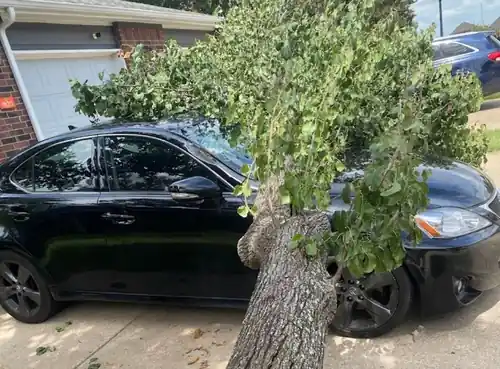
Yes. Texas Tree Tops provides emergency tree service for storm damage, fallen trees, split trunks, blocked driveways, and hazardous limbs in Denton and nearby DFW communities.
Neighborhoods And Nearby Areas

Denton Neighborhood And Local Service Coverage

Texas Tree Tops provides tree service for neighborhoods, HOAs, commercial corridors, managed properties, and nearby communities around Denton, including properties close to city boundaries. Coverage includes neighborhoods and areas like Oak-Hickory Historic District, Southridge, Forrestridge, Robson Ranch, Glenwood Village, and Hunters Ridge.

Denton Tree Service Coverage

Texas Tree Tops serves Denton from its Fort Worth business address. Tree service is planned around the property location, access, timing, and requested work.

Need Tree Service In Denton?

Send the service type, property location, timing, access notes, and cleanup expectations.

Request An Estimate