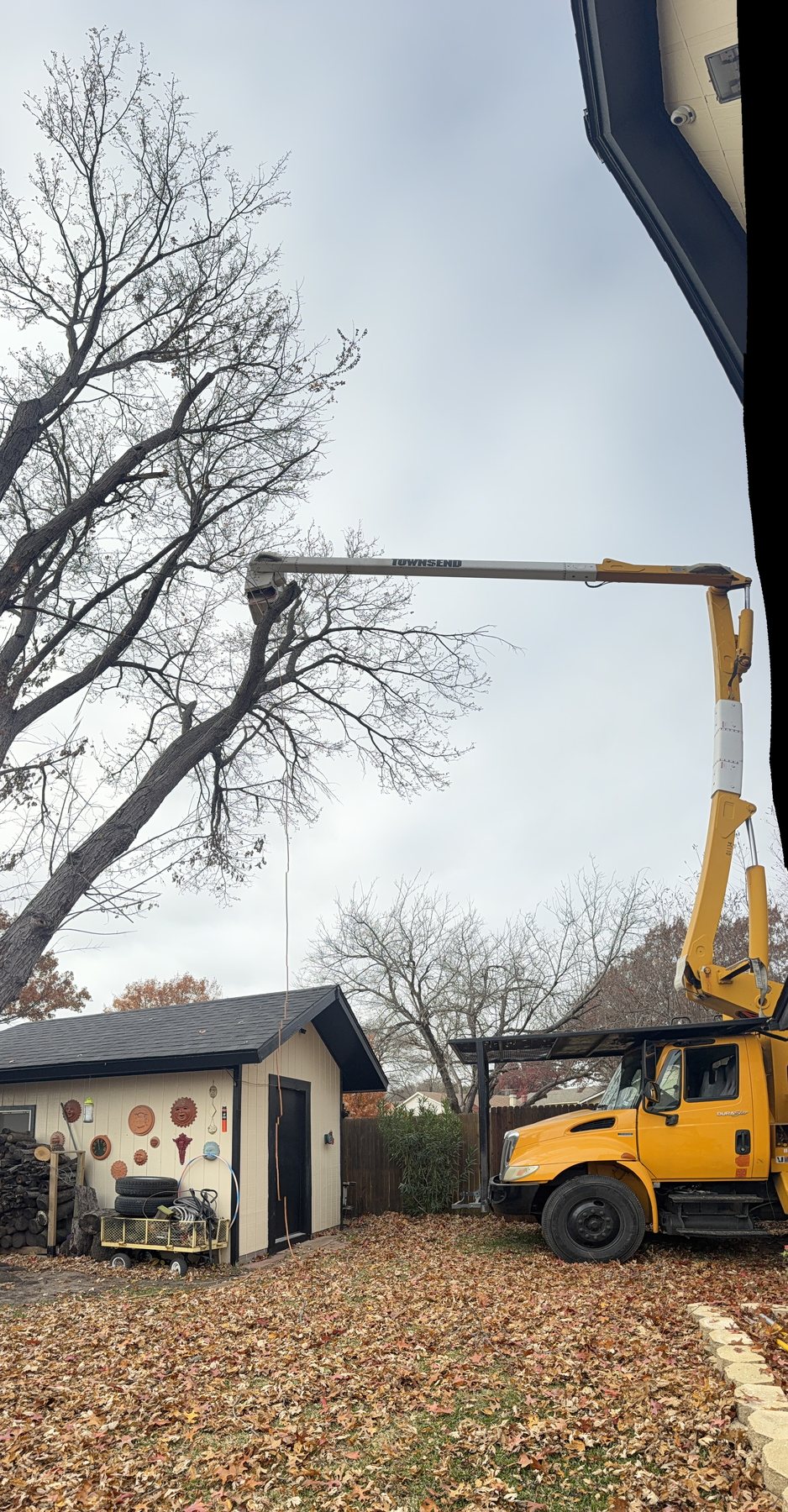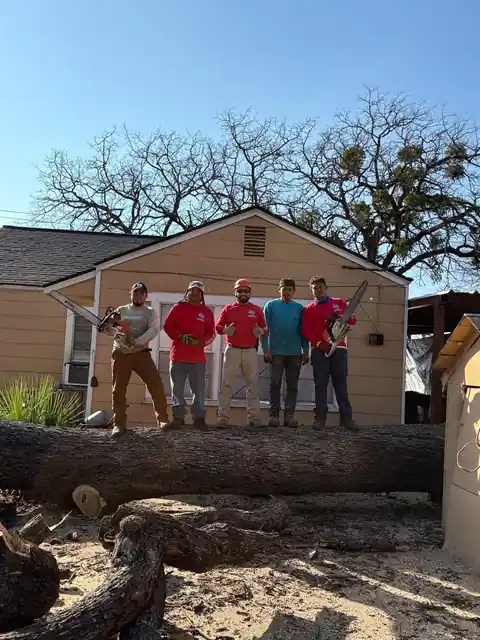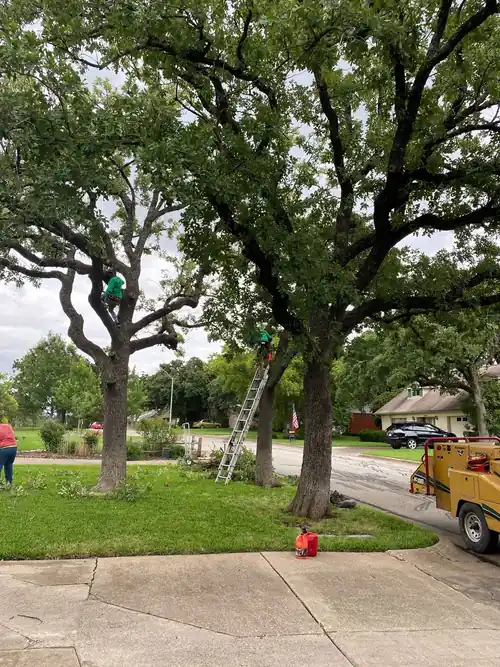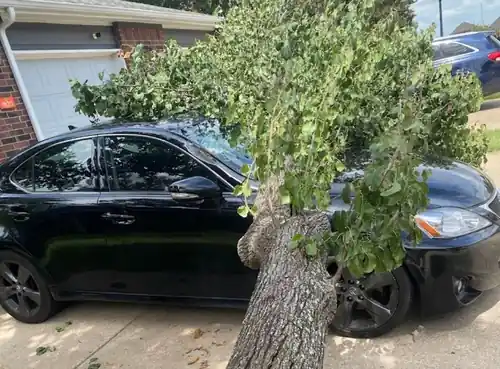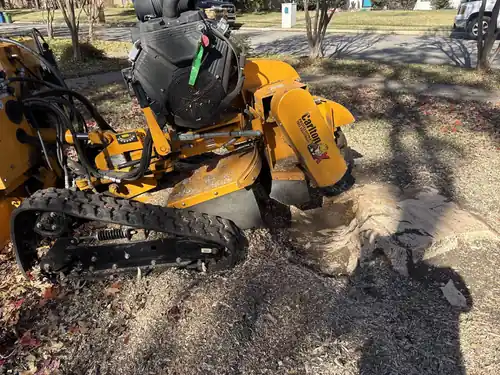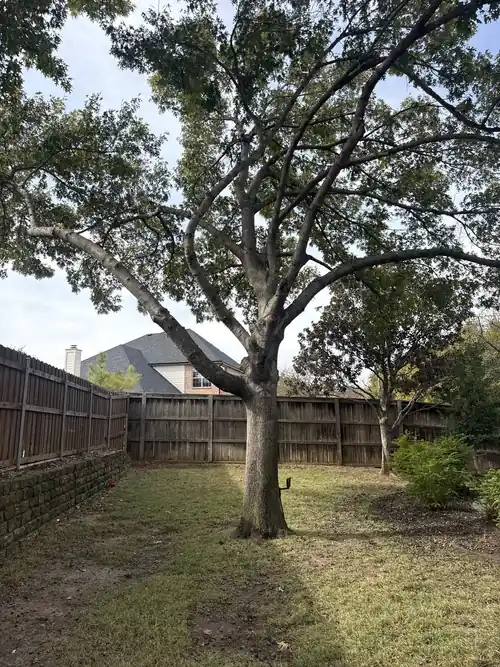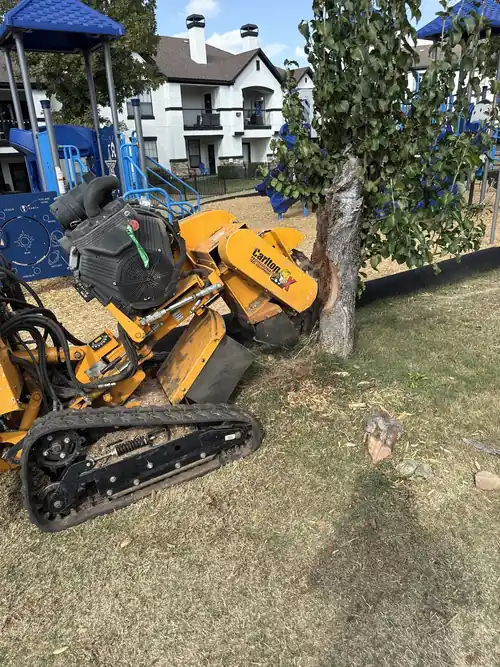
North Richland Hills sits in the middle of northeast Tarrant’s mature postwar suburbs, and its tree code reads accordingly: removal authorization before a healthy protected tree comes down, exemptions covering the trees that genuinely need to go, dead, diseased, hazardous, or grown into the lines, and heritage treatment for live oaks, pecans, and bur oaks. Most of our NRH work fits inside those exemptions: storm-cracked limbs over driveways, declining trees down before ice season, stumps ground out of forty-year-old lawns, and overgrowth trimmed off rooflines from Smithfield to the Hurst line. When a healthy protected tree truly has to come out, the authorization comes first, and we say so at the estimate instead of finding out at the citation.
North Richland Hills requires a tree removal authorization before any protected tree comes down unless it qualifies for an exemption — dead, diseased, hazardous, and utility-conflict trees are the main ones. Finaled single-family lots get relief from replacement-tree requirements, and a standalone authorization becomes void 180 days after approval.
Official source: North Richland Hills Code Chapter 114, Article II — Trees
Ordinance details change; confirm current requirements with North Richland Hills before scheduling a removal.
HomeTown NRH — the city's flagship master-planned community, begun in 1999 around a 25-acre park system — has a residential association enforcing architectural standards, with architectural and landscape committee requests routed through the property manager. The city also runs a formal HOA and neighborhood association registration program, so many subdivisions have registered associations.
North Richland Hills sits in the Eastern Cross Timbers — the narrow timbered belt of post oak and blackjack oak over sandy soils, described as perhaps the most fragmented vegetative region in Texas; the city even maintains a park named Cross Timbers Park. NRH incorporated in 1953 from a subdivided dairy farm and annexed the 1800s-era Smithfield community soon after, so street trees in the older core are now 50–70 years old — prime age for structural pruning, deadwood, and removal work.
This corner of Tarrant County almost never sees oak wilt — Arlington's 2026 detection was that city forester's first in close to fifteen years on the job — and disciplined habits keep the odds long: no oak cuts in spring, sealant brushed on while the crew is still in the tree, and tools cleaned between jobs.
Texas Tree Tops provides tree removal, trimming, emergency tree service, stump grinding, pruning, vegetation maintenance, lot and brush clearing, and commercial tree service in North Richland Hills.
A North Richland Hills tree service request includes the service needed, property location, access concerns, urgency, and cleanup expectations. When local rules apply, the documented municipal source is included in removal planning.
The North Richland Hills site review accounts for structures, fences, driveways, pools, utilities, parking, and the path used to move debris.
The North Richland Hills estimate connects tree condition, service type, timing, equipment access, and final property needs with North Richland Hills Code Chapter 114, Article II — Trees.
Tree condition, property access, cleanup needs, and the approved estimate determine the final service scope in North Richland Hills. Call +1 682-708-4984.
Texas Tree Tops provides tree service for neighborhoods, HOAs, commercial corridors, managed properties, and nearby communities around North Richland Hills, including properties close to city boundaries. Coverage includes neighborhoods and areas like HomeTown, Forest Glenn, Smithfield, Iron Horse, Thornbridge, and Graham Ranch.
Texas Tree Tops serves North Richland Hills from its Fort Worth business address. Tree service is planned around the property location, access, timing, and requested work.
Send the service type, property location, timing, access notes, and cleanup expectations.
Request An Estimate