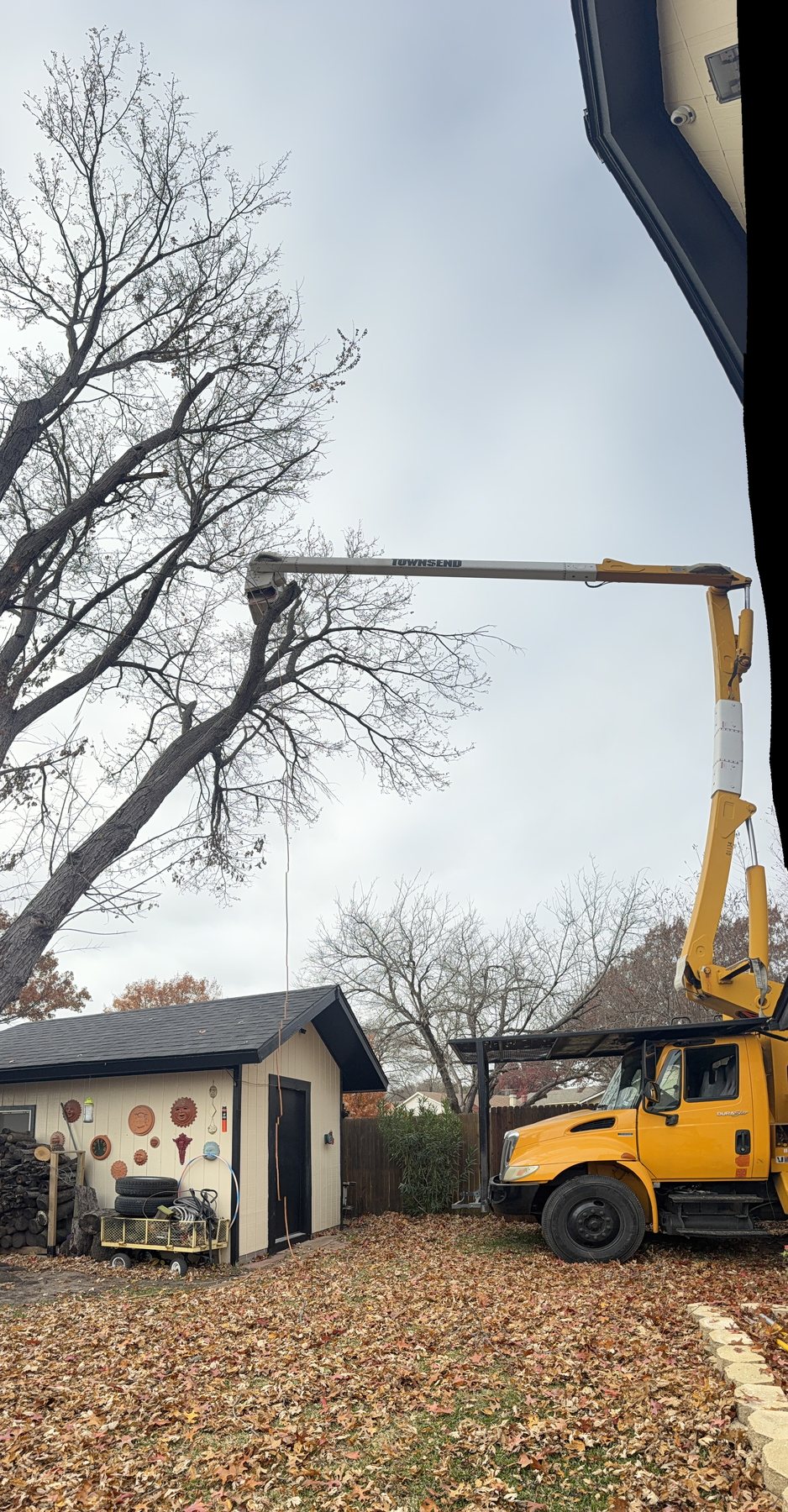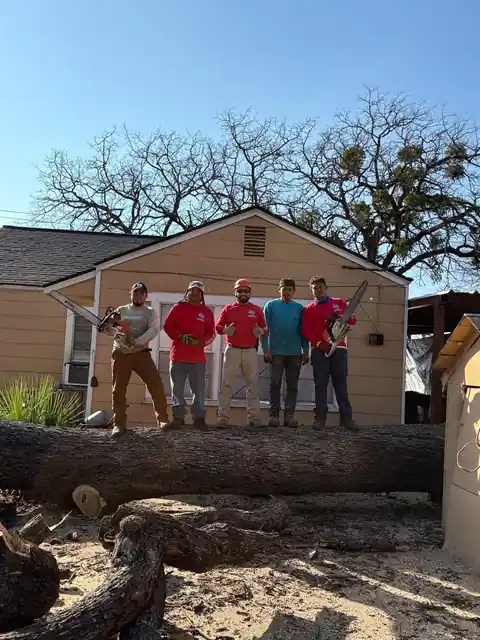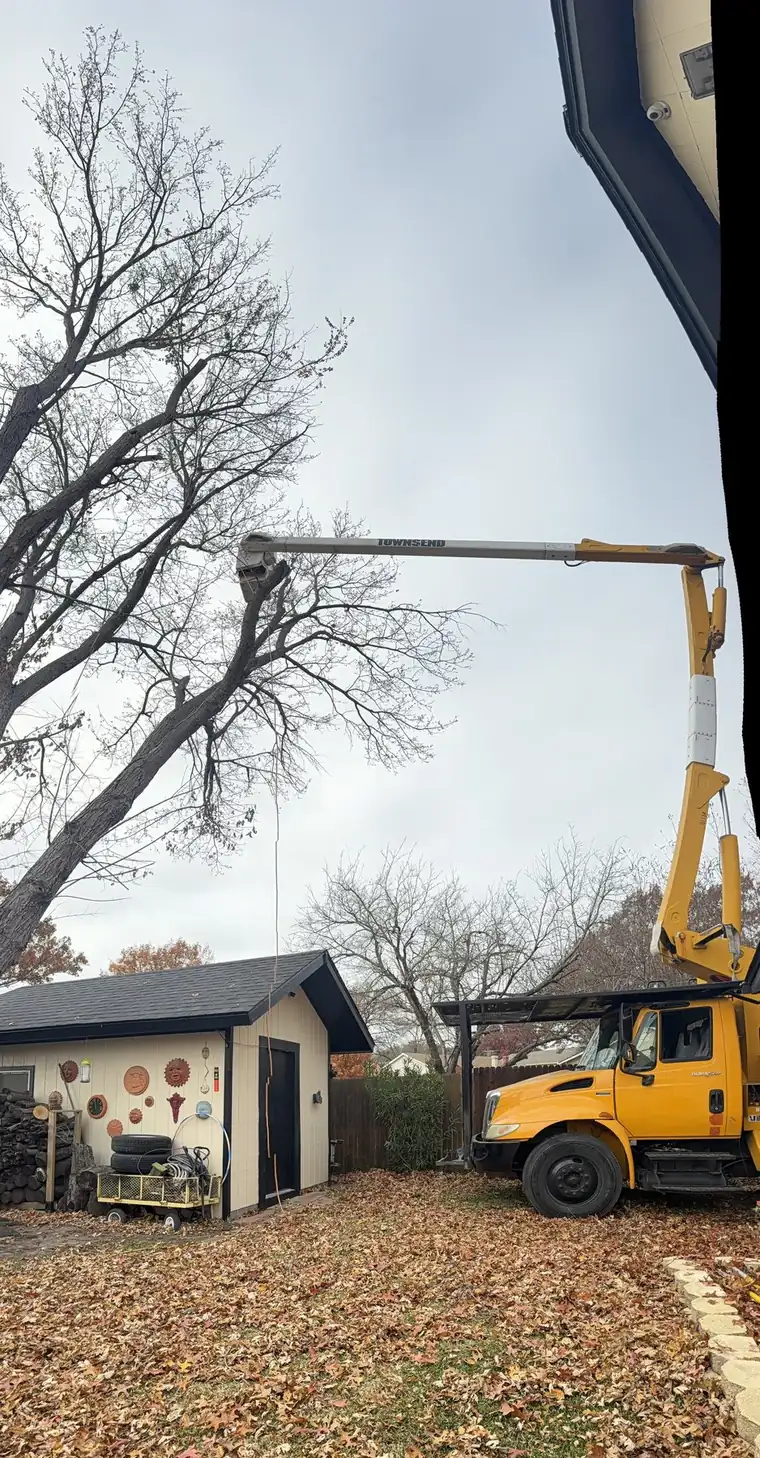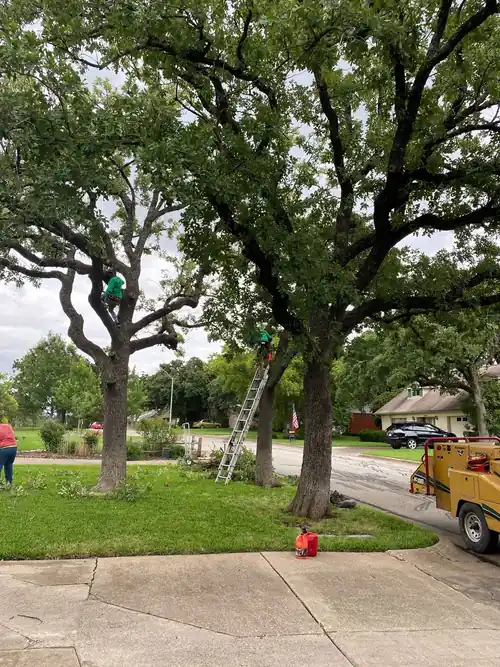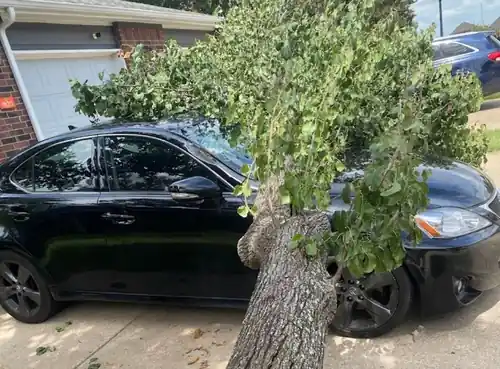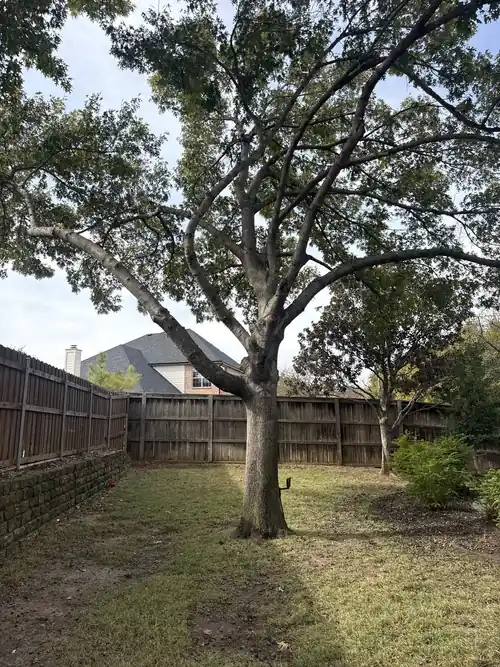
Most of Plano’s canopy is the same age as its neighborhoods. The subdivisions that filled in along Custer, Independence, and Preston through the 1980s planted red oaks, live oaks, cedar elms, and Bradford pears by the thousand, and forty years on those trees are mature, heavy, and due for structural work all at once. That is the shape of the Plano call: not whether the trees grew, but what to do now that they have. The other constant is underfoot. Blackland Prairie clay swells every wet spring and shrinks hard by August, working roots and foundations in the same motion, so removals and irrigation changes near a slab deserve more thought here than the metroplex average.
Coverage runs the whole city: the established neighborhoods between US 75 and Preston, the Willow Bend corridor, Legacy and the office parks toward the George Bush Turnpike, and the greenbelts along Spring Creek and Rowlett Creek where storm damage collects first. Commercial properties and HOAs get itemized, board-ready scopes; the aging Bradford pears that split in every spring wind get honest triage instead of a patch.
Established Plano homeowners do not need a city permit: Sec. 17.800 exempts individual single-family, duplex, and attached-home lots once the home has passed its final inspection. The rules apply to vacant land, redevelopment, and new construction, where trees 8 inches DBH and up need city approval and mitigation.
Official source: Plano Zoning Ordinance Sec. 17.800 — Tree Preservation and Protection
Ordinance details change; confirm current requirements with Plano before scheduling a removal.
Kings Ridge requires a completed architectural modification request before any exterior change to home or lot, and Willow Bend Park Estates runs submissions through a volunteer Architectural Review Committee — HOA approval is separate from any city rule.
Plano lies in the Texas Blackland Prairie on dark, calcareous shrink-swell clays — the famous Houston Black "gumbo." Neighborhoods built out in the 1970s–1990s now carry a genuinely mature planted canopy, and the seasonal moisture swing stresses both roots and foundations.
Oak wilt is confirmed inside Plano — the city reported a case near Coit Road and Parker Road, with suspected cases near Custer Road and Spring Creek Parkway. Red oaks are hit hardest; do not prune oaks February 1 through June 30, and paint every cut immediately.
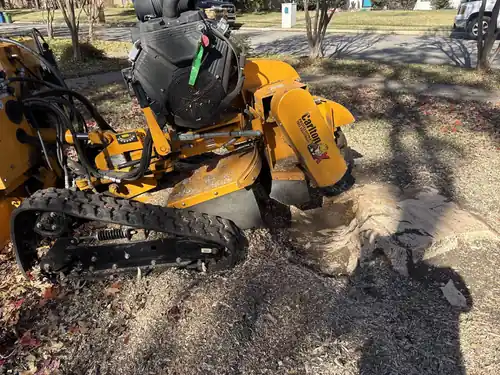
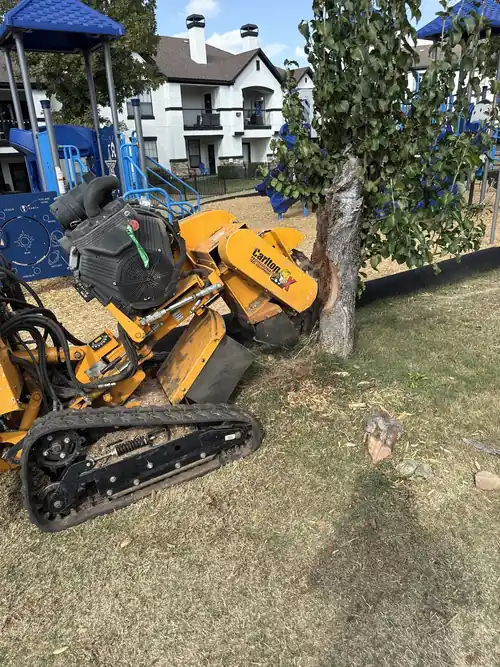
Texas Tree Tops provides tree removal, trimming, emergency tree service, stump grinding, pruning, vegetation maintenance, lot and brush clearing, and commercial tree service in Plano.
A Plano tree service request includes the service needed, property location, access concerns, urgency, and cleanup expectations. When local rules apply, the documented municipal source is included in removal planning.
The Plano site review accounts for structures, fences, driveways, pools, utilities, parking, and the path used to move debris.
The Plano estimate connects tree condition, service type, timing, equipment access, and final property needs with Plano Zoning Ordinance Sec. 17.800 — Tree Preservation and Protection.
Tree condition, property access, cleanup needs, and the approved estimate determine the final service scope in Plano. Call +1 682-708-4984.
Texas Tree Tops provides tree service for neighborhoods, HOAs, commercial corridors, managed properties, and nearby communities around Plano, including properties close to city boundaries. Coverage includes neighborhoods and areas like Kings Ridge, Deerfield, Willow Bend, Whiffletree, Lakeside on Preston, and Normandy Estates.
Texas Tree Tops serves Plano from its Fort Worth business address. Tree service is planned around the property location, access, timing, and requested work.
Send the service type, property location, timing, access notes, and cleanup expectations.
Request An Estimate