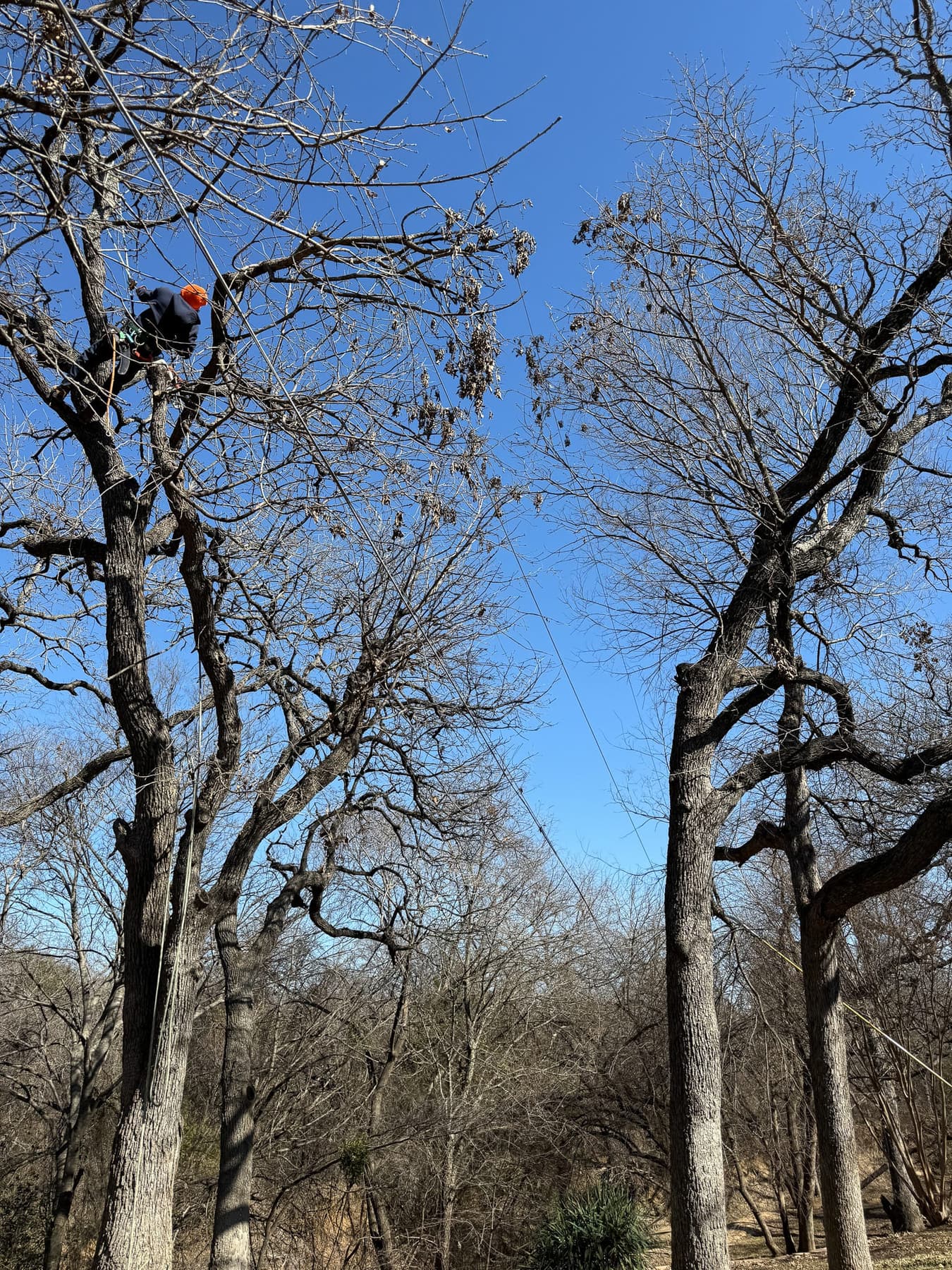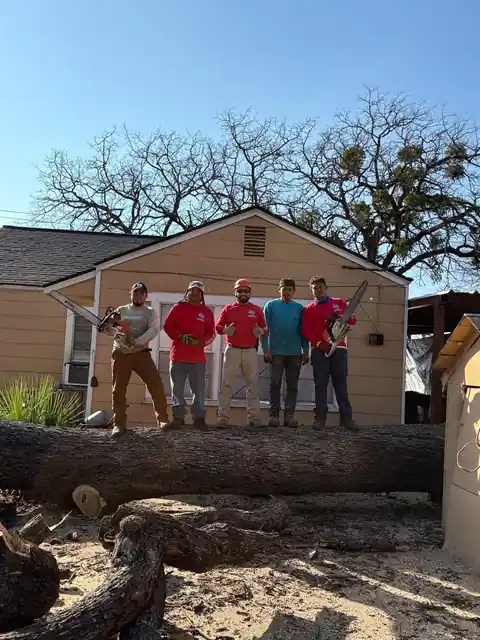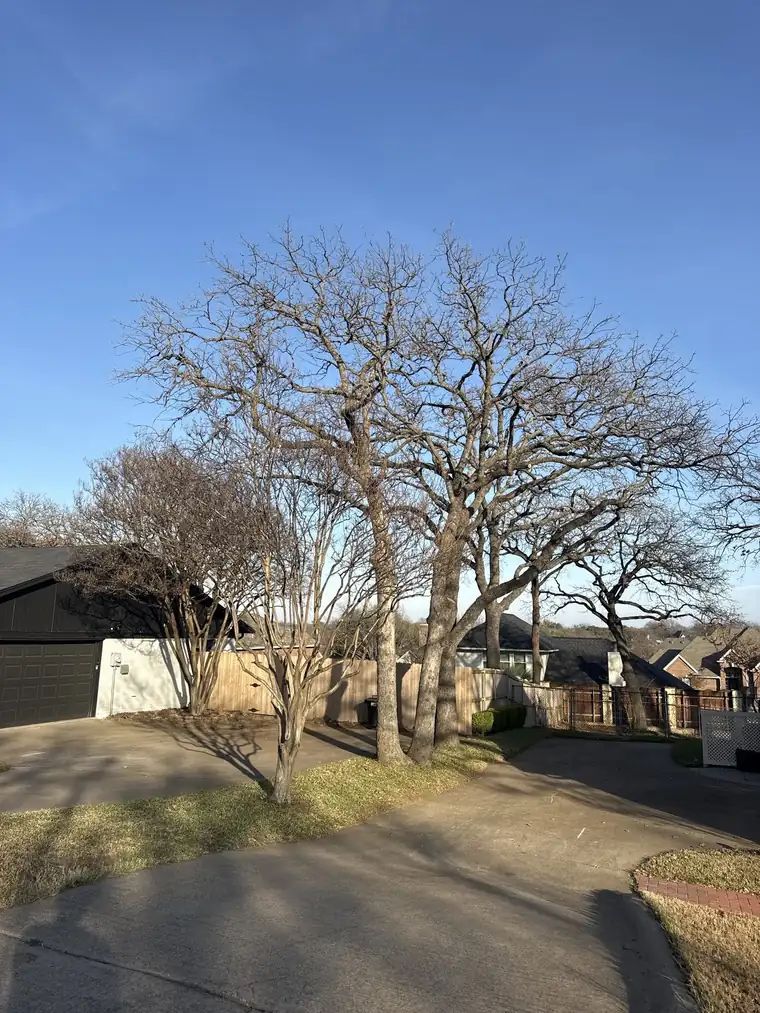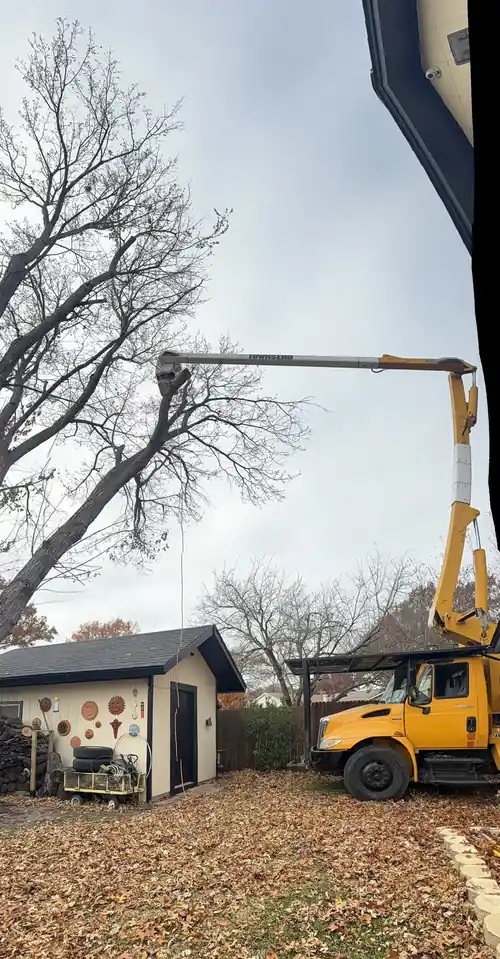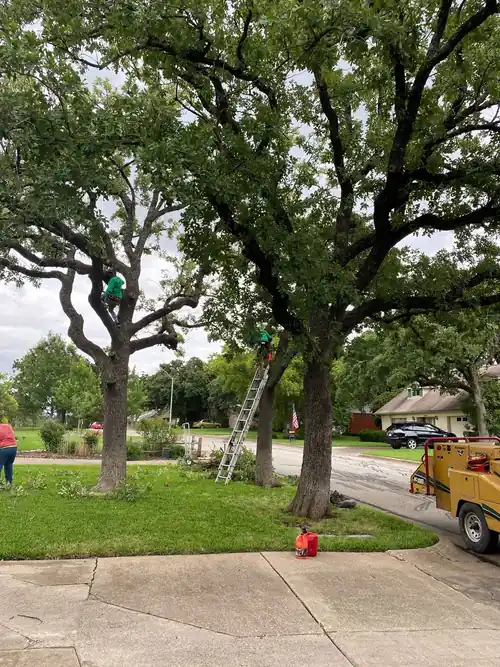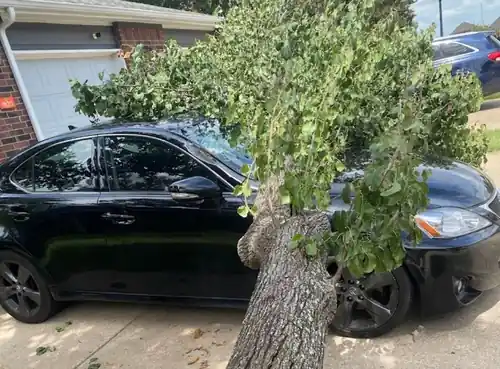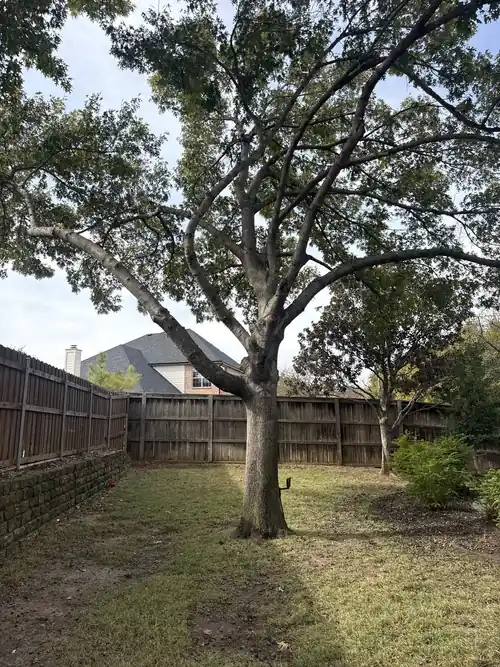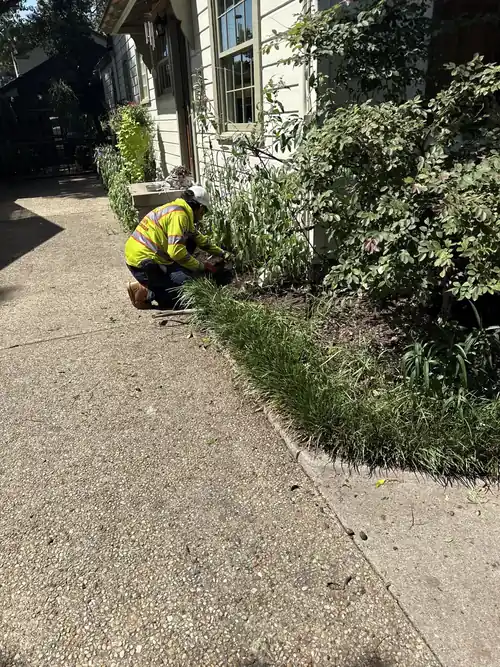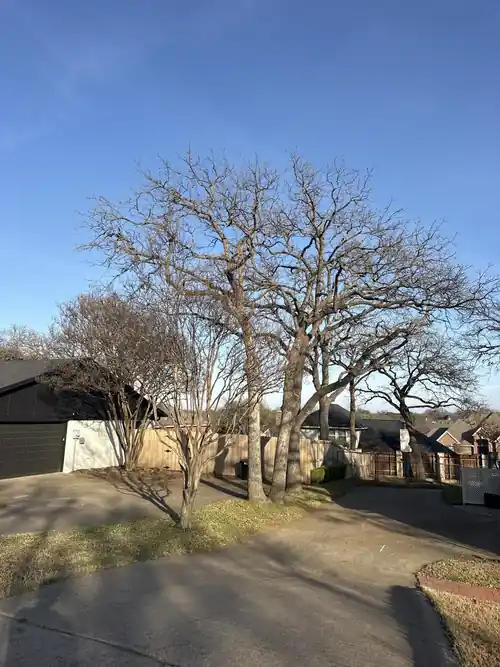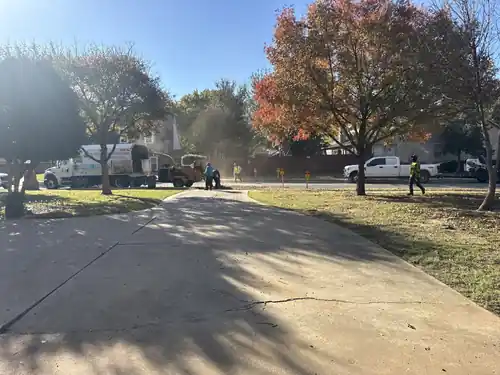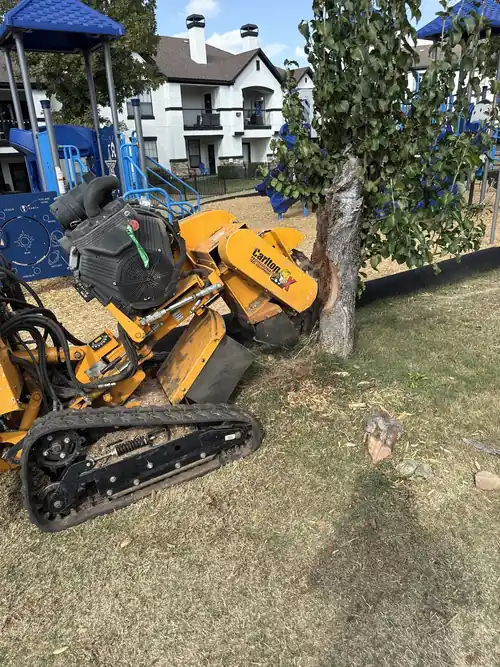
Irving tree service splits between the city’s two halves. South and central Irving carry the older neighborhoods: mature ashes and oaks, plus the hackberries and mesquites the city deliberately leaves unprotected, where the work is removals, storm cleanup, and keeping the code’s fourteen feet of clearance open over the streets. The north half is corporate: Las Colinas towers, apartment communities, and managed campuses where tree work gets scoped by property managers and priced by area. Both halves share one rule that matters: an occupied home lot stays exempt from the city’s tree conservation permits until a teardown or subdivision filing takes the exemption away. And topping is illegal citywide, which suits us fine, because topping is the one job we refuse anyway.
Irving's tree conservation rules exempt "Occupied Residential Property" — an ordinary occupied single-family, two-family, tri-plex, or townhouse lot — but the exemption disappears the moment a demolition permit or subdivision application is filed. On regulated property, protected trees need an Earthwork + Tree Removal Permit, which carries no application fee.
Official source: Irving Land Development Code Section 4.5 / Sec. 52-35A — Landscape and Tree Preservation (ORD-2017-9960)
Ordinance details change; confirm current requirements with Irving before scheduling a removal.
The Las Colinas Association is the dominant deed-restriction layer in Irving — membership is automatic on purchase of deed-restricted property, and its Architectural Control Committee requires plan submission before any exterior work including landscaping. Hackberry Creek and Valley Ranch carry their own association structures. Outside the deed-restricted communities, the binding rules are the city's Section 4.5 code.
Irving has been a Tree City USA since 2009, seats a 9-member Tree Board, and replants removed public trees from its own municipal Tree Farm. Two Trinity River forks frame the city — the 17-plus-mile Campion Trail follows the Elm Fork and West Fork through bottomland where pecan, bur oak, black willow, sycamore, and black walnut dominate — while most neighborhoods sit on Blackland Prairie expansive clay that swells wet and shrinks dry.
Oak wilt is confirmed in Dallas County. Live oaks spread the fungus through grafted roots at about 75 feet per year, and an infected red oak can succumb in a matter of weeks. No oak pruning February 1 through June 30, and paint every oak wound immediately, year-round.
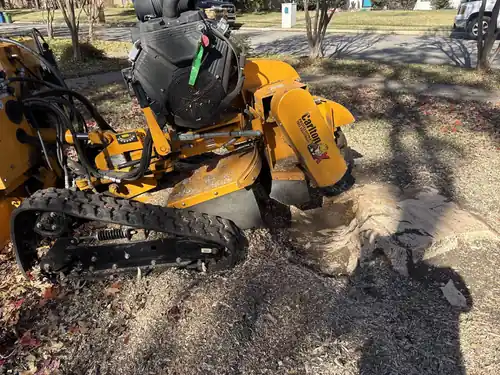
Texas Tree Tops provides tree removal, trimming, emergency tree service, stump grinding, pruning, vegetation maintenance, lot and brush clearing, and commercial tree service in Irving.
A Irving tree service request includes the service needed, property location, access concerns, urgency, and cleanup expectations. When local rules apply, the documented municipal source is included in removal planning.
The Irving site review accounts for structures, fences, driveways, pools, utilities, parking, and the path used to move debris.
The Irving estimate connects tree condition, service type, timing, equipment access, and final property needs with Irving Land Development Code Section 4.5 / Sec. 52-35A — Landscape and Tree Preservation (ORD-2017-9960).
Tree condition, property access, cleanup needs, and the approved estimate determine the final service scope in Irving. Call +1 682-708-4984.
Irving tree service coverage includes local neighborhoods and districts throughout the city. Tree removal, trimming, emergency tree service, stump grinding, pruning, and property cleanup are available across these communities. Coverage includes neighborhoods and areas like Las Colinas, Valley Ranch, Hackberry Creek, University Hills, Cottonwood Valley, and Fox Glen.
Texas Tree Tops serves Irving from its Fort Worth business address. Tree service is planned around the property location, access, timing, and requested work.
Send the service type, property location, timing, access notes, and cleanup expectations.
Request An Estimate