
Topped
Swollen knobs at the cuts, a broom of thin sprouts, heavy flower heads that bend the new stems to the ground.
The short answer. Crepe myrtle trimming belongs in late winter, before new leaves appear. Take off dead wood, crossing branches and sprouts at the base, and stop there. Never cut the trunks back to one flat height; that practice, called crape murder, leaves knobs and weak, floppy growth. A crepe myrtle with enough room often needs almost nothing.

The shaping window. Bare branches show every stem, and cuts sit just ahead of spring growth.
Wait until buds break. Live wood leafs out; dead wood stays bare and snaps cleanly.
Snip spent flower clusters you can reach, if you like. It is optional.
Leave it. Cuts now invite tender growth that the first freeze kills.
Shade trees beside it keep a different schedule. Oaks, elms and the rest are covered in the North Texas pruning guide.
"Crape murder" is the local name for lopping every trunk at the same height. It wipes out the branching shape that makes a mature crepe myrtle worth growing.
Swollen knobs at the cuts, a broom of thin sprouts, heavy flower heads that bend the new stems to the ground.
Tapering trunks, smooth bark on show, blooms held up on stems strong enough to carry them.
Bare, brittle stems come off at the joint with a live stem.
Where two rub, the weaker one goes.
On a tree-form plant, suckers around the trunks come off at the ground.
Clear these up to about head height so the trunks show.
Optional. Take only the ones you reach from the ground.
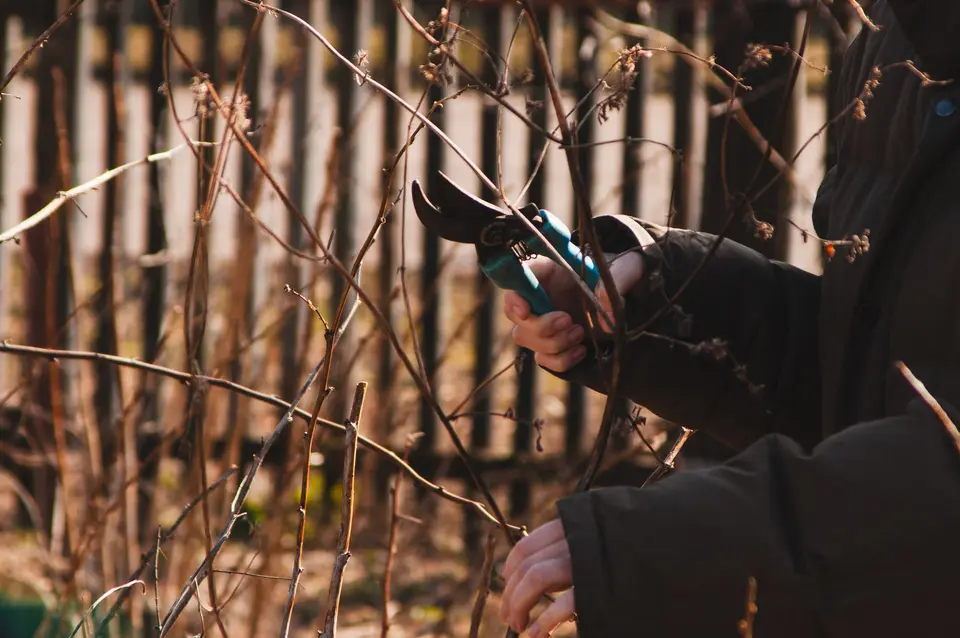
Step back after every few cuts. Once the problem is solved, put the loppers away, even if the two sides look a little different.
Crepe myrtles bloom on the current year's growth. That growth comes on a lightly trimmed plant too, so hard cuts buy nothing.
Full sun drives the bloom. A plant shaded by a growing oak flowers less every year.
Deep, occasional watering through a dry July keeps buds from dropping.
Big cuts send the plant's energy into sprouts, not flowers.
Heavy lawn feeding pushes leaves over blooms. The grass food spread nearby reaches the crepe myrtle too.
If a crepe myrtle bloomed well for years and then faded, look up first. A neighboring tree that grew over it is the usual cause, and the fix is on that tree.
Selective clearance on one side usually fixes it for years.
That is a fit problem. Ask about long-term options before another hard cut.
Bring it. Knowing whether the complaint is access, sight lines or looks sets the smallest fix.
Pick the strongest sprout at each knob, remove the rest, and let the new limb thicken over three seasons.
One visit won't undo years of topping. A corrective plan spread over a few winters will.
Any cut you can't make with both feet on the ground.
Stems above something breakable need a controlled drop.
Call the utility first. Lines are their job.
Both spellings are correct and both are common in Texas. "Crape" is the older spelling many horticulture sources use; "crepe" is what most homeowners type into a search bar. The plant and the pruning rules are the same either way, so follow whichever one appears on your nursery tag.
No. A plant with room to grow may go several winters with nothing more than a dead stem removed. Trim when something specific is wrong: a stem crossing another, sprouts crowding the base, a branch blocking the walk. The calendar alone is never the reason.
No. Crepe myrtles shed their outer bark in thin sheets, usually in summer, and the smooth, mottled trunk underneath is part of the plant's appeal. Peeling bark is normal. Cracks that go deep into the wood, or bark loss paired with dead branches above, are worth a closer look.
White powder is usually powdery mildew, common in shade and humid spring weather. A black film is often sooty mold growing on sticky honeydew left by aphids. Neither calls for heavy pruning. Better airflow and sun help mildew, and dealing with the aphids clears the mold.
Small young plants can often be moved in winter while dormant, with as much root ball as you can lift. Established multi-trunk plants rarely move well. If yours has outgrown its bed, compare moving it, keeping it trimmed lightly, or replacing it with a dwarf variety sized for the space.
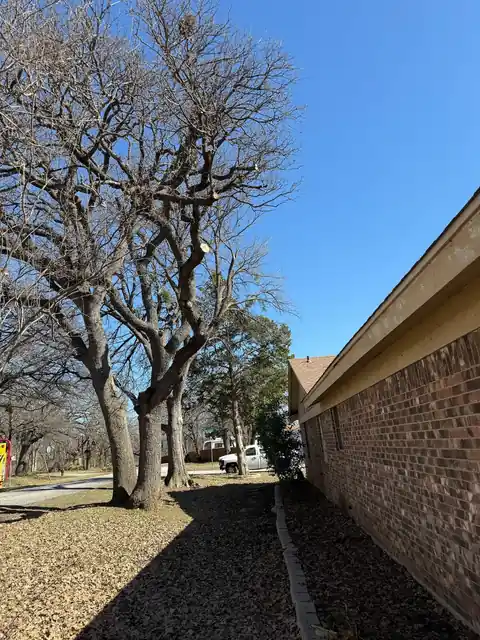
Month by month timing for shade trees, and where each cut goes.
Pecans take their winter trim in February, the same late-winter stretch as crepe myrtles.
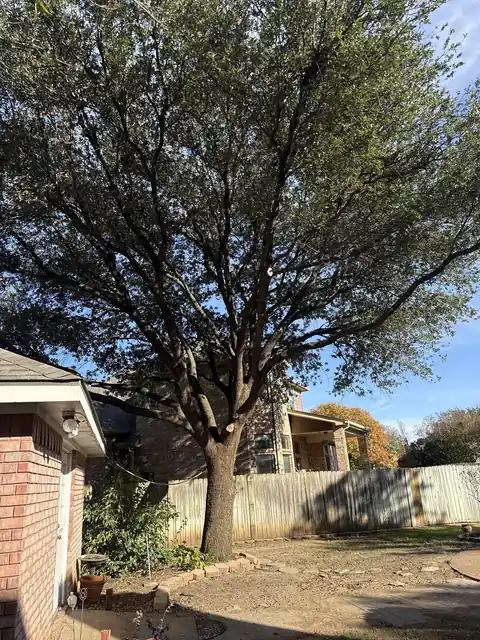
The July to January window, and paint on every cut.
There are more tree care guides for shade trees, oaks and pecans.
Not sure what is wrong with your tree? Book a tree health visit and we will tell you what we see.
Two short steps. Say which stems bother you, or which view you want back.
We reply within 30 minutes.
Get My Free Estimate
Point out the crowded walkway or the branch on the house. We'll plan cuts that keep the form, in writing and free.
Texas Tree Tops, 3613 Avenue N, Fort Worth, TX 76105. (682) 708-4984.