Skip to content

Pecan Tree Care for North Texas Yards

  • North Texas yard guide
  • 6 minute read
  • By Daniel Sanchez, owner, Texas Tree Tops
  • Reviewed

The short answer. Pecan tree care in a home yard comes down to four things. Water deeply and less often, out past the drip line. Watch new leaves for the small, crinkled look of zinc shortage. Trim deadwood and weak limbs in winter while the tree is dormant. Record when nuts fall and what they look like before blaming a disease.

On this page
  1. Deep water and drainage
  2. Pecan tree trimming
  3. Zinc and yellow leaves
  4. Why a pecan drops nuts
  5. A one-page pecan record
  6. When a pecan needs a visit
  7. Pecan questions

Pecan tree care starts with deep water

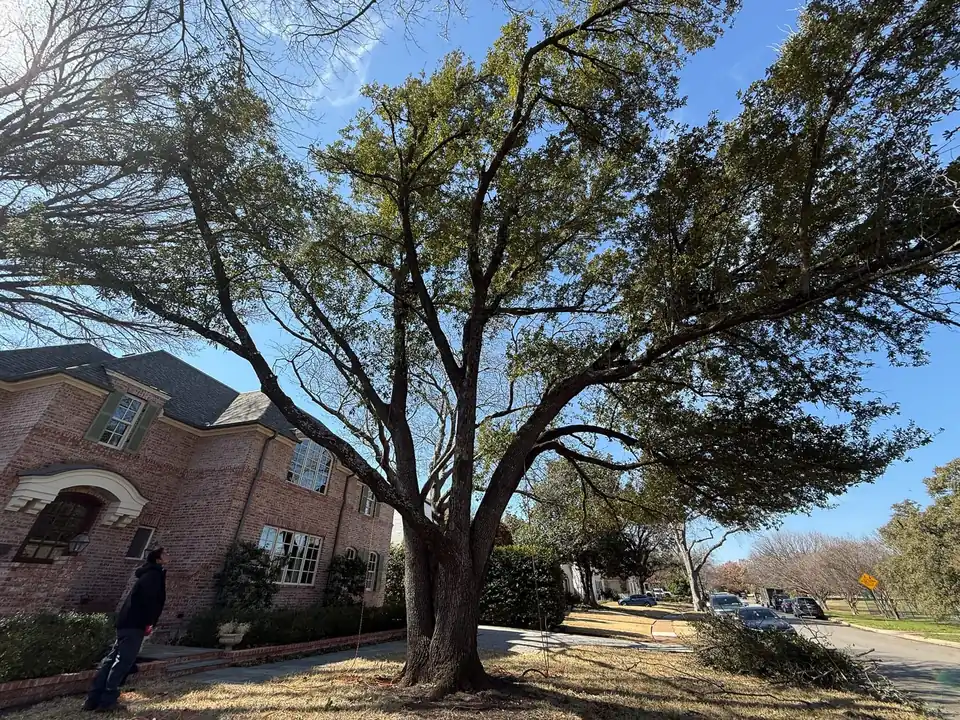
The pecan is the Texas state tree and grows wild along the Trinity and Brazos river bottoms. It wants deep moisture and ground that drains.

  • Soak deep, less often

    A long, slow soak that wets the soil well down beats a daily sprinkle that stops at the grass roots.

  • Water at the drip line

    Feeder roots spread out to the edge of the crown and past it, not at the trunk.

  • Watch for standing water

    Puddles that sit for a day after watering mean roots are short of air.

  • August matters most

    Nuts fill in late summer. A dry August shows up as light, poorly filled nuts in fall.

Heavy clay in one yard and shallow soil over limestone in the next need different schedules, so don't borrow the neighbor's timer settings.

Pecan tree trimming: winter work with a purpose

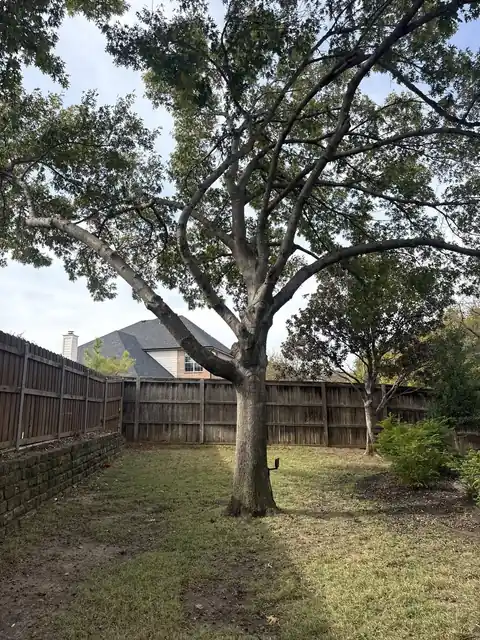
Pecans take routine trimming in the dormant months, December into February, before bud break. For how pecan timing fits the rest of the yard, see when to prune trees in North Texas.

  • Deadwood

    Dead limbs come out first. Pecan wood is heavy and drops without warning.

  • Narrow forks

    Two stems joined in a tight V split easily. Young trees get one leader chosen early.

  • Low limbs over the drive

    Raised in stages so the trunk keeps enough leaves to thicken.

  • Crossing branches

    The weaker of the two goes before the bark wears through.

Trimming fixes branch problems. It will not fix a water, root or crop problem, so don't cut healthy limbs because nuts dropped.

Zinc, fertilizer and yellow pecan leaves

Pecans need more zinc than most yard trees. Short of it, new leaves come in small, narrow and crinkled, and shoot tips form tight rosettes.

Yellowing across old leaves, or on one side only, points somewhere else: water, roots or disease.

  1. Test first

    AgriLife's soil lab and your county Extension office explain soil and leaf tests and how to read them.

  2. Zinc goes on the leaves

    In alkaline North Texas soil, zinc sprayed on new leaves in spring works better than zinc spread on the ground.

  3. Keep a product log

    Lawn fertilizer lands on pecan roots too. Write down what goes on the grass and beds, and when.

Why a pecan drops nuts, month by month

When nuts dropWhat you seeCommon cause
Late spring into early summerTiny nutlets on the ground, some with a small entry holePoor pollination, or pecan nut casebearer larvae.
MidsummerGreen nuts falling in a dry spellWater stress or an overloaded crop.
Late summer into fallNuts with a small round exit holePecan weevil.
Fall harvestNuts that look fine but rattle or crack emptyDrought while the kernels were filling.
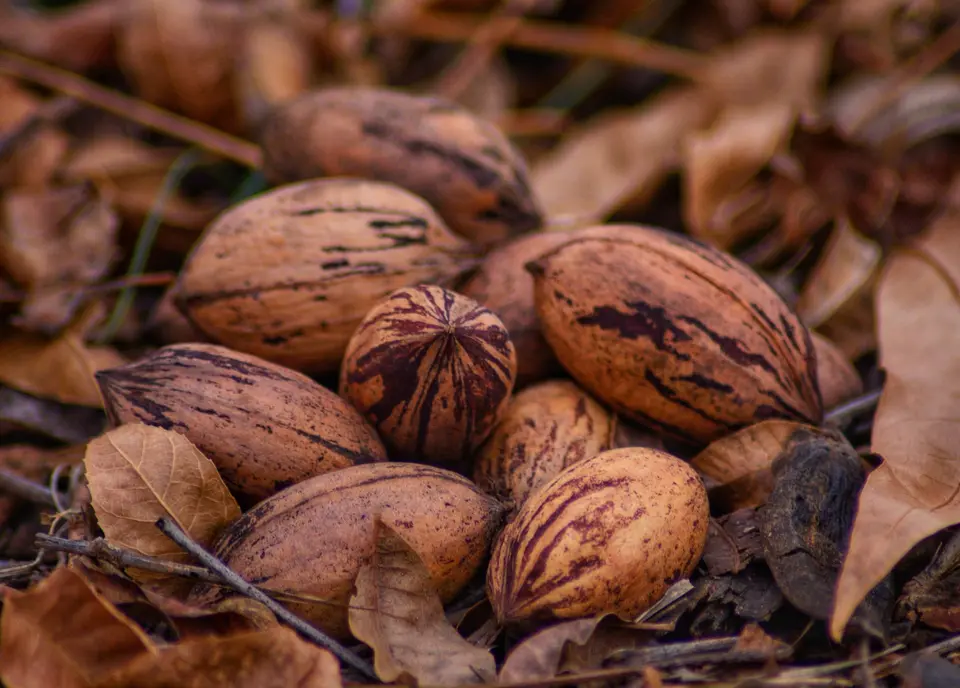
Pecans in the shell among fallen leaves
Pecans also bear heavily one year and lightly the next. Compare crops with dated notes, not memory, and get a pest identified before spraying anything.

A one-page pecan record

What to noteWhat to write down
CanopyWhich part changed, and the date you noticed.
GroundStanding water, dry patches or fresh digging.
WateringChanges to timing, coverage or the system itself.
CropWhen nuts fell and how they looked.
BranchesCracks, hanging wood or new contact with the roof.
Yard workPaving, trenches, added soil or trucks over the roots.

Take photos from the same spots each time. A wide view of the whole tree says more than a close-up of the worst leaf.

When a pecan needs a visit

  • A hanging or split limb

    Keep everyone out from under it. Heavy pecan wood needs a controlled lowering.

  • A new lean

    Lifted soil or cracked roots on one side call for a look now.

  • A crown thinning fast

    Fewer leaves year over year, with no clear cause, deserves a visit before anyone cuts.
Pecan questions

When should I pick up pecans, and how do I store them?

Gather nuts soon after they fall, before squirrels, birds and damp ground get to them. Toss any with holes or dark spots, then spread the sound ones in a dry spot for a couple of weeks. Once the kernels snap cleanly, seal them in bags and freeze them. Frozen pecans keep far longer than a jar on the counter.

How far from the house should I plant a pecan?

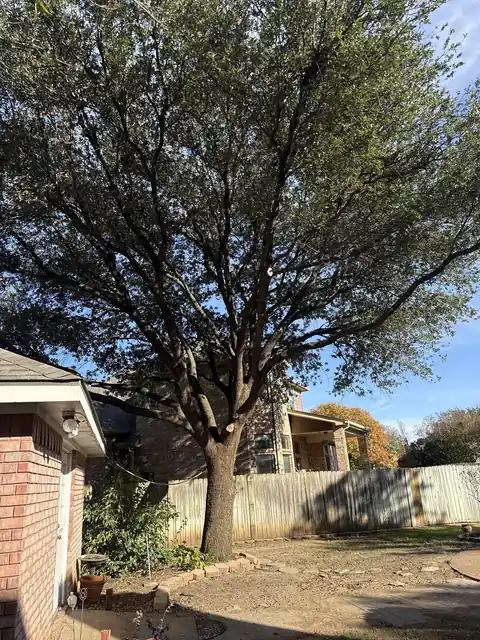
Farther than the young tree suggests. Pecans grow into very large trees with a crown as wide as they are tall, so leave plenty of room from the house, the pool and any overhead line. Ask your county Extension office which variety suits your soil and whether you want nuts or only shade.

What is the black film on my pecan leaves?

It is usually sooty mold, a fungus that grows on the sticky honeydew aphids leave behind. The mold itself does little harm, but heavy aphid feeding weakens leaves late in the season. Get the insect confirmed before you spray, and remember that a spray program is separate from branch work.

Can I cut a large limb over my driveway myself?

No. A big pecan limb weighs far more than it looks, and it can swing or split as it drops. Stay out from under it and keep cars clear. Describe the limb, what sits below and the access to it when you ask for an estimate.

Pecan limb, leaves or crop worrying you?

Tell us what changed and when. We'll sort branch work from crop questions and put any tree work in a free written estimate.

Texas Tree Tops, 3613 Avenue N, Fort Worth, TX 76105. (682) 708-4984.

Call (682) 708-4984 Free estimate