On this page
Oak wilt signs, oak by oak
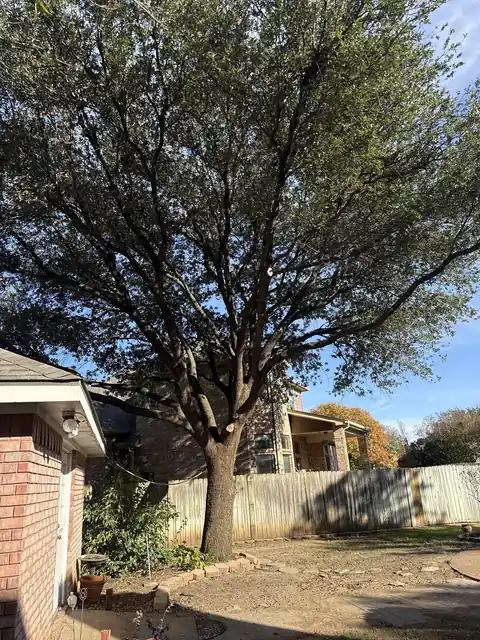
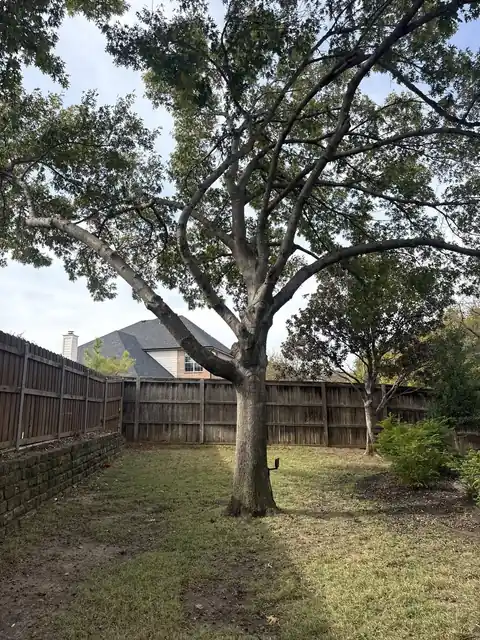
Live oak
Over weeks to months, often spreading tree to tree
Leaf veins turn yellow, then brown, while the leaf edge stays green. Leaves drop and the crown thins.
Red oaks
Fast. A red oak can die within weeks.
Leaves wilt and turn dull red-brown from the edges, often in late spring.
White oak group
Slow, when it happens at all
Infection is uncommon. Scattered branches die back.
How oak wilt spreads from tree to tree
Above ground
Infected red oaks grow fungal mats under the bark in spring. Sap beetles feed on the mats, pick up spores and land on fresh oak wounds nearby.
Below ground
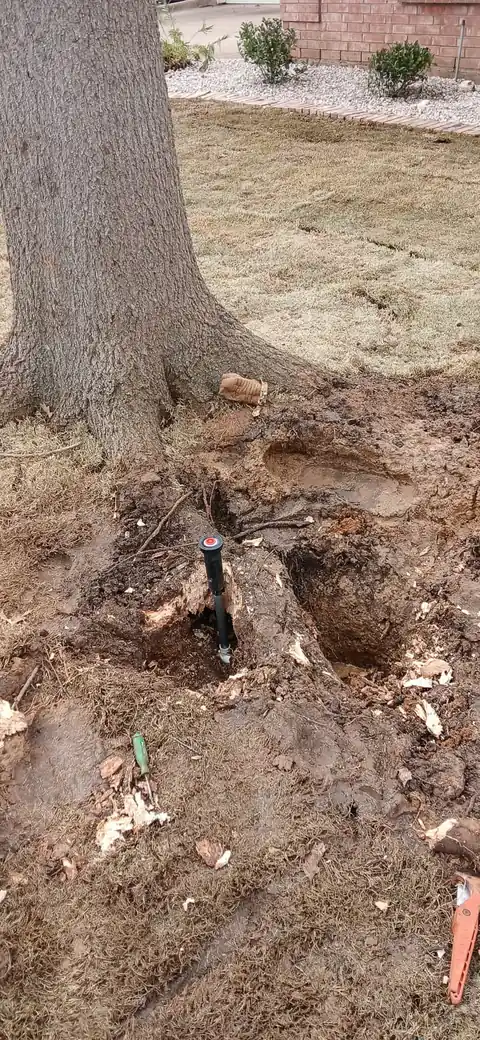
Live oaks grow in groups with joined roots. The fungus travels through those roots and reaches the next tree, then the next.
Roots ignore property lines. If a neighbor's oaks changed first, share what you have seen without calling it a diagnosis, and keep dated photos per tree.
Oak wilt around Dallas-Fort Worth
Confirmed inside the city
In July 2026 a post oak in west Arlington tested positive at the Texas A&M Plant Disease Diagnostic Lab. The city now requires sealing paint on pruning wounds in its landscaping contracts.
Oak wilt was first found in Texas in 1961, from diseased trees in Dallas. A 2025 Texas A&M Forest Service release lists Dallas among cities with an oak wilt program.
In 2010 the Plano Star Courier reported a confirmed case near Coit Road and Parker Road, with suspected trees near Custer Road and Spring Creek Parkway.
The Forest Service map of Parker County, updated in 2026, marks documented oak wilt areas that overlap Weatherford. A marked area may or may not still be active.
TexasInvasives.org lists Fort Worth among the cities where oak wilt has been reported. We're based here, in Tarrant County.
A 2010 Dallas Morning News report quoted a local tree specialist on an oak wilt cluster near Custer Road and Eldorado Parkway.
- County with an oak wilt record
- Town with a city record
- Town we serve
Oak wilt is confirmed in all six counties we serve: Tarrant, Dallas, Collin, Denton, Parker and Johnson. Texas A&M Forest Service puts the statewide count at 76 counties.
A county record means the disease has been confirmed somewhere in that county, not on your street. It is reason enough to keep the pruning calendar anywhere in the metroplex.
County status: texasoakwilt.org county map, Texas A&M Forest Service. Checked Sep 30, 2026.
Confirmed at county level
Find your town: 21 towns we serve, by county
Dallas County
Denton County
Parker County
Across the metroplex, post oak and blackjack oak fill the old Cross Timbers woods, while live oak and Shumard oak line the planted streets. All of them are oaks, and all oaks can be infected.
When oaks can be pruned in North Texas
- Jan
- Feb
- Mar
- Apr
- May
- Jun
- Jul
- Aug
- Sep
- Oct
- Nov
- Dec
July through January
The pruning window. Sealant goes on as each oak limb comes off.
Five months of the year, oaks wait.
February to June
No oak pruning. Fungal mats are active and sap beetles fly, so a fresh cut draws them in.
A storm in any month. A broken limb over the house comes down right away, and the wound is painted.
Three habits that protect a healthy oak
Spring means no saw
No elective oak cuts from February through June, including shaping a live oak for a party.
Seal wounds on the spot
Paint every fresh oak wound at once, in any month, including scrapes from mowers and trenchers.
Firewood stays put
Don't bring unseasoned red oak firewood of unknown origin onto your lot.
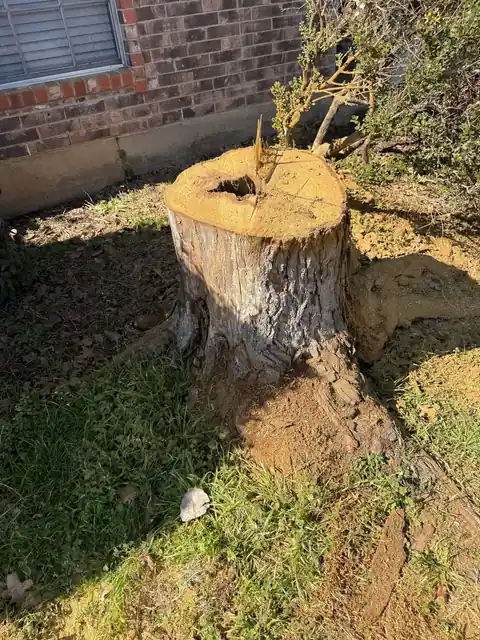
For which branches to cut and when, read our guide to oak tree trimming.
Think your oak has it? Do this first
Oak record, in order
- Stop all oak pruning on the property until someone has looked.
- Take one wide photo of each oak, from the same spot every week.
- Photograph leaves you can reach from the ground, veins in view.
- Write down the date you first saw it, and which tree changed first.
- Note recent pruning, storm wounds, trenches or new soil.
- Ask your regional forester through the Find My Forester page.
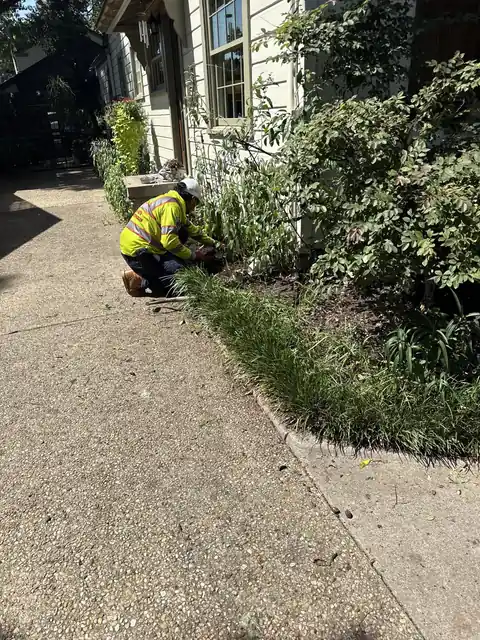
Oak wilt treatment: who does which step
Treatment starts with a confirmed diagnosis and a look at the whole site, not one tree.
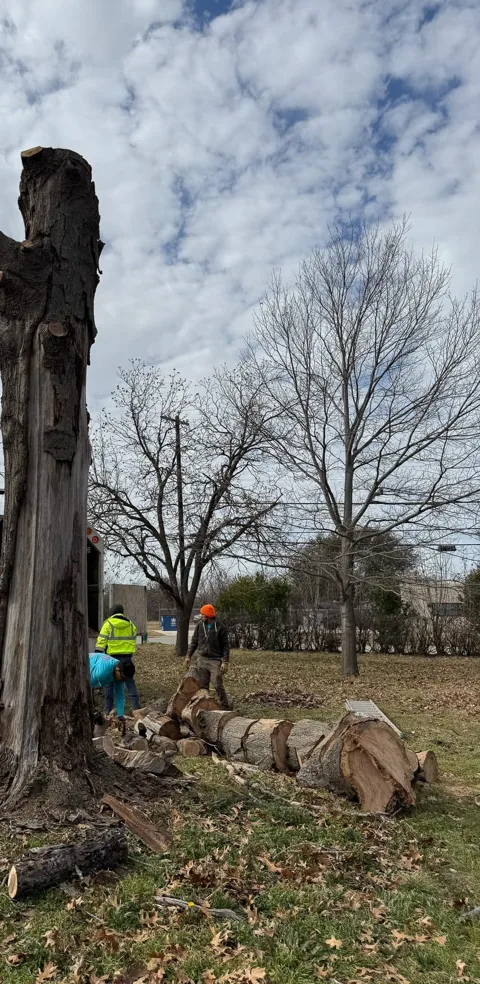
Taking down one oak does not stop the disease below ground, and stump grinding does not break root connections. If the plan calls for removing an oak wilt tree, send us the diagnosis and the wood-handling directions with the estimate request.
When a changing oak needs a visit
Fast decline
A crown that thins noticeably in a few weeks.
A group changing together
Two or more neighboring oaks showing the same signs.
Dead wood overhead
Brittle limbs above a roof, drive or play area are a hazard whatever the cause.