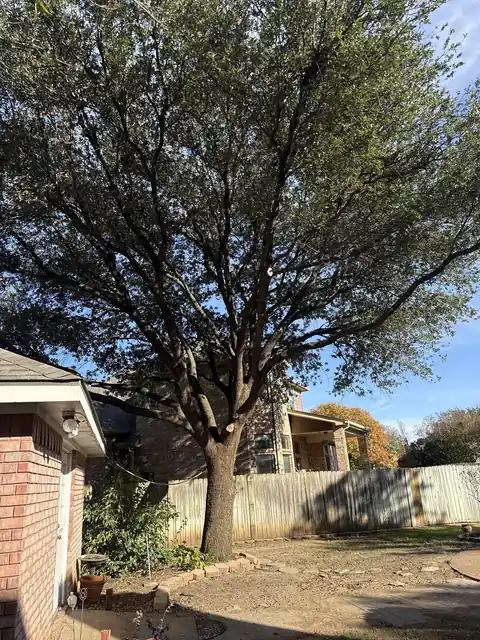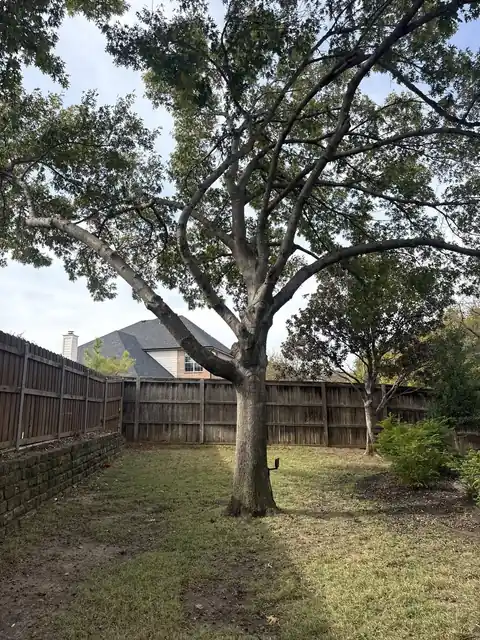
Pruning trees at the branch collar
The branch collar is the slightly swollen ring where a branch meets the trunk. The final cut sits just outside it.
Undercut
On a heavy limb, a shallow cut from below, a short way out from the trunk, keeps bark from tearing down the stem.
Weight cut
A second cut from the top, a little farther out, drops the limb.
Final cut
The short stub comes off just outside the collar. The collar stays whole, and the tree seals the wound from there.
Flush cut
Wrong. It slices into the trunk and leaves a larger wound.
Long stub
Wrong. The stub dies back slowly and rot follows it in.
Back to a side branch
Right, when a limb needs shortening rather than taking off.
Learn these to judge a plan, not to climb with a saw. Texas A&M Forest Service draws each cut in its mature-tree guide, listed under Sources.
Cutting back trees hard: why we won't top one
Tree topping chops big limbs to stubs to shrink a tree. We don't do it. The tree answers with a thicket of fast sprouts that hang on weakly and snap in the next storm.
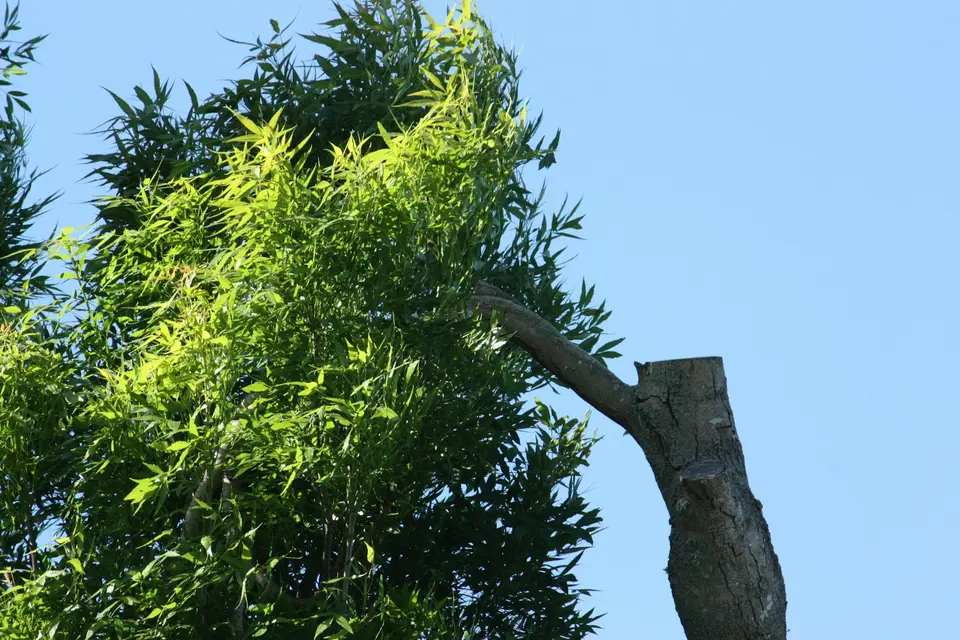
Topped
Stubs, a burst of water sprouts, a weaker crown in a few seasons, then the same bill again.
Reduced
Limbs shortened to side branches, natural shape kept, and fewer return visits.
If a tree has truly outgrown its spot, reduction buys time and removal is the honest end point. Hard cuts every spring never make a big tree small.
Pruning a young tree you can reach from the ground
Pick one leader
Two stems racing to be the trunk make a weak fork later. Choose one early and shorten the other.
Keep some low limbs
Lower branches feed a thin trunk. Take them off over several years, never in one visit.
Hand pruners for thin stems
A sharp blade cuts clean. Crushed bark closes slowly.
Loppers within their size
If the tool strains or crushes wood, the branch has outgrown it.
Stop when the job needs a ladder, a chainsaw or a limb you can't control as it falls.
Tree pruning checklist before anyone climbs
- Name the tree, or photograph its leaves and bark.
- Point to the exact branch and the trouble it causes.
- Note when it changed, and whether a storm came first.
- List what sits below: roof, fence, pool, cars, beds.
- Measure the side gate and flag any soft ground.
- Ask how much live canopy comes off, and why.
- Settle cleanup and haul-off before the first cut.
When pruning needs a crew
Above your head
Any cut you would make from a ladder or from inside the canopy.
Over something that breaks
Limbs above the roof, the fence, the pool or a parked car need ropes and a lowering plan.
Near a power line
Stop and call the utility. Wires belong to them and their contractors.